A supply line for ‘sister soldiers’
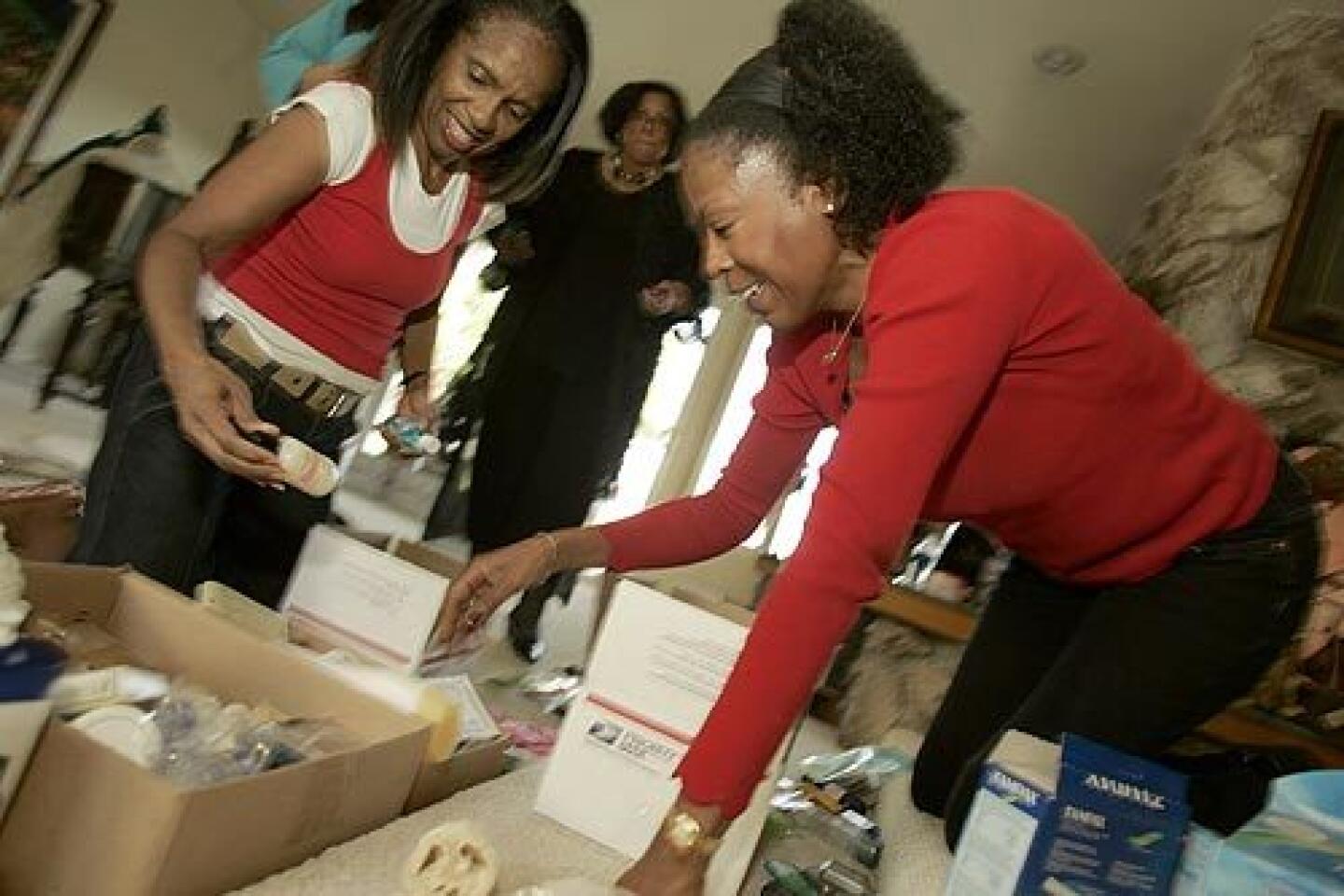
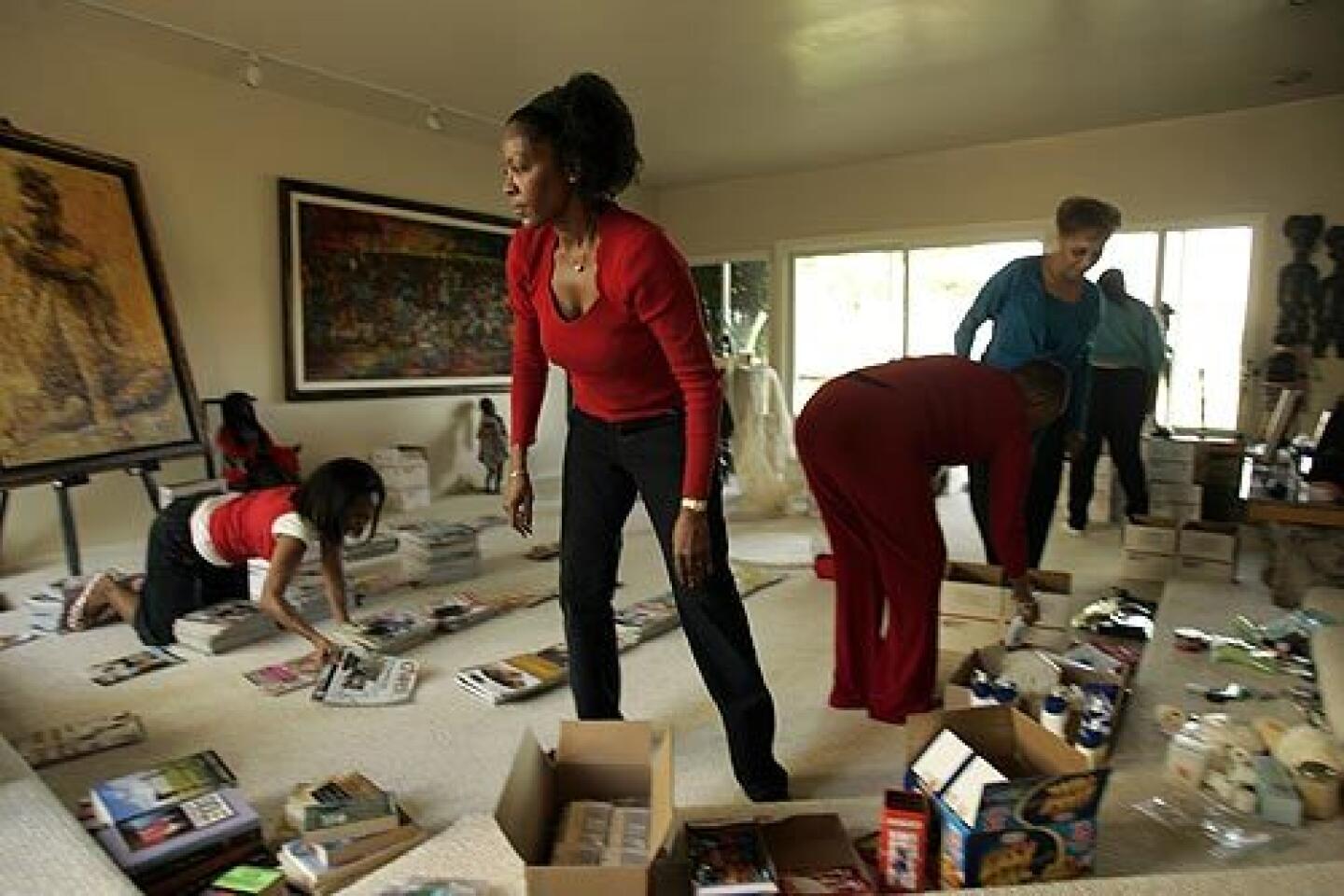

At a pre-Christmas “packing party” almost 8,000 miles away in Los Angeles last month, Dawn Sutherland’s living room was strewn with piles of goodies such as black hair products and manicure sets, T-shirts and the latest issues of Essence and Ebony magazines.
They weren’t Christmas gifts for family and friends. They were to go into care packages for “sister soldiers” in Iraq.
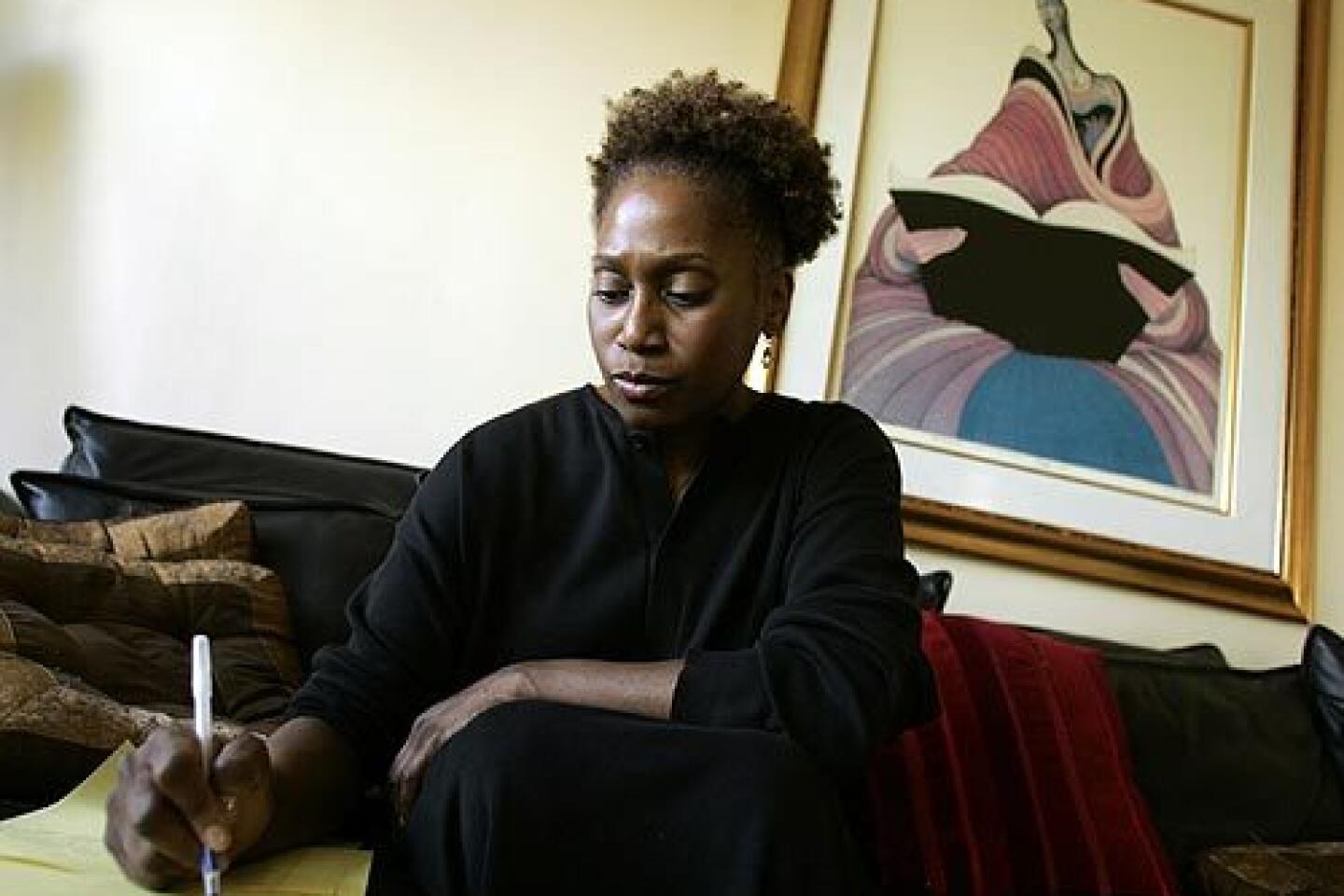
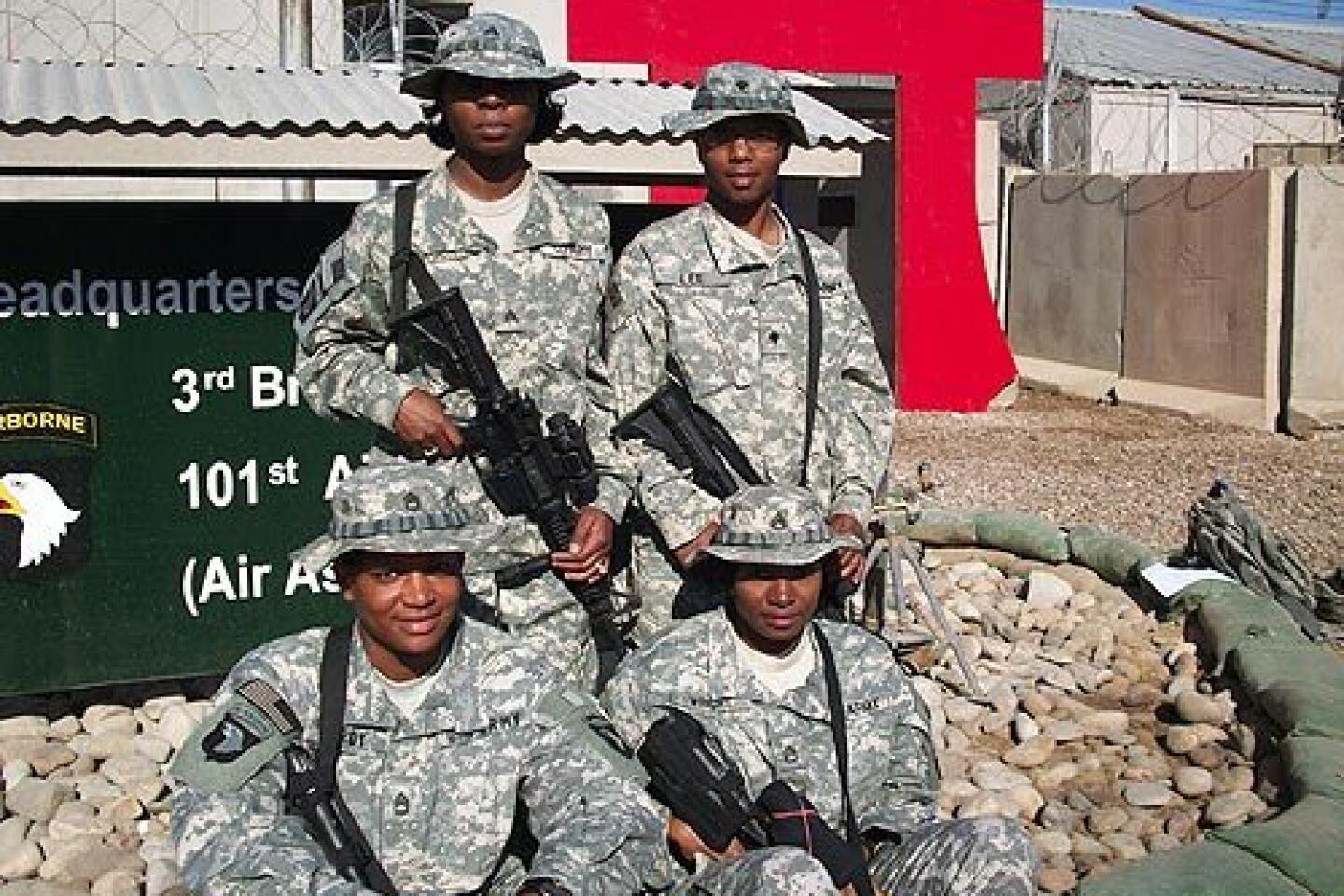
Moved by the unique challenges many black women say they face when deployed in war zones, Sutherland and her book club, a group of professional African American women called Sisterfriends, have “adopted” about 40 servicewomen.
“We wanted to reach out as black women to other black women in need,” said Myraline Morris Whitaker, a member of Sisterfriends. “We thought we were looking at our younger sisters. We wanted to get them what they need to make them feel comfortable, and make them feel positive about themselves.”
Morris Whitaker, a hotel consultant based in San Luis Obispo County, got the idea to help after a conversation with a former Marine who said one of her strongest memories of being deployed was the struggle her African American roommate faced in dealing with her hair.
So Morris Whitaker began surfing the military support website anysoldier.com, a kind of clearinghouse for care package wish lists.
“I was amazed at how many requests there were, especially for black hair-care products,” Morris Whitaker said. “Almost everyone who identified herself as African American asked for hair-care products.”
But the appeals on the website sparked more than concern about mane management.
“We want to give them nourishment for the soul, as well as for their hair,” said Morris Whitaker, who, independent of her book group, has sent 25 boxes to African American military personnel in the last year.
A request sent last April by Sgt. 1st Class Tamara Williams, 39, of Detroit particularly caught Morris Whitaker’s attention.
Williams, who is based at Camp Victory in Baghdad, asked for “magazines (People, OK, Essence) anything to keep you sane or laughing,” and “DVDs (action, scary, comedy) again, anything to take your mind [off] our current plight momentarily.”
Williams had just learned of the Defense Department’s decision to extend the tours for all active-duty Army units in Iraq and Afghanistan from 12 to 15 months. “Needless to say, we have some very grumpy soldiers,” Williams wrote on the website.
Morris Whitaker promptly sent many of the items on her list.
“I’m forever grateful,” Williams said recently at Camp Victory, speaking about her experience in Iraq and the gratitude she feels toward people such as the book club members. “It’s been a blessing.”
Although there are many ways to donate goods to troops deployed to Iraq and other places, African American female soldiers said it was rare to find groups specifically for them.
There are almost 8,000 blacks among the 25,600 or so women deployed in Iraq, Afghanistan and other countries supporting the U.S.-declared “war on terror,” according to statistics from the Defense Department.
Many of the experiences, challenges and dangers black women face are shared by all female soldiers.
Many have left children at home. In places such as the Middle East, they have to deal with a culture that largely views men as superior. And female soldiers sometimes feel they must work harder to prove themselves in the male-dominated military.
Some black female soldiers, however, believe that certain challenges are more acute for them, such as learning not to take offense at the grins, awkward stares and sometimes overly enthusiastic attention from those Iraqis who have never had direct contact with a black person. They also must deal with some fellow service members’ fixed notions about them.
And a factor not to be underestimated is the lack of products specifically designed for African American hair and skin.
“My hairdresser back home would make a killing if she came out here,” joked Staff Sgt. Kathaleen Wright, 34, from Augusta, Ga., who is on her second 15-month tour in Iraq. A fuel transporter, currently assigned as a noncommissioned officer in charge at Camp Stryker in Baghdad, she wore her straightened hair in a short bob.
The commissaries at the military bases typically have a section of goods such as hair oils and straightening perms for black customers, but these products fly off the shelves as soon as they are stocked, soldiers said.
Making matters worse, they sometimes have trouble finding a hairdresser on base who knows about grooming black hair.
Sgt. 1st Class Kerensa Hardy, 33, a public affairs officer, wanted to make sure her hair would be manageable during deployment, so she cut her once-long tresses into a short-cropped style.
Hardy also shipped tubs of her favorite Maison brand hair-care products to Iraq before leaving her home in Fort Lauderdale, Fla. Like many other “sister soldiers,” she has learned to chemically straighten her own hair -- a procedure typically done at a salon every month to six weeks.
Spc. Shani Lee, 23, a supply clerk from Queens, N.Y., has taken to wearing her hair in braids. She also was helping fellow soldiers who had decided to “go natural.”
“I even pass out cards,” said Lee, who said she has established a steady clientele at Camp Stryker.
Many of the soldiers were quick to underscore that their concerns about hair care was not just a matter of vanity.
“It’s a pride thing,” Hardy said.
Using an expression common among some young urban blacks, Wright added, “We represent for every black female.”
Although the U.S. military presence in Iraq will soon enter its fifth year, the sight of female soldiers is still unusual to many Iraqis. Being black intensifies the curiosity, many soldiers said.
“It’s not often that they see black females; it’s different for them,” said Quiannette Crowder, 30, a supply sergeant from Palmdale who recalled the stares of fascination when she sported a hairstyle of “micro-braids.”
“They’re very friendly, and very interested in who you are,” said Wright -- especially the men. “They say, ‘You’re beautiful. Do you have kids? I have many wives. Do you have many husbands?’ ”
Then, the soldiers said, the Iraqis usually want proof of their encounter with a black person.
“They always want to take pictures . . . constantly,” said Williams, a senior human resources sergeant who is assigned as an administrative assistant to the No. 2 U.S. commander in Iraq, Army Lt. Gen. Raymond T. Odierno.
Although the appeals for photos can sometimes be excessive, Williams and other black soldiers said they typically obliged. In fact, some said they felt Iraqis showed a greater appreciation of their skin color than their fellow Americans.
But the soldiers also acknowledged that they sometimes had to assert their authority among Iraqi men, not because they are black, but because they are women.
They also have problems , they said, with some American service members in Iraq who have preconceived views of black women.
“There are already stereotypes when you come in here, that you don’t want to do your part,” said Wright, noting that she grew up in the projects, which could cause some to typecast her.
The frustration, many of the women said, was their having to sometimes fight prejudice within their own ranks while fighting a war.
Eager not to “screw up anything” on her first assignment as a supply sergeant whose duties include keeping account of her unit’s property, Crowder said she often worked 15-hour days without leaving her station even for lunch. As the sole female supply sergeant in an infantry battalion, she also said she felt like “a loner.”
Such accounts resonate with Morris Whitaker and her book club friends.
“We feel a kindred spirit with them,” said Sutherland, the leader of the group, which also serves as a support network for black women in Southern California.
Last year, the book club held two “packing parties” during which they collected enough goodies to fill 64 boxes. Some of the women scoured their closets for things they had bought, but never opened, such as toiletries and stationery. Others shopped for new T-shirts, socks and sweats. Many donated used books and magazines.
Morris Whitaker said the boxes went to black servicewomen in Iraq, Afghanistan and Kuwait. Sisterfriends members chipped in to cover the costs of mailing.
“We feel we are contributing to their well-being,” said Sutherland, whose group hopes to host four packing parties this year. “Usually the general population has more family support and more community support. And a lot of [black soldiers] are over there because they don’t have any alternative.”
Hardy said many of her relatives didn’t approve of her being in the Army, but she viewed it as a means to earn money and establish a solid foundation for her 4-year-old daughter, Mia. “She is my life,” said Hardy, a single mother who reminds the toddler during their frequent phone chats that “everything I do is for you, so Mommy can bring you the things you need . . . so that when you grow up, you don’t have to do this.”
Crowder, an engaged single mother of a daughter, 13, and son, 10, concurred. “All I do is to make a better life for them. I want them to grow up and have a choice and not be forced to wear this uniform.”
Tears welled in Wright’s eyes as she spoke about “the hurt” of being away from her husband and her children, ages 18, 10 and 5.
Williams, the mother of a 13-year-old daughter, Tiana, managed to complete her master’s in business administration by taking online classes while in Iraq.
She said family and friends had given her much support but that the assistance and generosity of strangers, such as the book club members, also helped boost her morale.
“I’ve been blessed to have the opportunity to connect with some beautiful women who encourage without even trying,” Williams wrote in a recent e-mail to the book club. “God bless you all, and thanks for everything you’re doing for the African American female.”
In a card Crowder sent to Sisterfriends after receiving a care package at Christmas, she thanked the group for being so thoughtful at a time of year “when we really need the support.”
Receiving the packages, she wrote, “made my heart full.”
She signed her card, “Sister Soldier.”


Start your day right
Sign up for Essential California for news, features and recommendations from the L.A. Times and beyond in your inbox six days a week.
You may occasionally receive promotional content from the Los Angeles Times.