-
Click here to listen to this article - Share via
See more from the L.A. Times in Google Search. Set us as preferred
I once held what seemed to be a perfectly rational belief: that even the staunchest supporters of Donald Trump would change their minds once his incompetence and hatred directly affected them. That logic tracked with the dominant narrative of the last decade, going back to when pundits first claimed that Trump supporters were motivated not by hatred but by something called “economic anxiety.”
Trump’s economy has now arrived, and it’s as catastrophic as the experts predicted. Despite his promises not only to curb inflation but also to bring prices down, there is no relief in sight, because Trump never had a plan for dealing with any of that. Housing remains out of reach for many, unemployment is rising, and, thanks to the Big Beautiful Bill Act, Medicaid is about to eject millions of recipients to help offset a budget-busting tax cut for rich people.
Across the country, Republicans are discovering that their loyalty was a one-way street. A red county in Maryland lost its badly needed FEMA aid. A Nebraska clinic closed due to imminent funding cuts. In North Dakota, Trump’s tariffs have cost soybean farmers the Chinese market. An Indiana cement factory lost a $500-million grant to reduce its carbon footprint because the administration doesn’t believe that climate change is real. And now, a government shutdown hinges on Trump’s refusal to provide subsidies to people on Obamacare — many of whom voted for him.
This time, the stagnation cannot be pinned on a once-a-century pandemic. Instead, it’s the self-inflicted wounds — government layoffs, education cuts, tariffs, deporting essential workers — that are causing havoc. But there should be good news too, right? We’ll see that the Trump movement really was about economic anxiety all along, because supporters will surely renounce Trump now that his promise to fix the economy on day one (along with Ukraine and Gaza) is more than 200 days late.
But no. We all know what’s going to happen instead. Trump supporters will progress through the same stages of denial that we saw during the pandemic. First, they’ll say that what’s happening isn’t really happening. Then they’ll say it’s not that bad. Then they’ll accuse Democrats of politicizing the issue. All while their own lives are threatened. Or destroyed.
While that position evolves, we’ll continue to hear the tired claim that left-leaning politicians and celebrities are to blame, because they pushed people away with their wokeness. According to this interpretation, Trump supporters have been mostly concerned with kitchen-table issues, and charges of cultish behavior and xenophobia are overblown accusations from the left. If only the mean liberals would stop complaining about racism, then MAGA would be nicer!
In other words, if you believe this interpretation, saying “I told you so” to MAGA fans will only make things worse.
I disagree. We should be shouting “I told you so” from the rooftops. Hashtag it. Flood TikTok with it. Slap it on every piece of merch from hats to chip clips. Make it rattle in people’s heads through the next few election cycles.
For anyone reluctant to do that, for anyone still hoping for constructive dialogue after a decade of lies, consider the fact that for years now conservatives have been lecturing the country on how to respectfully talk to MAGA supporters and — surprise! — it turns out that they’ve been acting in bad faith all along. Instead of encouraging better conversations, Trump apologists sought to control the discourse by invalidating any and all criticism, and by cultivating a sense of apathy so bottomless it could excuse anything. In their world, Trump supporters can never be held responsible for what they’ve done. In their world, calling out bigotry is the real bigotry. They see resisting cruelty as worse than actual cruelty.
I often wonder if that kind of permissive “you made me do it” mentality is what is truly to blame for our current predicament. Saying “I told you so” rejects that condescending idea. It may not change minds, but it treats Trump voters like fellow adults for once. Call it the opposite of gaslighting. It is a basic sanity check that resists the administration’s efforts to rewrite history. And it reminds everyone that no matter how frustrated we may be with politics, we have a responsibility to learn, and to think of others, rather than burning everything to the ground out of spite and tribal loyalty.
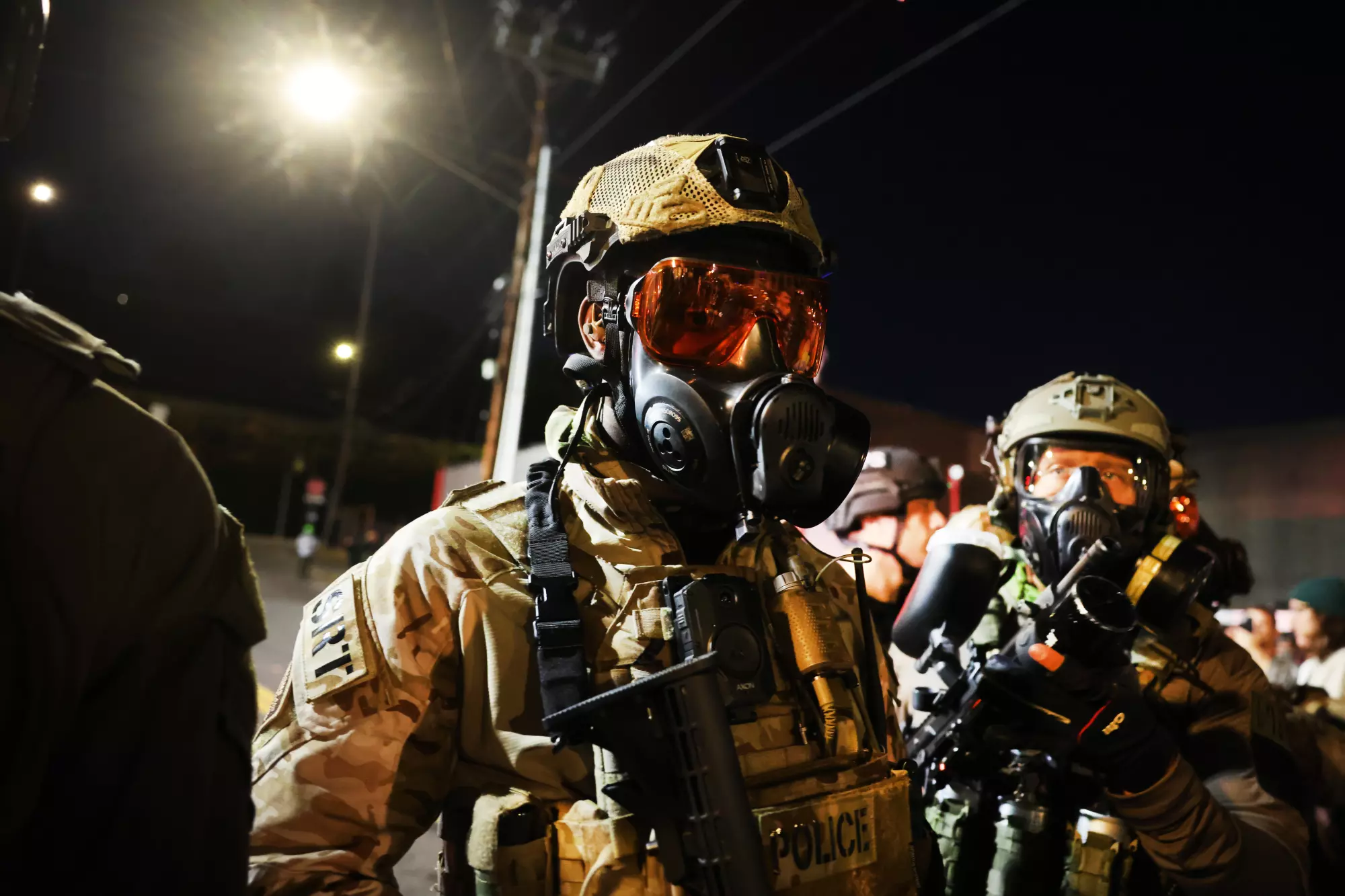
But far more important is this reality: Our country really is sliding toward autocracy, a system that thrives on dead silence. In the span of a few months, Trump has usurped fiscal and law enforcement power from both Congress and the states, while unleashing bands of masked police harassing and deporting people without due process. Trump has made billions of dollars since returning to power, while stifling the Epstein investigation that he promised to resolve, and while threatening to censor networks that question him. As Trump has demonstrated, authoritarians don’t handle criticism well, especially when it can be packaged in a simple phrase.
Saying “I told you so” may feel like holding a single candle in the dark. Enough of them would generate some badly needed light.
With dialogue at a stalemate, we might as well reduce what we need to say to simple truths: We tried to warn you. You didn’t listen. Now the consequences are here. So we’re going to keep saying, “I told you so.” Maybe this time you’ll listen to your neighbors who are affected by all this, or to the people who interact with immigrants, or who work in jobs that Trump has deemed a waste, or who live in cities that Trump claims are overrun with crime. Or maybe you won’t. But I suggest you get used to hearing us say it. “I told you so.” After all, you made us do it.
Robert Repino is an editor of religious studies and history for Oxford University Press. His essays have appeared in Slate, Religion Dispatches, the Baltimore Sun and Sojourners.


Insights
L.A. Times Insights delivers AI-generated analysis on Voices content to offer all points of view. Insights does not appear on any news articles.
Viewpoint
Perspectives
The following AI-generated content is powered by Perplexity. The Los Angeles Times editorial staff does not create or edit the content.
Ideas expressed in the piece
The author contends that Trump’s economic policies have proven catastrophic as experts predicted, with no relief from inflation, rising unemployment, and housing remaining unaffordable despite promises to bring prices down. The author argues that Trump never had a concrete plan to address these economic challenges, resulting in widespread hardship across the country.
Furthermore, the piece asserts that Trump supporters are experiencing direct negative consequences from policies they supported, including lost FEMA aid in red counties, clinic closures due to funding cuts, farmers losing markets due to tariffs, and factories losing grants due to climate change denial. The author maintains that these are self-inflicted wounds from government layoffs, education cuts, tariffs, and deportation of essential workers.
The author rejects the narrative that Trump support stemmed from “economic anxiety,” instead arguing it was fundamentally rooted in hatred and bigotry. The piece suggests that the “economic anxiety” explanation was a cover for more troubling motivations, and that current economic failures expose this reality.
Additionally, the author advocates for abandoning constructive dialogue with Trump supporters in favor of repeatedly saying “I told you so,” arguing that attempts at respectful conversation have been ineffective and conducted in bad faith. The piece contends that this direct confrontation treats Trump voters as adults and serves as a necessary sanity check against gaslighting and historical revisionism.
Different views on the topic
White House officials dispute claims of economic failure, with spokesperson Kush Desai arguing that Americans heard similar predictions during Trump’s first term when his economic agenda instead delivered “historic job, wage, and economic growth and the first decline in wealth inequality in decades”[1]. Officials maintain that tax cuts, tariffs, deregulation, and energy policies will prove forecasters wrong again in the second term.
Economic data presents a more complex picture than complete failure, with the U.S. economy growing at a 3.0% pace in the second quarter, surpassing economists’ expectations and contradicting nearly three-fourths of surveyed Bloomberg economists[2]. Consumer spending growth accelerated from 0.5% in the first quarter to 1.4% in the second quarter, while the Federal Reserve’s preferred inflation measure fell to 2.1% in the second quarter.
Manufacturing indicators show positive trends that contradict claims of widespread economic damage, with auto output rising at a 35.5% annual rate and manufacturing output surging 1.8% in the first five months of Trump’s second term compared to a decline in the final months before his inauguration[2]. These figures suggest that certain sectors are experiencing growth rather than the uniform decline described in criticism.
While economic forecasting organizations like the Congressional Budget Office project challenges ahead, including expectations that GDP growth will slow to 1.4% in 2025, they also anticipate recovery with growth reaching 2.2% in 2026[1]. This suggests that current economic difficulties may be temporary adjustments rather than permanent failures of policy.
More From the Los Angeles Times


Podcasts

In 2005, there was no bigger show in L.A. than USC football. The players were household names, celebrities crowded the sidelines, and the wins kept piling up — until Texas came to town.
California once bet big on offshore wind to help power its clean-energy future, but the Trump administration is now paying developers billions to walk away from their projects. As California’s remaining offshore-wind leases hang in the balance, the state is fighting back in court.

The Hillside Strangler murders terrorized Los Angeles in the late 1970s. The killers were a pair of sadistic cousins. One confessed. The other was set to stand trial—until L.A. prosecutors flinched.


