New housing projects for homeless go beyond basic shelter

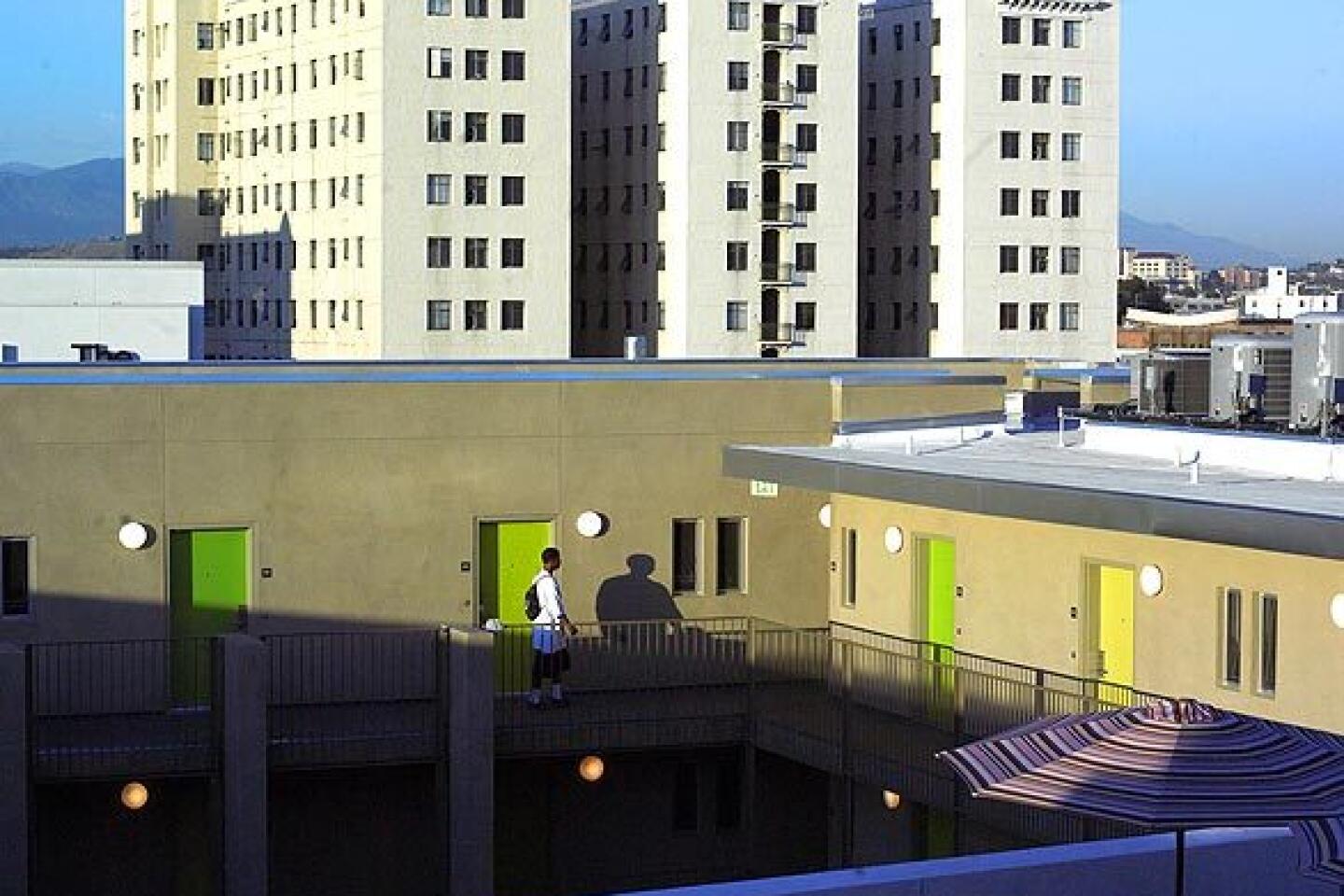


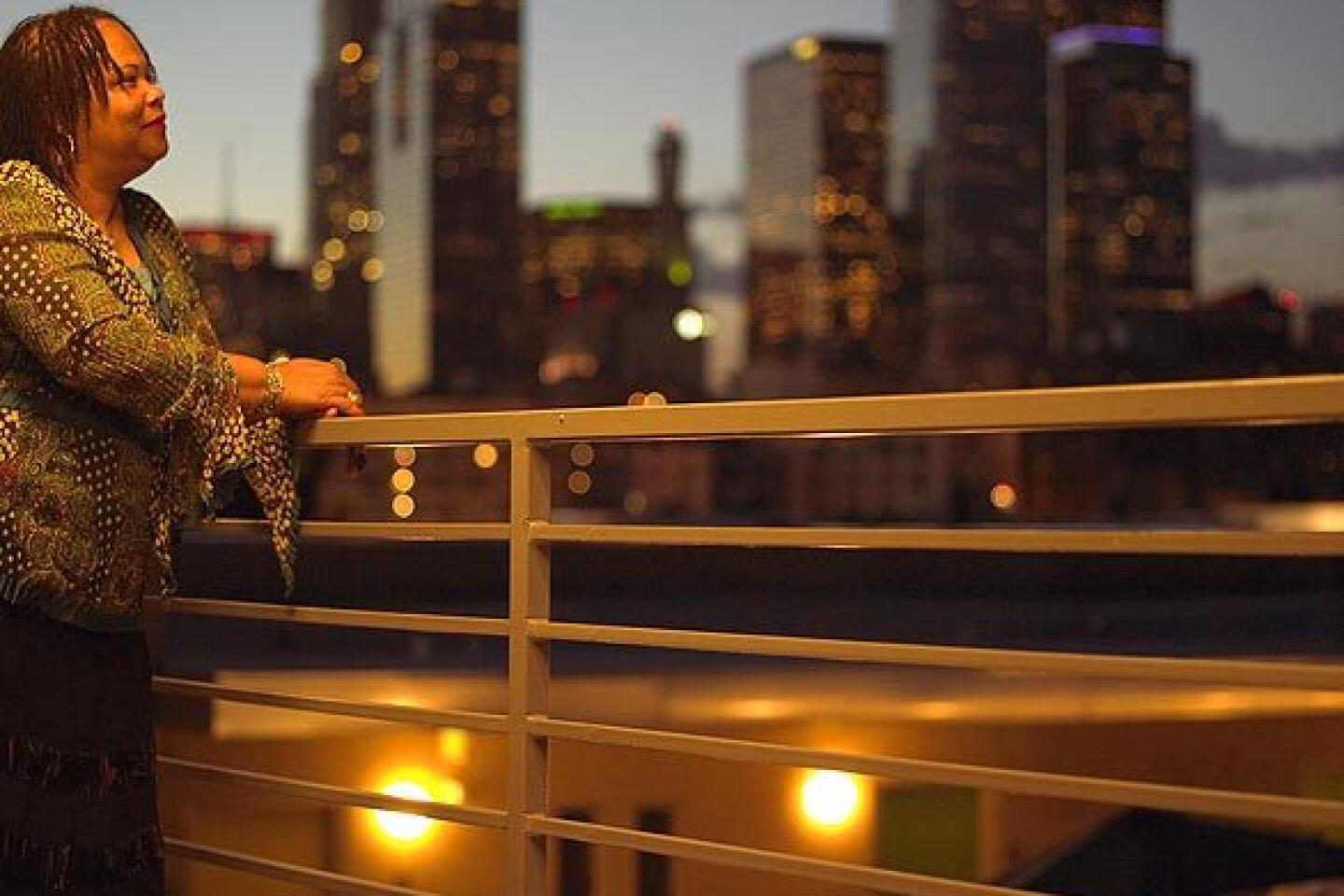

It’s the day before the grand opening of the Abbey Apartments, where 113 formerly homeless men and women will try to rebuild 113 broken lives. Mike Alvidrez, executive director of the Skid Row Housing Trust, swings through the sunny courtyard, shows off the TV lounge, then climbs to the fifth floor sun deck where striped patio umbrellas sway in the afternoon breeze. In the distance: a panorama of the downtown L.A. skyline that would make most loft dwellers envious.
But the tour isn’t over. Alvidrez moves to another vista point, this one overlooking the courtyard of the Downtown Drop-In Center next door. Dozens of people pack an asphalt lot. One man sleeps next to a bike, its handlebars weighted with belongings. Others sit by pushcarts overloaded with blankets and jackets. On the street beyond lies a woman with even less -- just a cardboard condo, a filthy box that shields her from flies and an even filthier sidewalk.
FOR THE RECORD:
Homeless: An article in the April 25 Home section on new building designs for formerly homeless residents in downtown Los Angeles incorrectly attributed the following quote: “I’m 63. This apartment isn’t what I envisioned my later life to be.” The quote was mistakenly attributed to Denise Drinkard, 48, but it should have been attributed to Pamela Parker. —
That distinction between basic shelter and genuine home is being made, eloquently, here on skid row, where some of the most compelling housing in the city is being built for those who have none. The Abbey, which held its grand opening April 16, and other recent projects attempt to move beyond the architecture of survival. They represent the architecture of ambition -- the desire to do better, despite the odds. Provide a bed and bathroom, sure, but also furnish residents with security, stability and, most important, hope.
These buildings raise intriguing questions about the power of design to change lives. Can the placement of a lounge really foster social interaction among people who often have lived for years, sometimes decades, in emotional isolation? If the street outside is a vision of urban grit, do residents really want a window to that world? If you put a nurse, a psychiatrist and a social worker inside a home, will residents eventually see them as extended family worthy of trust?
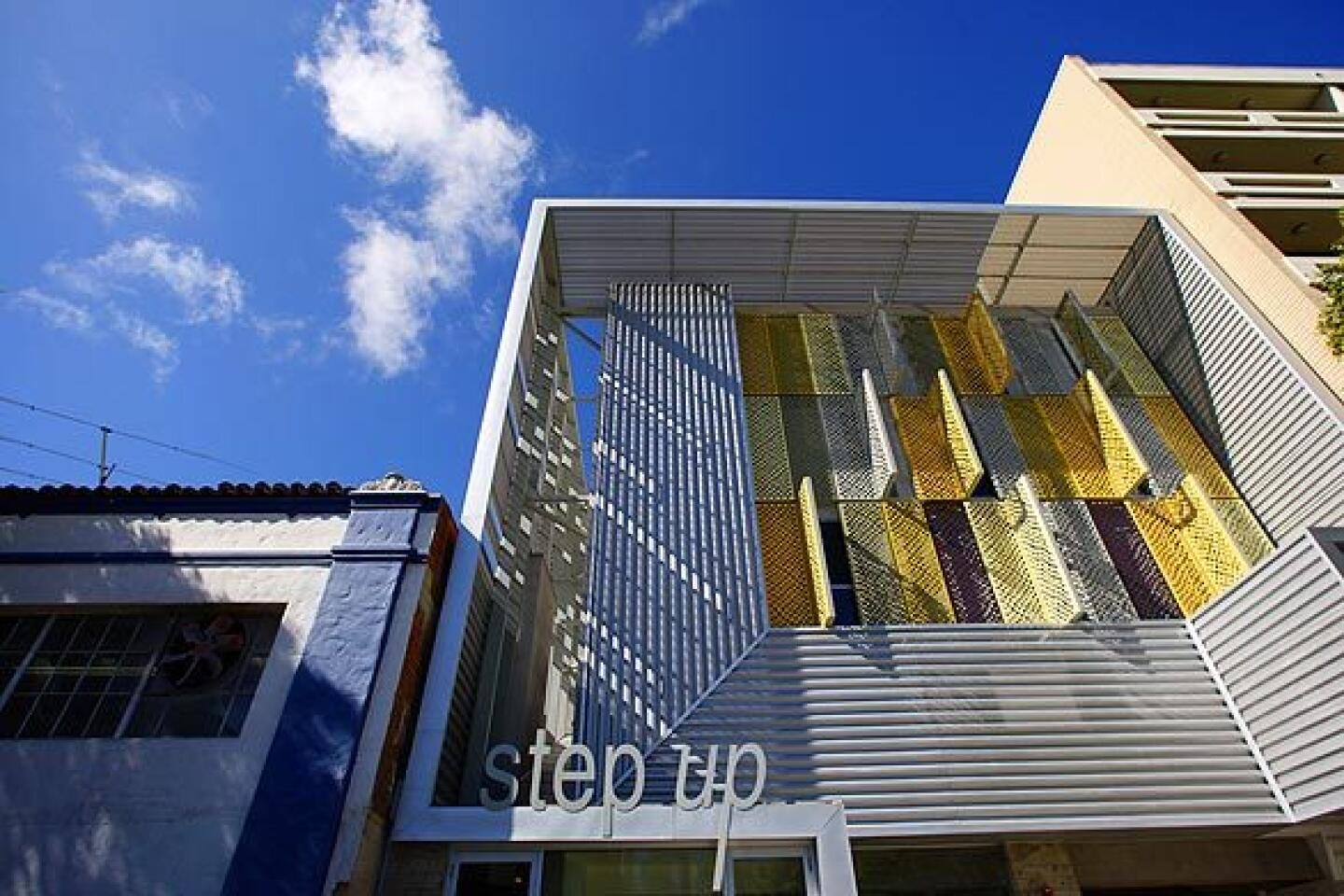
For some initial answers, head to San Pedro Street and the new Abbey, designed by Santa Monica-based Koning Eizenberg Architecture, and the 2 1/2 -year-old Rainbow Apartments next door, by Los Angeles-based Michael Maltzan Architecture. Both are developments of the nonprofit Skid Row Housing Trust, which operates under the philosophy that the most effective and least expensive solution to homelessness is more homes -- not a patchwork of shelters but permanent homes that feel safe, foster healing and, yes, look good.
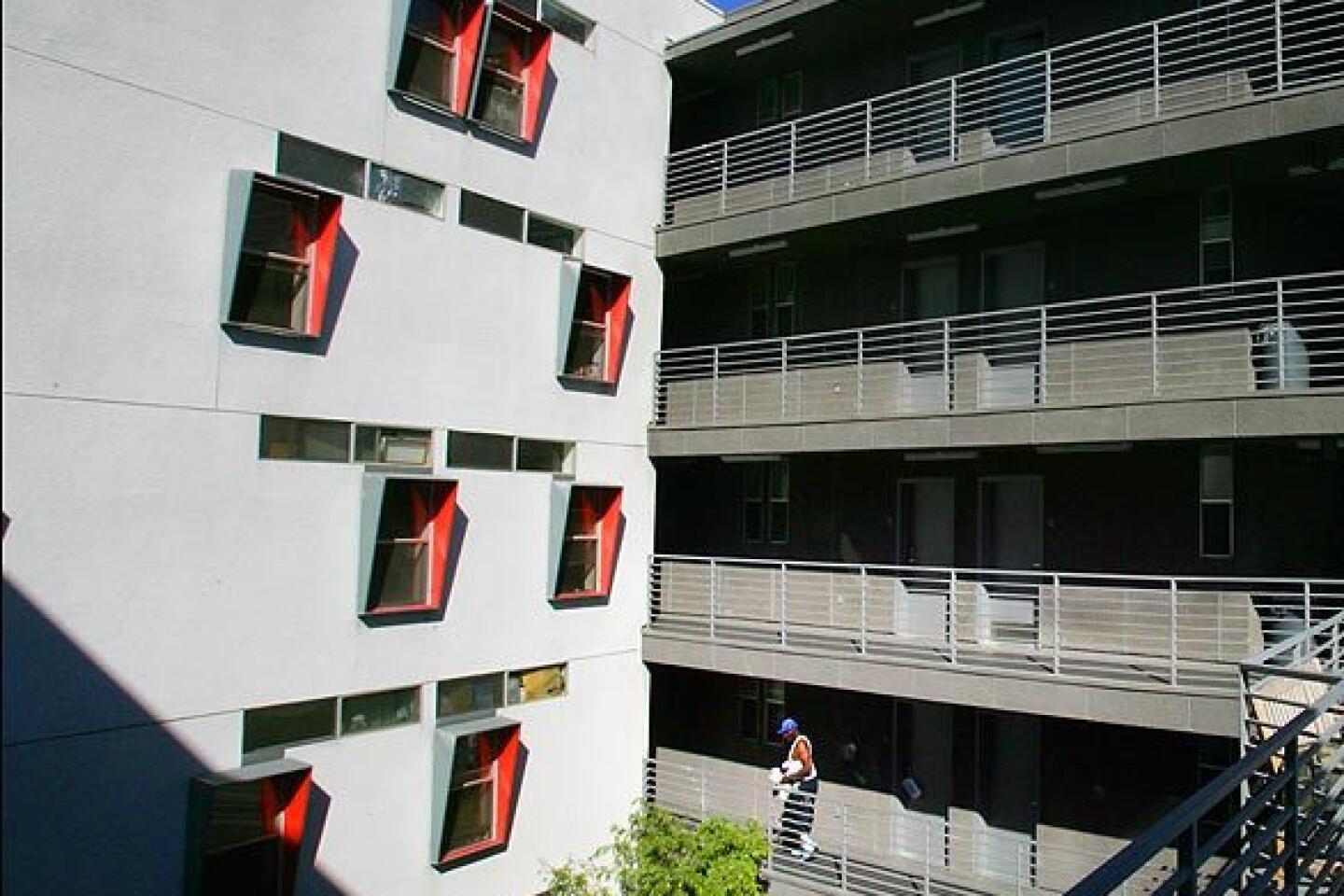
Rainbow and the Abbey make an effort to have street appeal -- the former with angular orange window shades, the latter with the kind of colorful window graphics and sculpted concrete blocks on the facade that you’d expect to see outside a cafe or Pinkberry knockoff.
The message to the neighborhood: You deserve more than a budget-driven box.
Because most residents have at least two disabilities, and because substance abuse or mental health issues often caused or contributed to their homelessness, crucial services are provided in ground-floor offices. Residents can see a nurse, doctor, counselor or case manager in a setting that looks more residential than institutional. The Abbey’s polished concrete floor, board-formed concrete walls, exposed ventilation ducts and splashes of chartreuse paint all feel more like a loft than a waiting room.
“A lot of these folks have been through the system and failed -- the education system, the foster care system, the mental health system,” Alvidrez says.
Negative experiences prompt residents to distrust other people. But as they see the same faces day in and day out, they grow more comfortable with staff. They reach out for help, and the neighborhood where they once felt ignored by society becomes the place where they find a new family.
“This isn’t just the community where lives fell apart,” says Molly Rysman, Skid Row Housing Trust special projects director. “It’s the community where they found recovery. This is where people come to start over.”
::
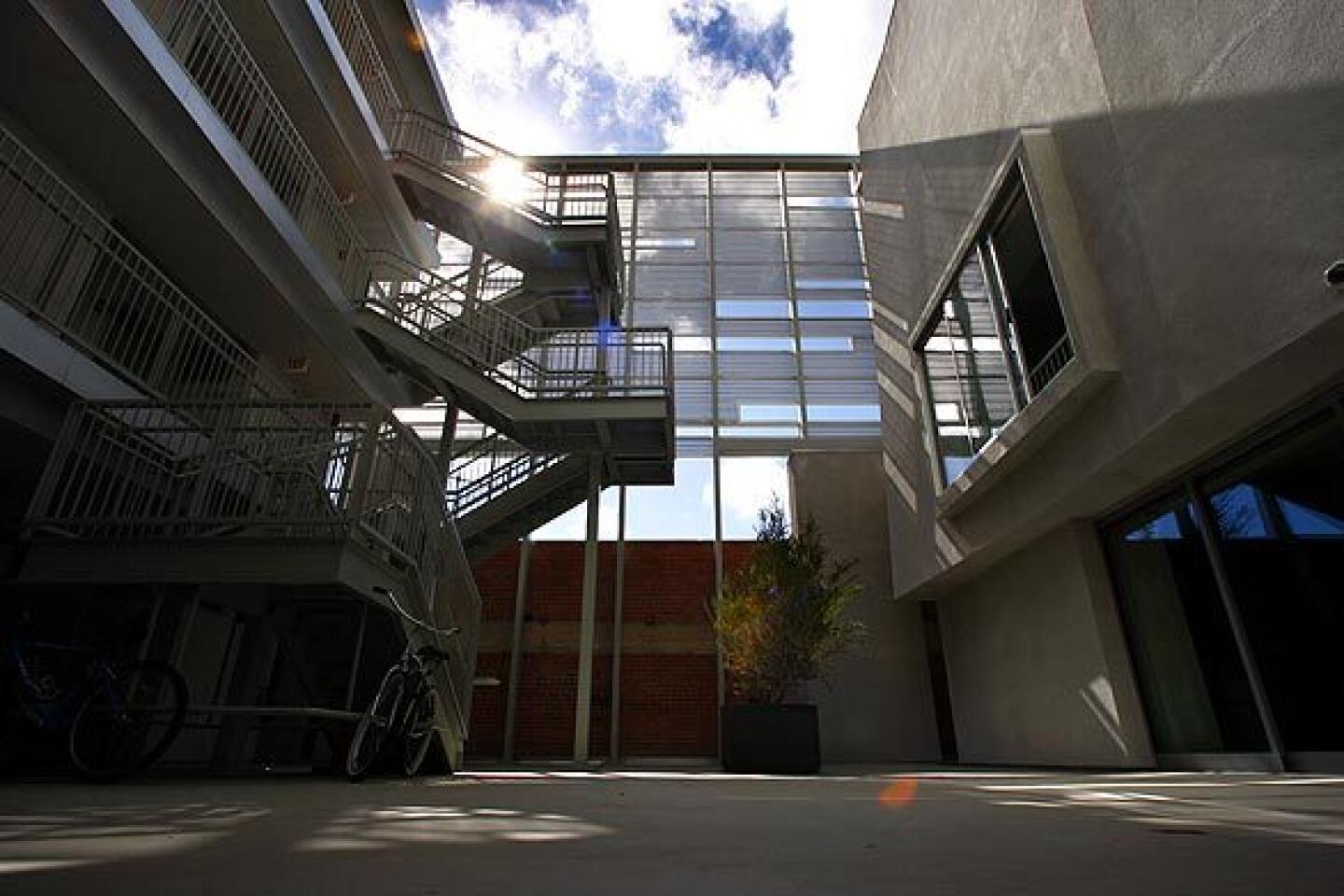
The Abbey and Rainbow perform a complex balancing act, allowing residents to stay connected to the outside world while trying to create a physical and psychological haven inside. Each building has a broad, open-air staircase that leads residents to a private second-story courtyard. The street may be just a few dozen steps away, but the heart of the complex feels calm and protected.
Rainbow residents have raised plywood beds where they’re growing onions, peas, carrots and more. Built-in planters at the Abbey hold timber bamboo and ornamental grasses -- “more green for a concrete jungle,” Alvidrez says.
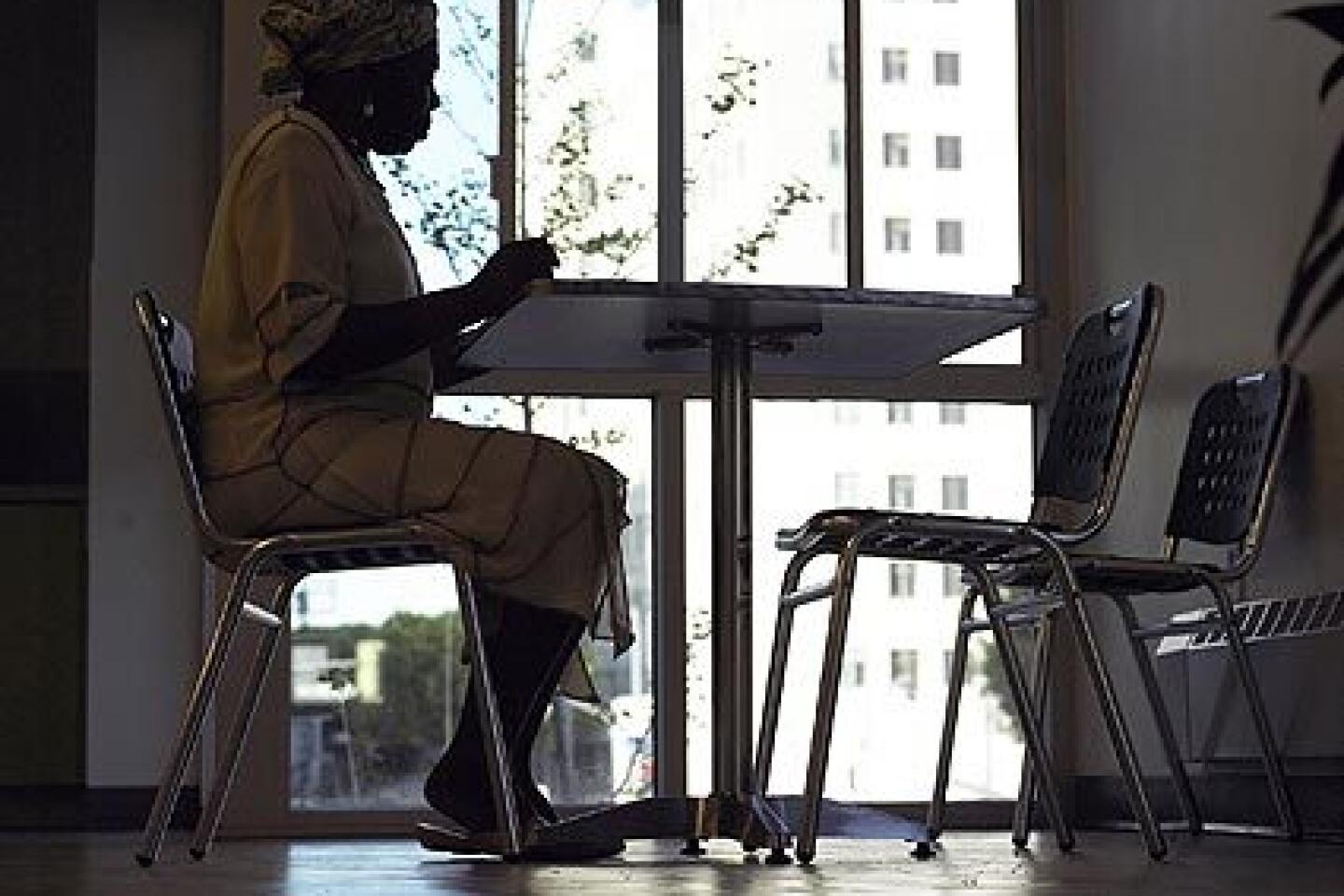
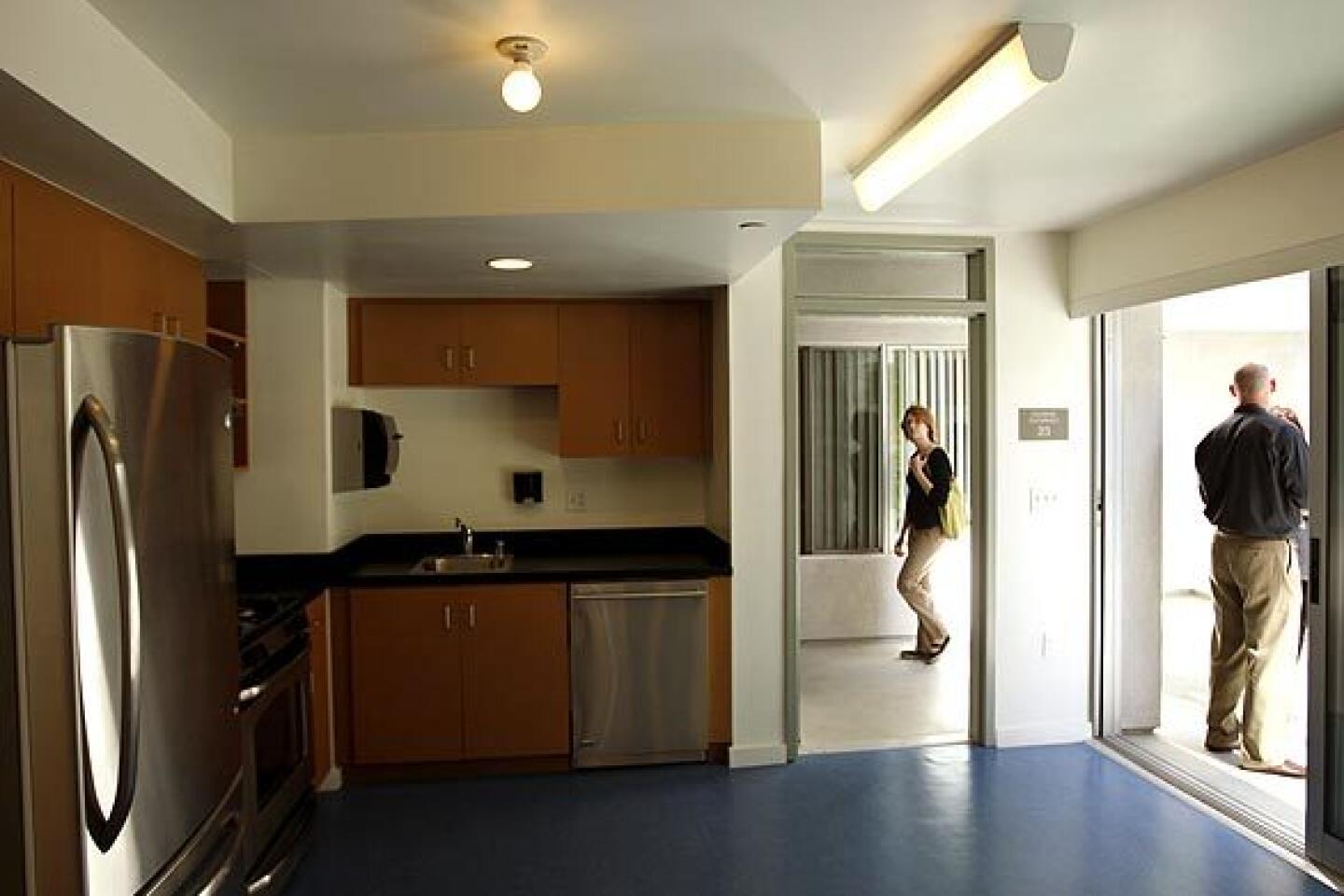
Each courtyard is meant to be a hub of life, a place where residents can note comings and goings, call out to friends and otherwise have their own neighborhood within the neighborhood. TV lounges and large kitchens with industrial ranges offer a collective retreat, a place to watch a game with buddies or cook with friends. The rooms are built with lots of glass, so passersby can look in, see who’s there and say hello. Even the laundry room, so often pushed to the corners in traditional apartment buildings, is centrally located at the Abbey -- another spot to make connections.
Alvidrez and Rysman say it’s no surprise that 2 1/2 years after opening, Rainbow has a sense of community that exists in none of the trust’s 20 previous projects, many of them rehabs of older buildings. Though studies haven’t quantified the connection between design and socialization in supportive housing, officials say the conclusion here is clear: The architecture builds relationships. Residents who once had little or no structure in their lives have formed a gardening group, an art class, a photography club and a women’s group, among others.
When they want their own private space, they can retreat to one of 89 apartments with natural light streaming in from the front and back. By making one window a horizontal band of glass placed high on the wall, Maltzan provided another gift: an edited view -- a blue sky full of possibility on most days and, as one resident noted, a gentle moon at night.
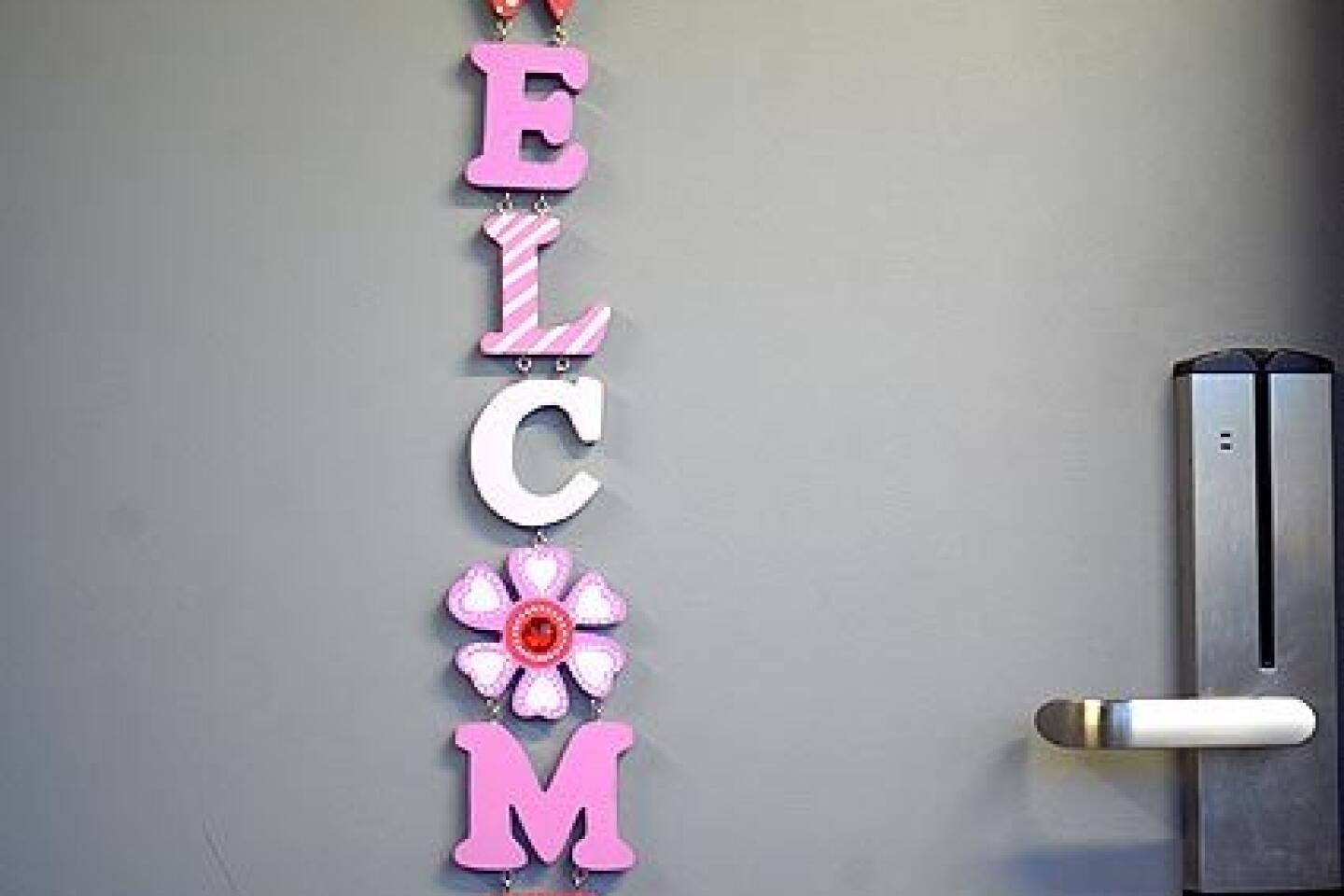
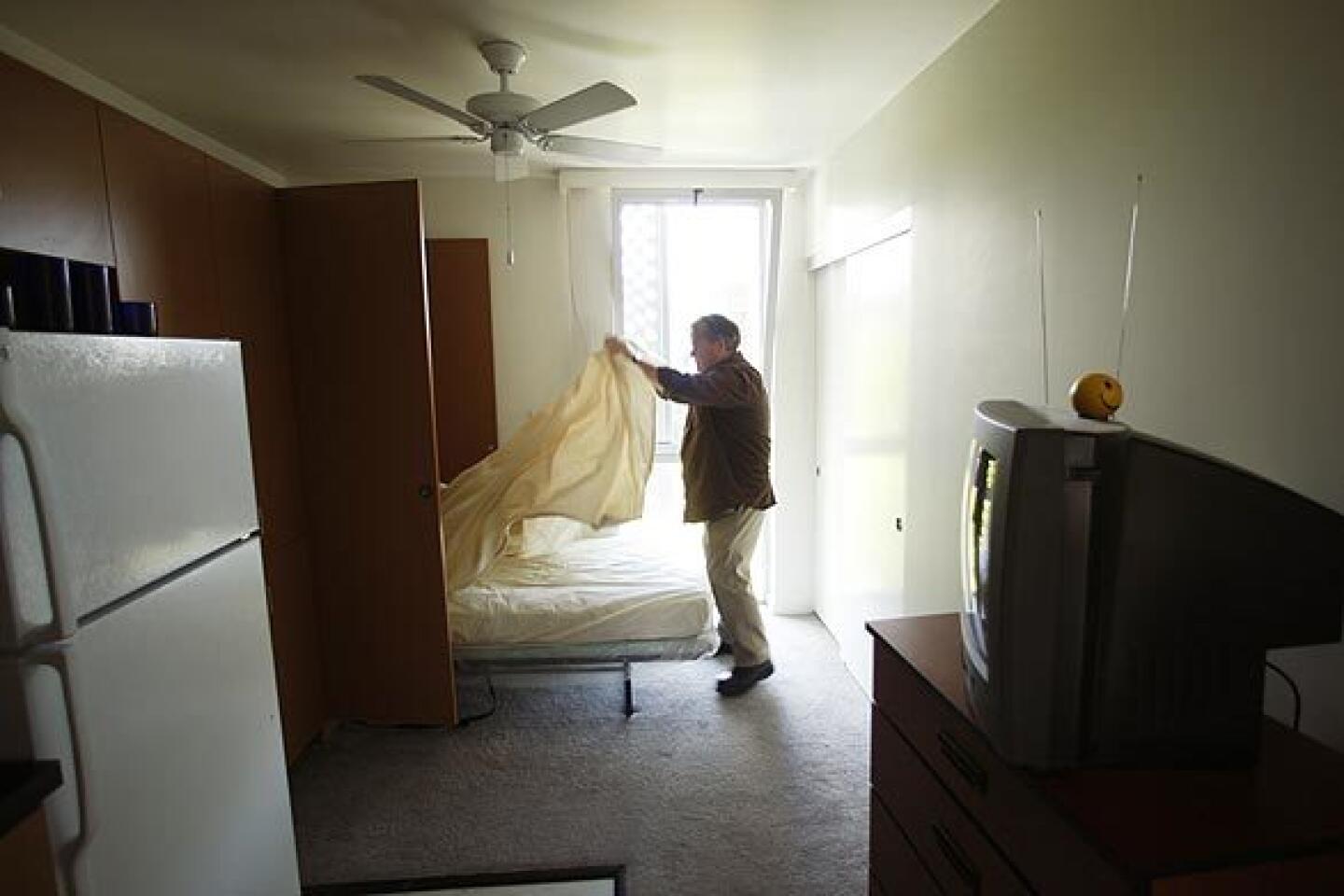
Abbey residents rave about additions such as ceiling fans and personal mailboxes. And then there are the doorbells -- tiny but powerful symbols of civility and control, of what it means to have a real home.
::
With her hair artfully draped over one eye and a silver heart dangling from her necklace, Pamela Parker greets visitors with a broad smile and genuine enthusiasm for her new home at the Abbey. The studios here, each 330 to 370 square feet, accommodate a twin bed, dresser and nightstand in a faux-maple laminate. Sheet-vinyl flooring looks remarkably like oak planks, and the kitchenette includes a sink, stove and small refrigerator -- a reminder that the days of institutional dining are over, and residents once again can cook what and when they want.
Parker accepts it all with gratitude. She says she had lived on the streets for four years, making a home behind garbage bins and in bushes in Santa Monica. After she spent three nights in jail for sleeping on the beach, she bounced from shelter to shelter, including one where 130 women in bunk beds filled a single room. That was bad, but the street was worse.
“I didn’t want to close my eyes because then my stuff could get stolen,” she says. “I don’t have to worry about that now. I can sleep through the night -- with both eyes closed.”
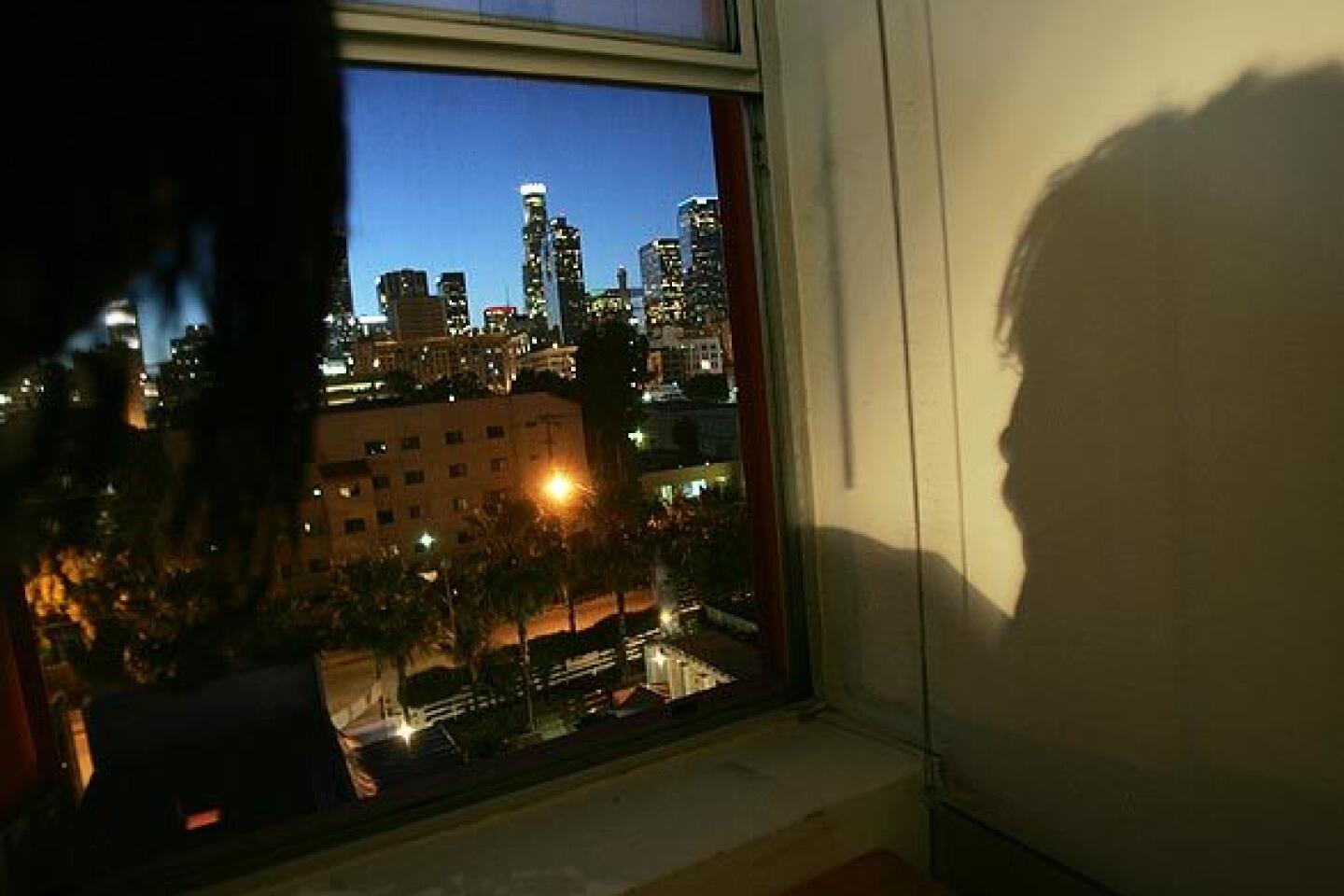
Denise Drinkard and Nia Layton have lived in Rainbow since it opened. Layton had been on and off the streets for six years, most recently at a shelter where she shared a bedroom with three women. Her studio at Rainbow may be petite, but “it’s like having your own sanctuary where you can have your own peace,” Layton says. “I open up my window at night, and all I see is the skyline lit up. You know what I call that? I call that hope.”
Drinkard’s window has a more sobering view -- grim San Julian Street -- but she doesn’t mind. It’s a reminder of where she came from and where she’s going.
“I’m 63. This apartment isn’t what I envisioned my later life to be,” Drinkard says, and though she can stay for as long as she wants, she hopes to do better for herself. “This is not just the end. It’s a beginning.”
Just as the residents are aiming higher, so too are architects. Maltzan’s next building for the Skid Row Housing Trust is an eye-popping design that’s already garnering national attention in advance of its scheduled completion in late summer or early fall. Renderings of the New Carver Apartments near the Convention Center hint of the seemingly impossible: a dynamic, beautiful, livable home on a lot hemmed in by I-10.
The architects’ inspiration doesn’t end with stunning skyline views. Pull yourself away from that fifth-floor panorama at the Abbey, enter a nearby stairwell and look for metal wires running from the roof down toward the street. They seem like a cheap bit of industrial decoration until you reach ground level and the wires disappear into a 1-by-6-foot planter. Here, vines are soaking up the sun, their leaves glowing an iridescent green in the spring light, their tendrils curling around each strand of steel.
The goal is to create a living wall -- another sign of life, another attempt to make shelter feel like a home. When the contractor’s bid for installation came in at $30,000, Koning Eizenberg project manager Paul Miller recruited colleague Keith Gendel, and they installed the wires themselves on the weekend. Planted less than two months ago, the vines haven’t reached the second floor, much less the fifth, but give them time. They’re climbing.