Army psychiatrist blamed in Fort Hood shooting rampage
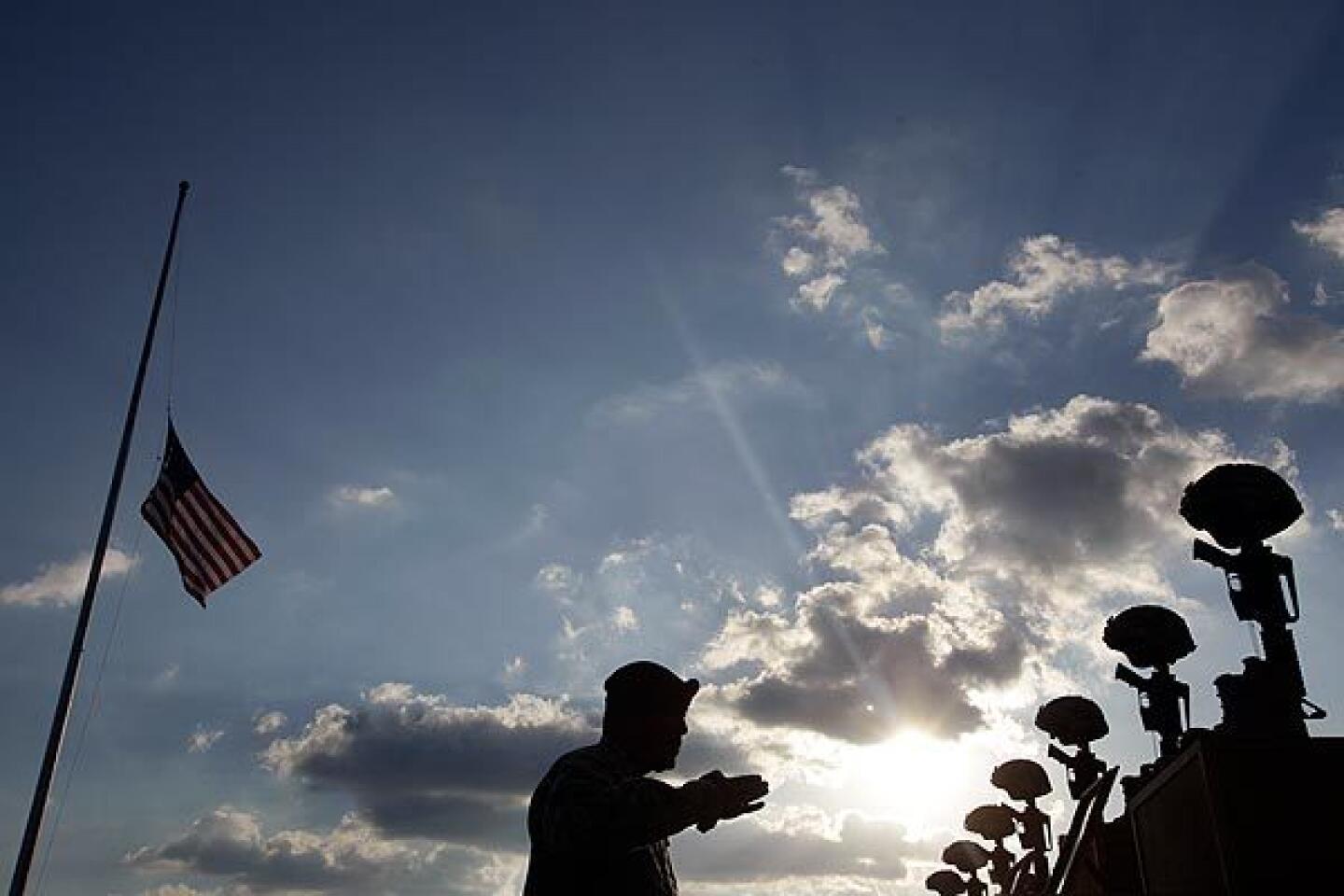
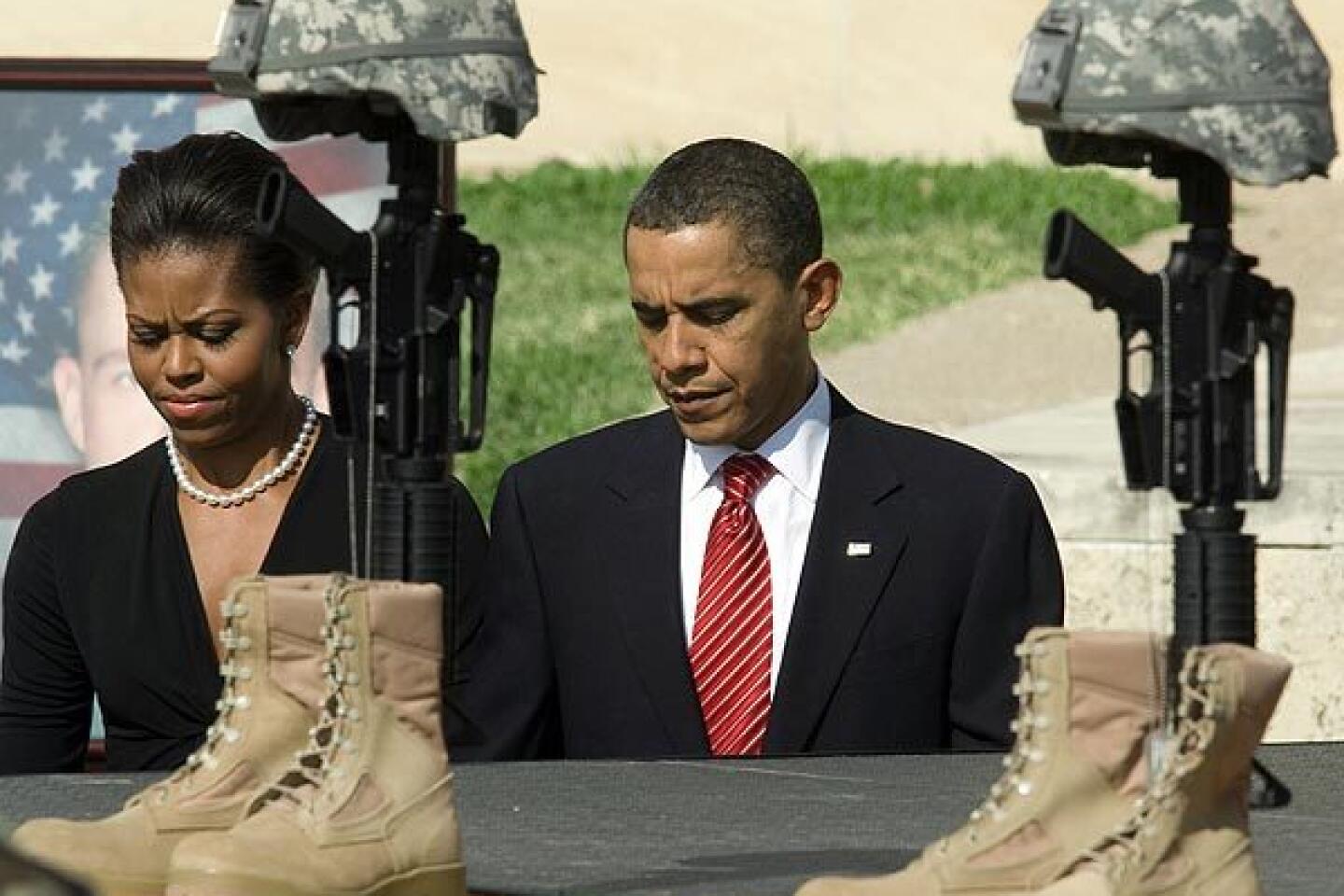
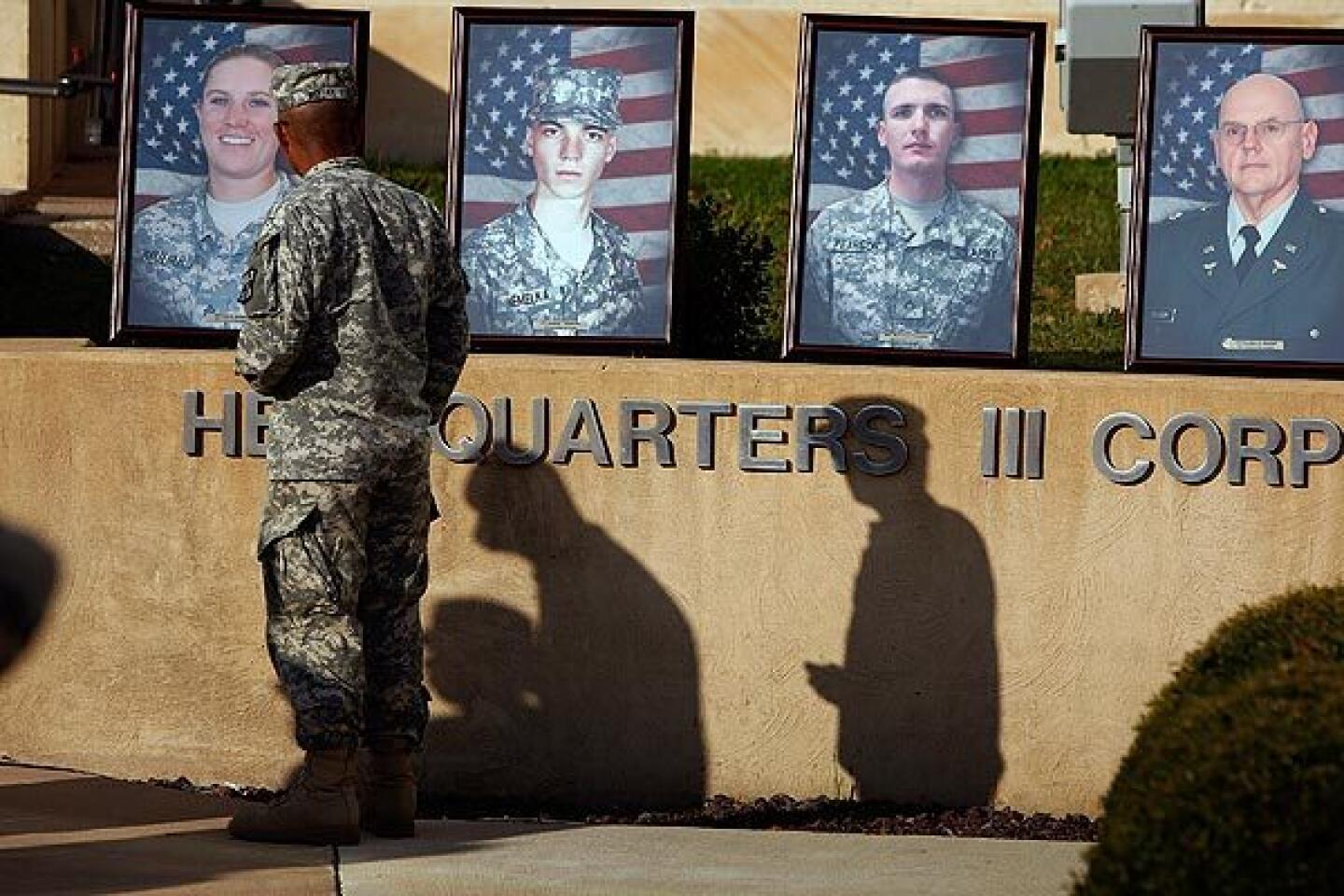
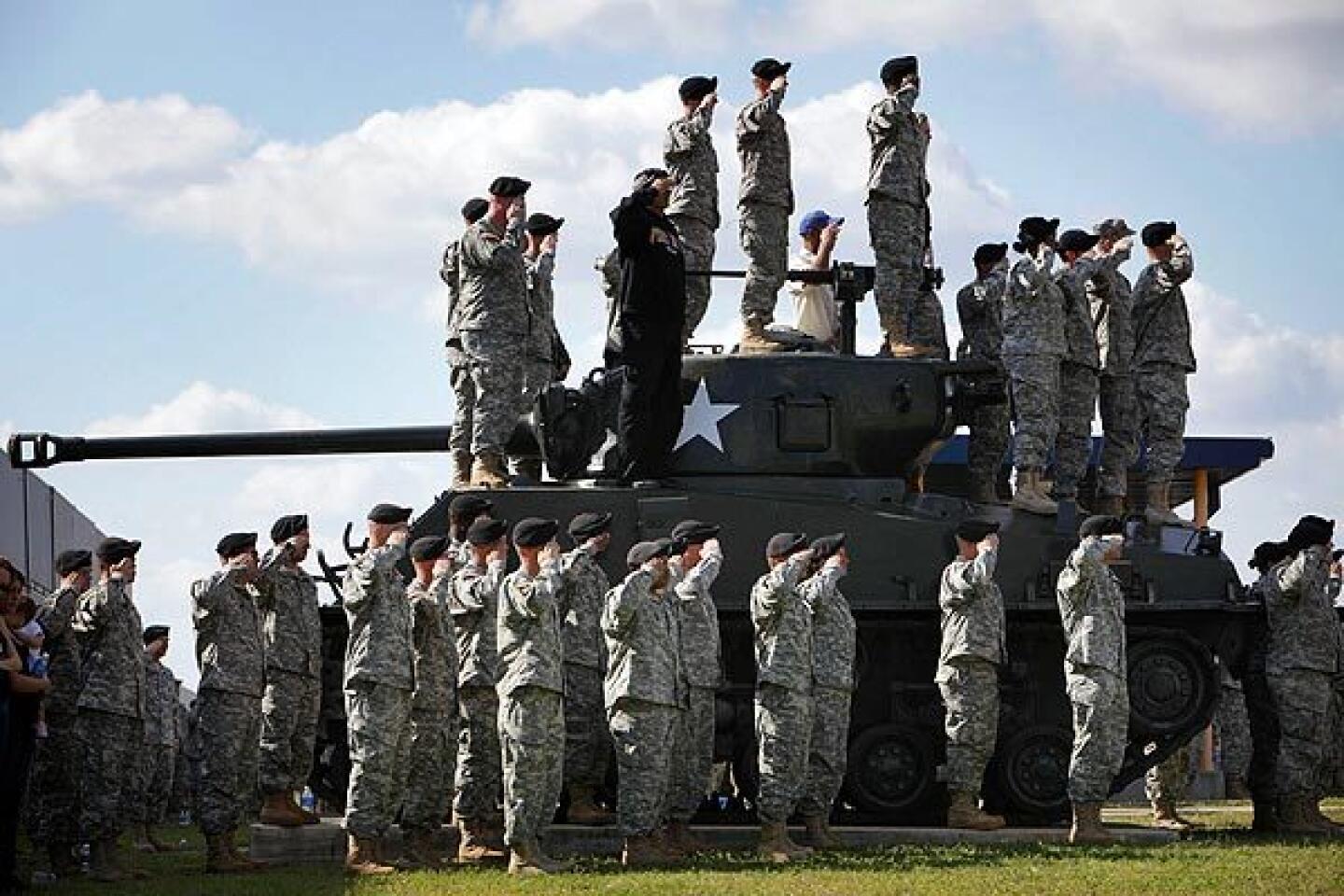
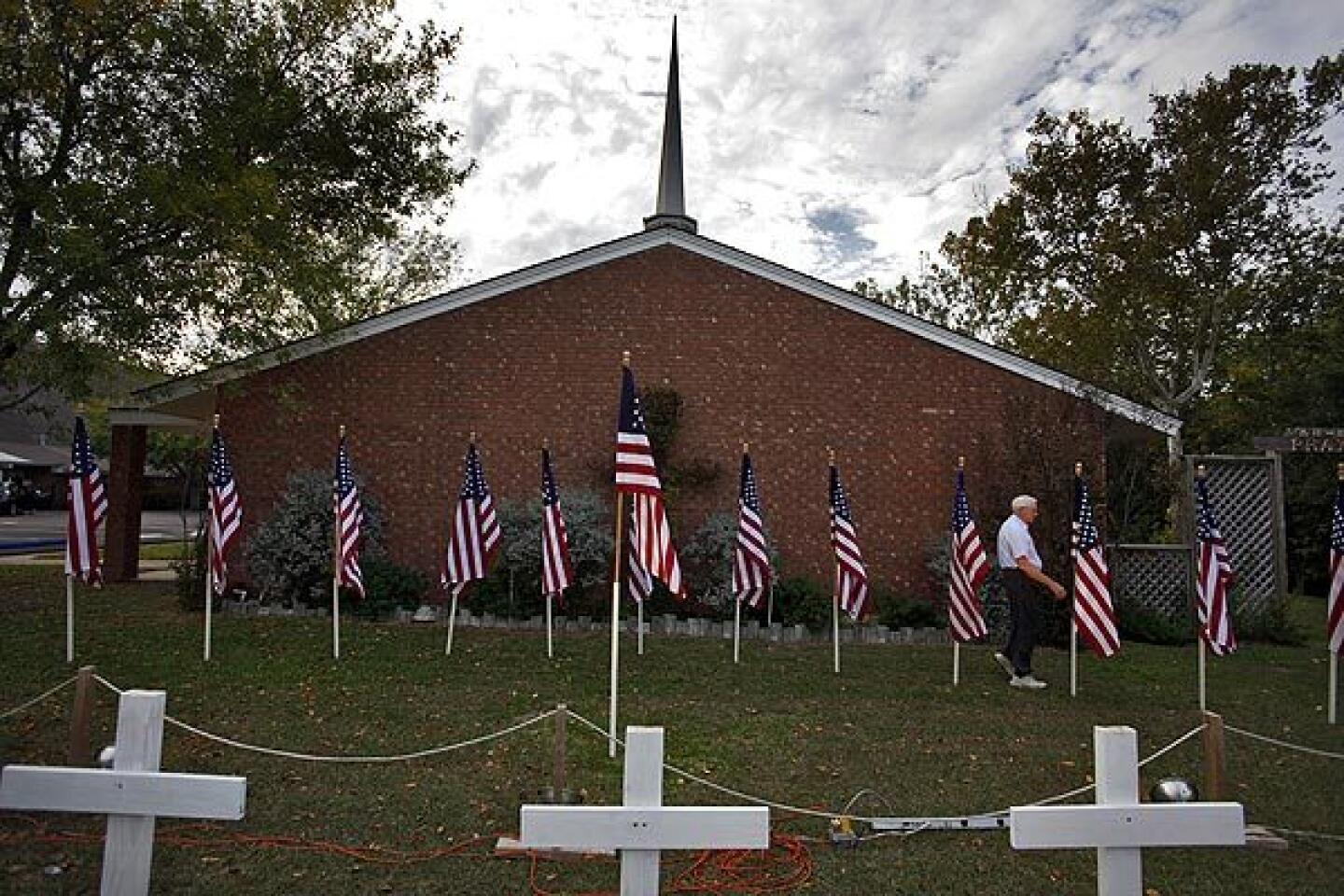
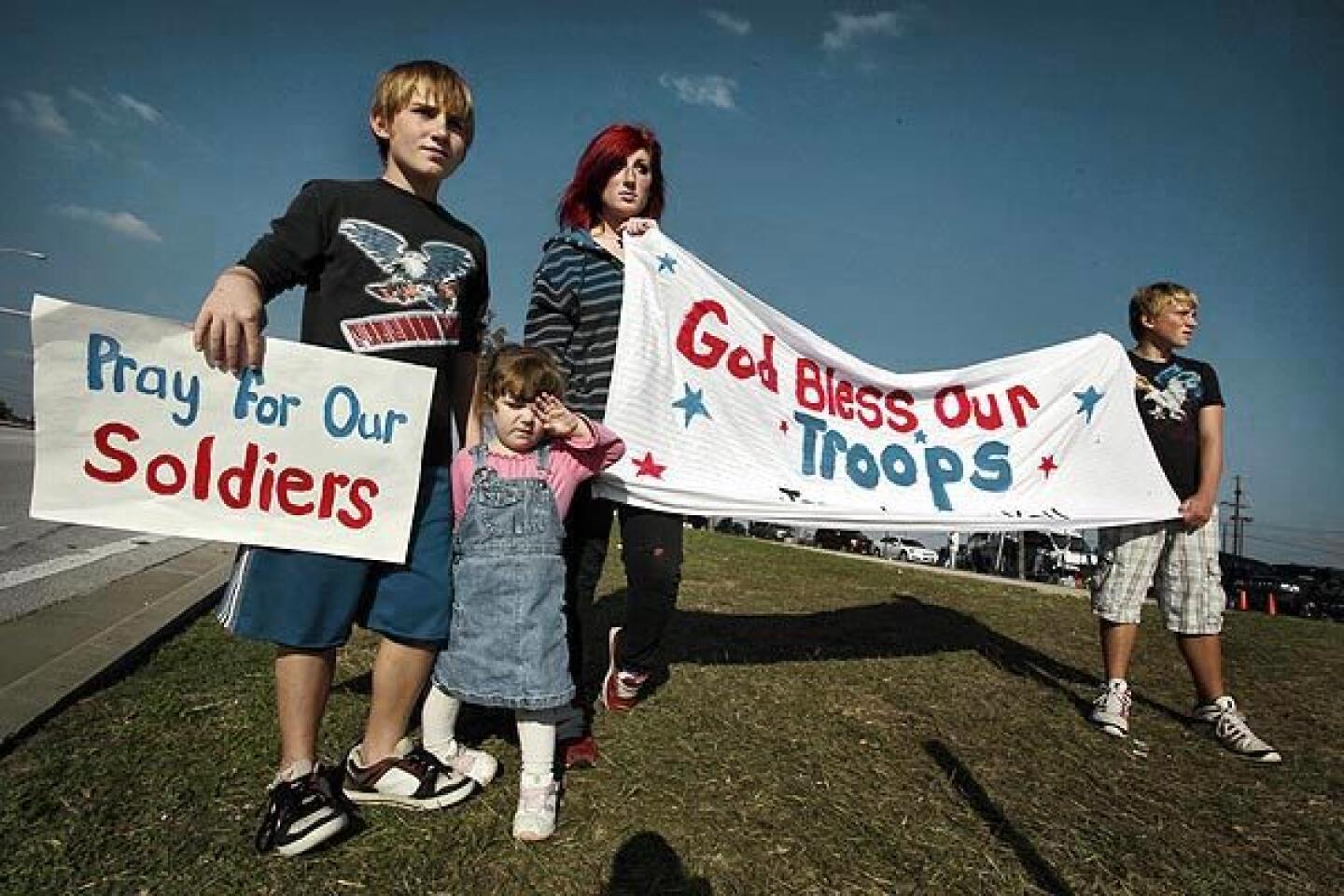
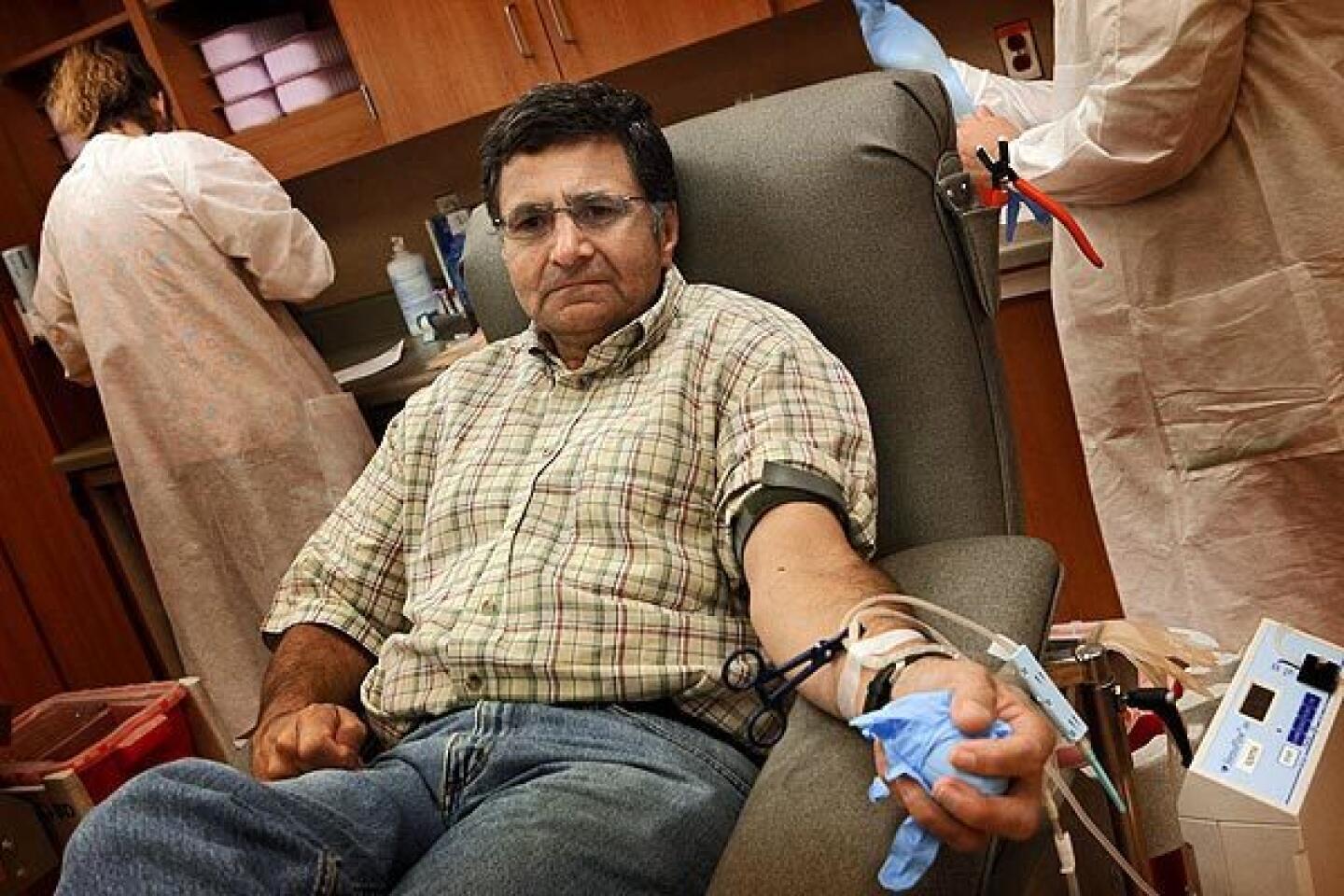
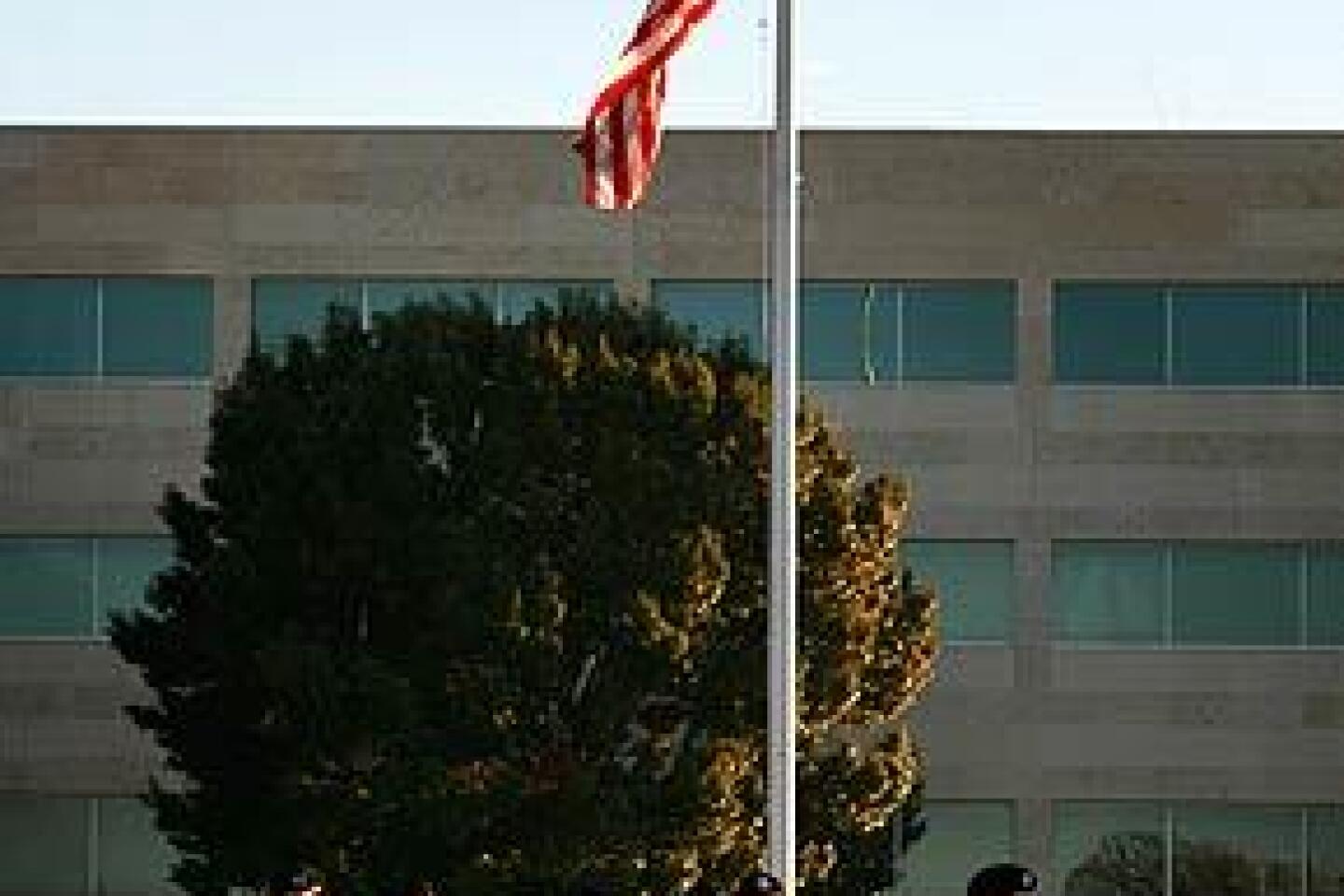
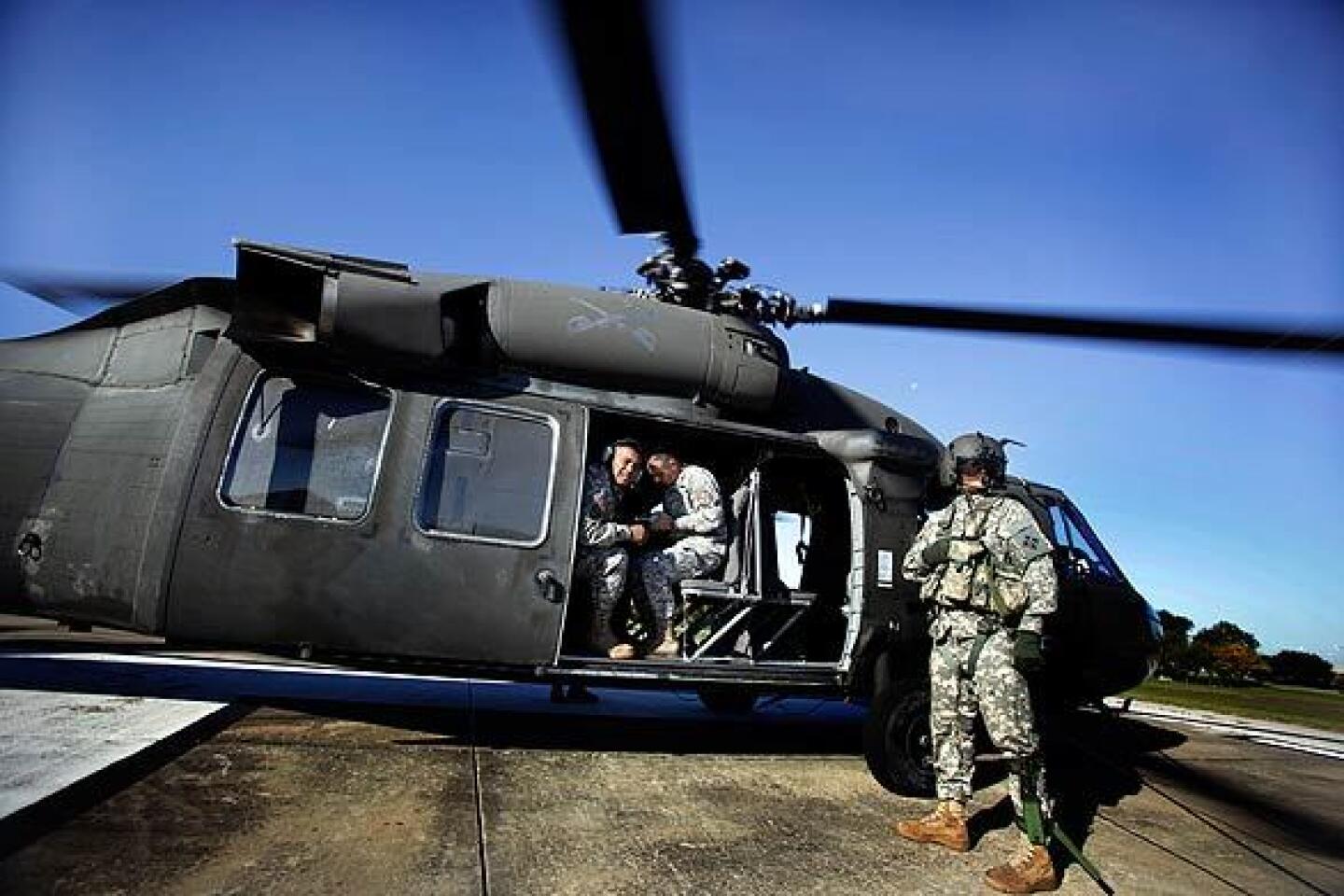
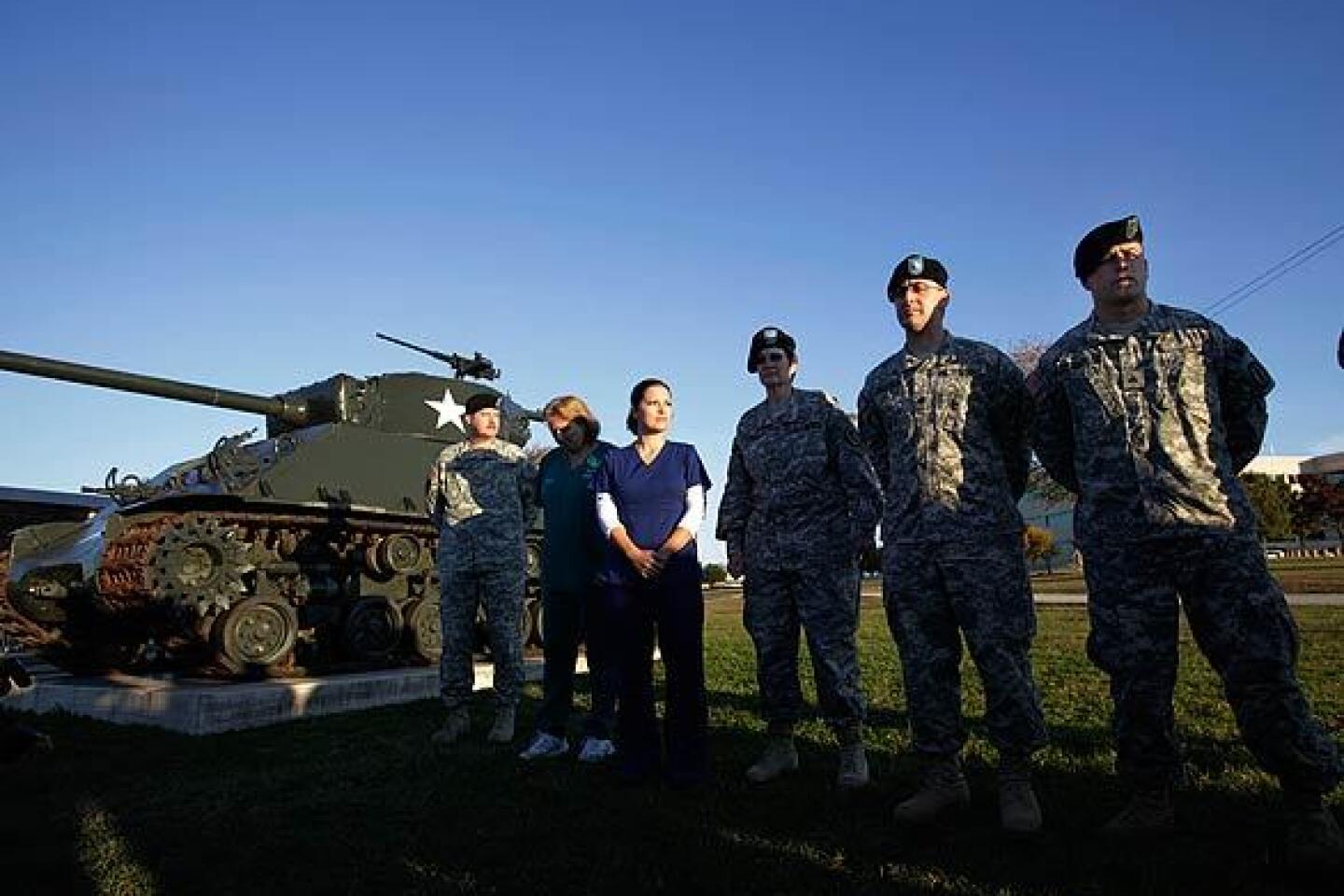
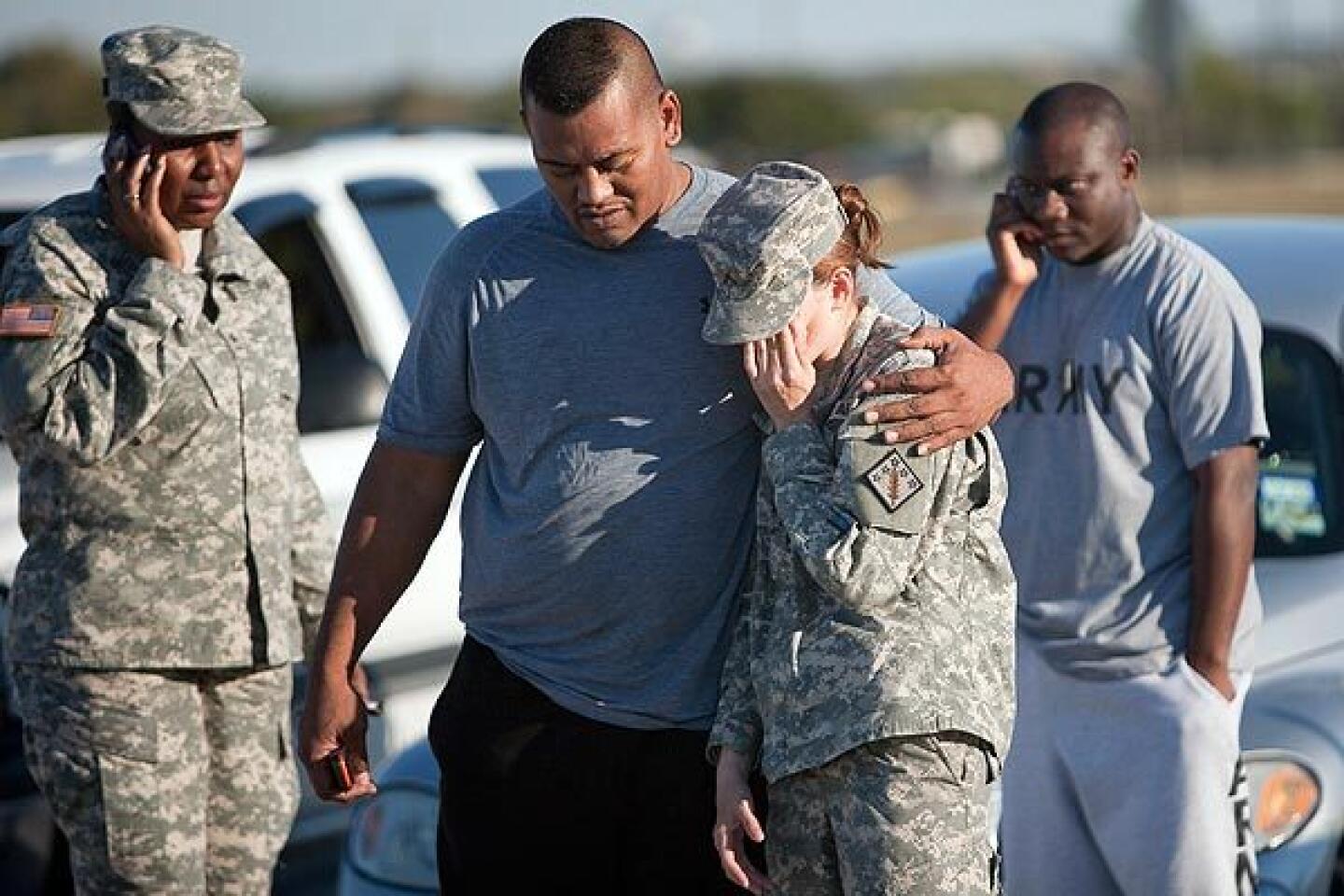
Reporting from Ft. Hood, Texas, Washington and Los Angeles -- An Army psychiatrist who was about to be deployed to Iraq allegedly armed himself with two guns and opened fire Thursday afternoon on the grounds of Ft. Hood, the country’s largest military base, killing 12 people and injuring 31 others.
UPDATE -- 2:34 a.m.
The Associated Press reports a 13th death, with 30 wounded, in Thursday’s shooting rampage at Ft. Hood. Suspected shooter Maj. Nidal Malik Hasan, who was shot four times, is on a ventilator and unconscious in a hospital.
Officials said that soldiers and civilians ripped apart their clothes to make bandages for fallen colleagues, many of whom were waiting at the base’s Soldier Readiness Center for medical and dental exams before deployment. The attack shocked the country and raised questions about base security.
The suspected gunman, who initially was thought to have died, was wounded and in stable condition under guard at a hospital. Identified as Maj. Nidal Malik Hasan, 39, he worked at the Darnall Army Medical Center, Ft. Hood’s hospital. The facility has an extensive program to help soldiers deal with the stress of returning from war.
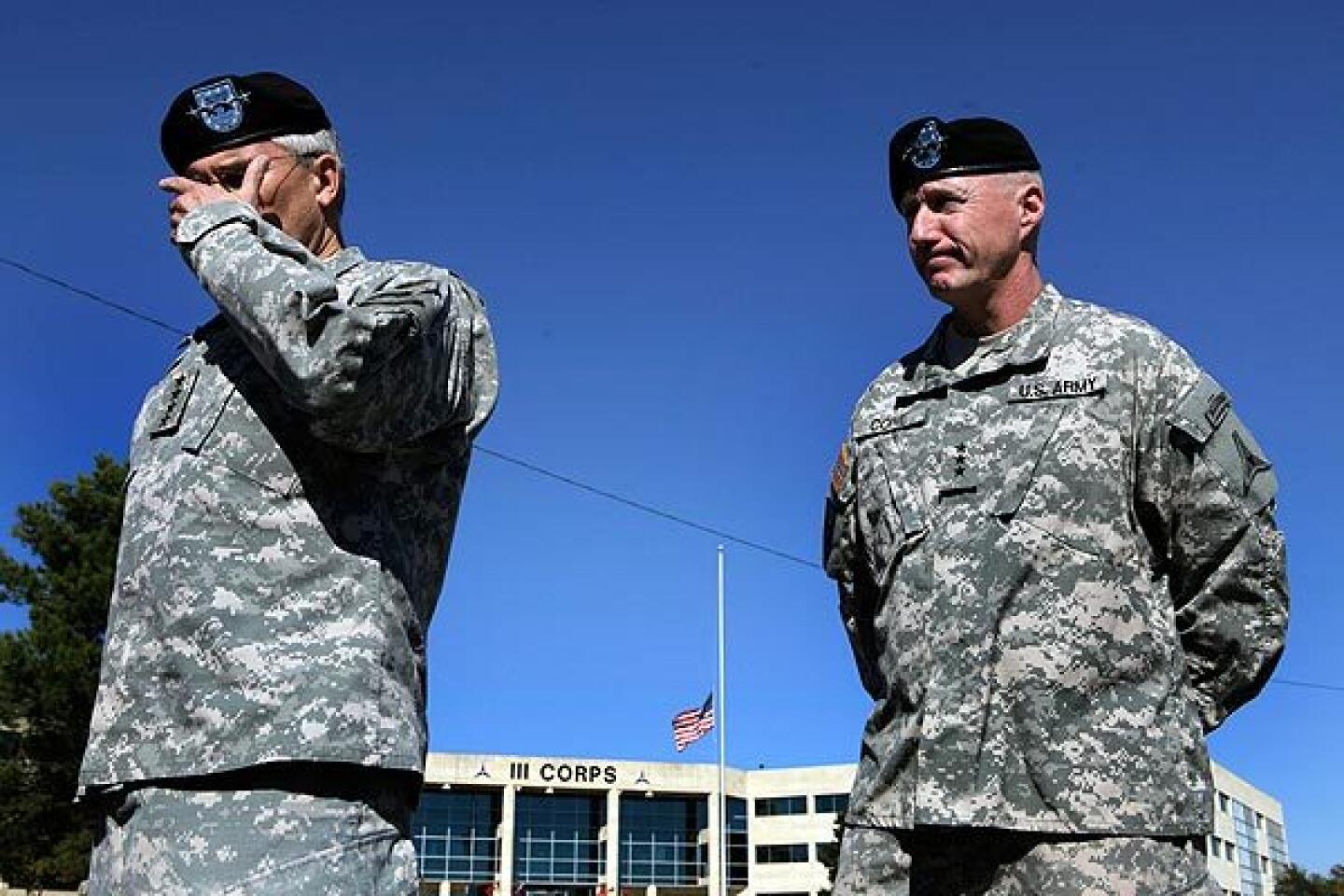
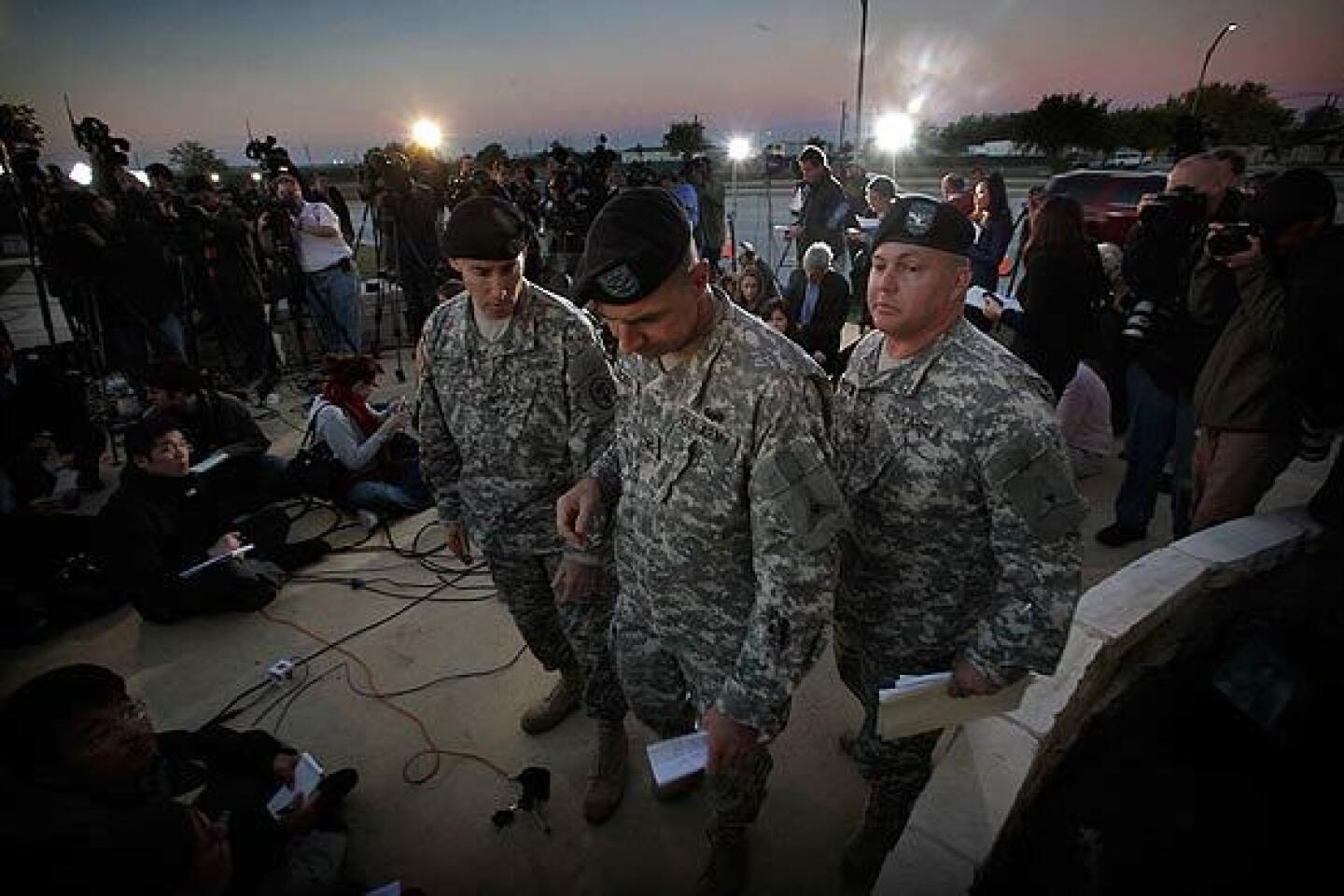
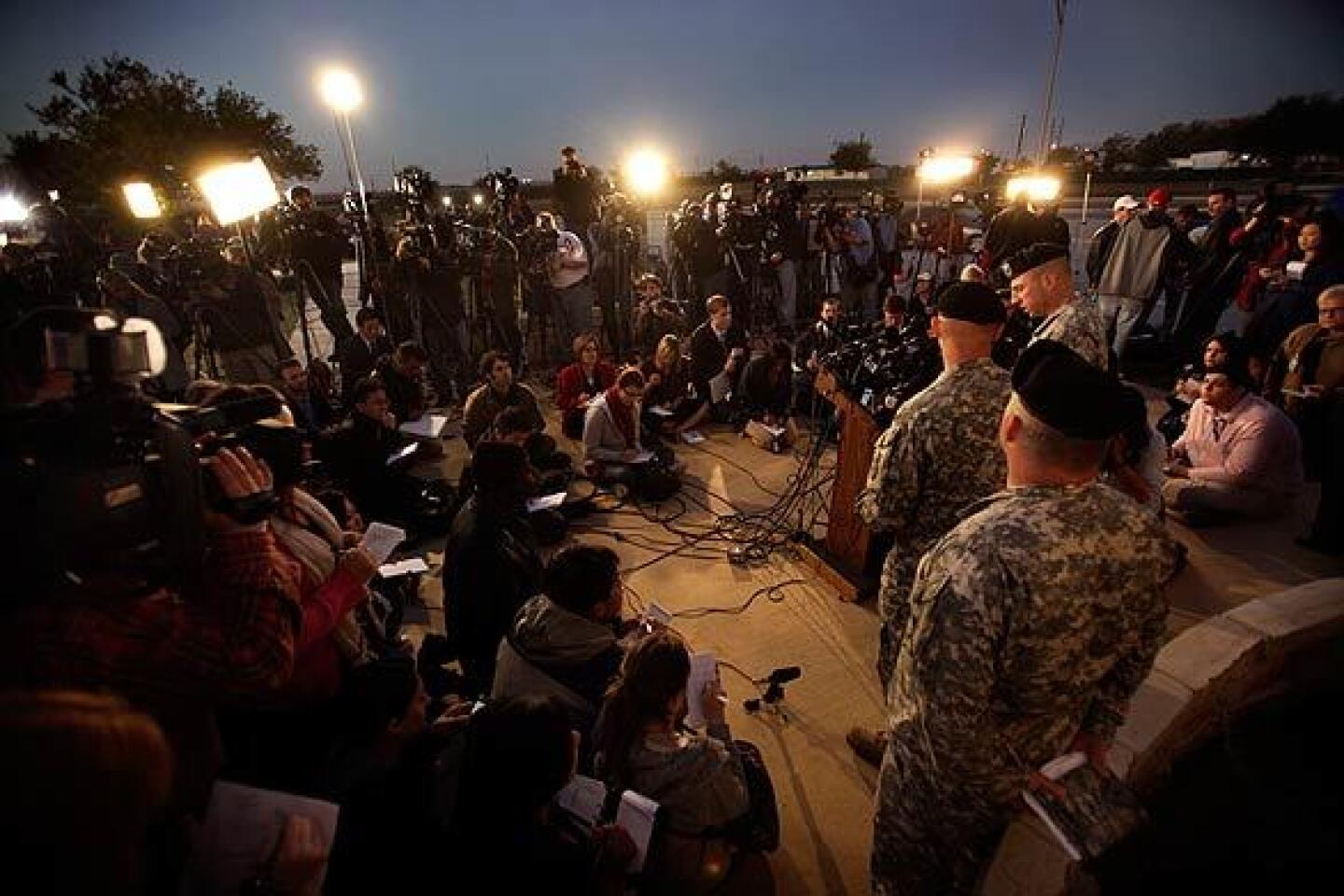
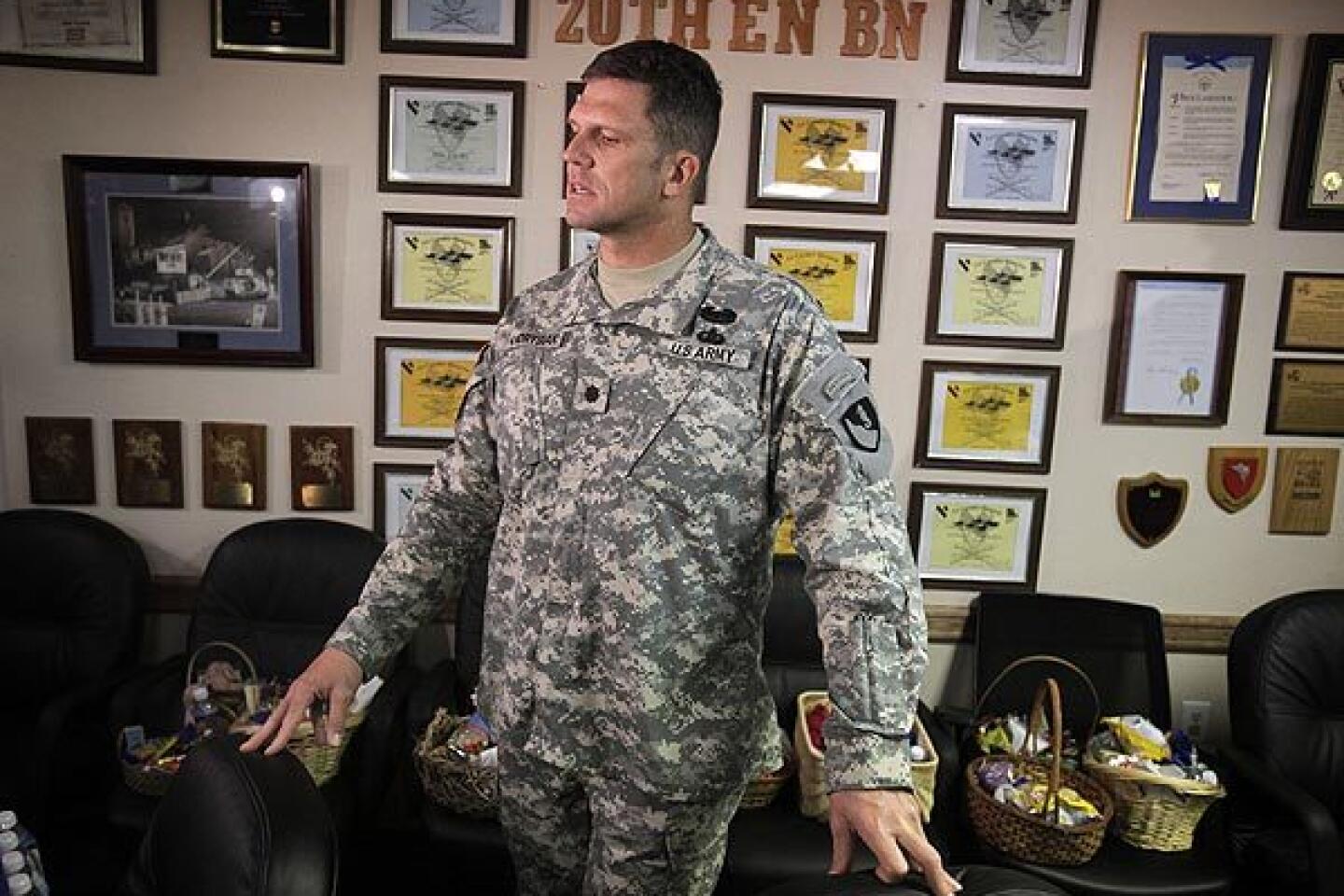
Base commander Lt. Gen. Robert Cone said at a news conference Thursday evening that Hasan was shot multiple times by a female civilian Army police officer, who was also injured. The suspect reportedly had not spoken with investigators, and Cone would not say anything more about him.
A senior U.S counter-terrorism official said Thursday night that the Army and FBI were looking into whether Hasan, who is Muslim, had previously come to the attention of federal law enforcement officials as the suspected author of inflammatory Internet comments likening suicide bombers to heroic soldiers who give their lives to save others.
The official, who spoke on condition of anonymity because the investigation was ongoing, said that authorities would examine Hasan’s actions in the months leading up to the rampage in part to determine whether authorities had missed warning signs. “This is going to be a long and convoluted and messy investigation,” the official said.
Although three other soldiers were briefly taken into custody, Cone said he believed that the gunman acted alone.
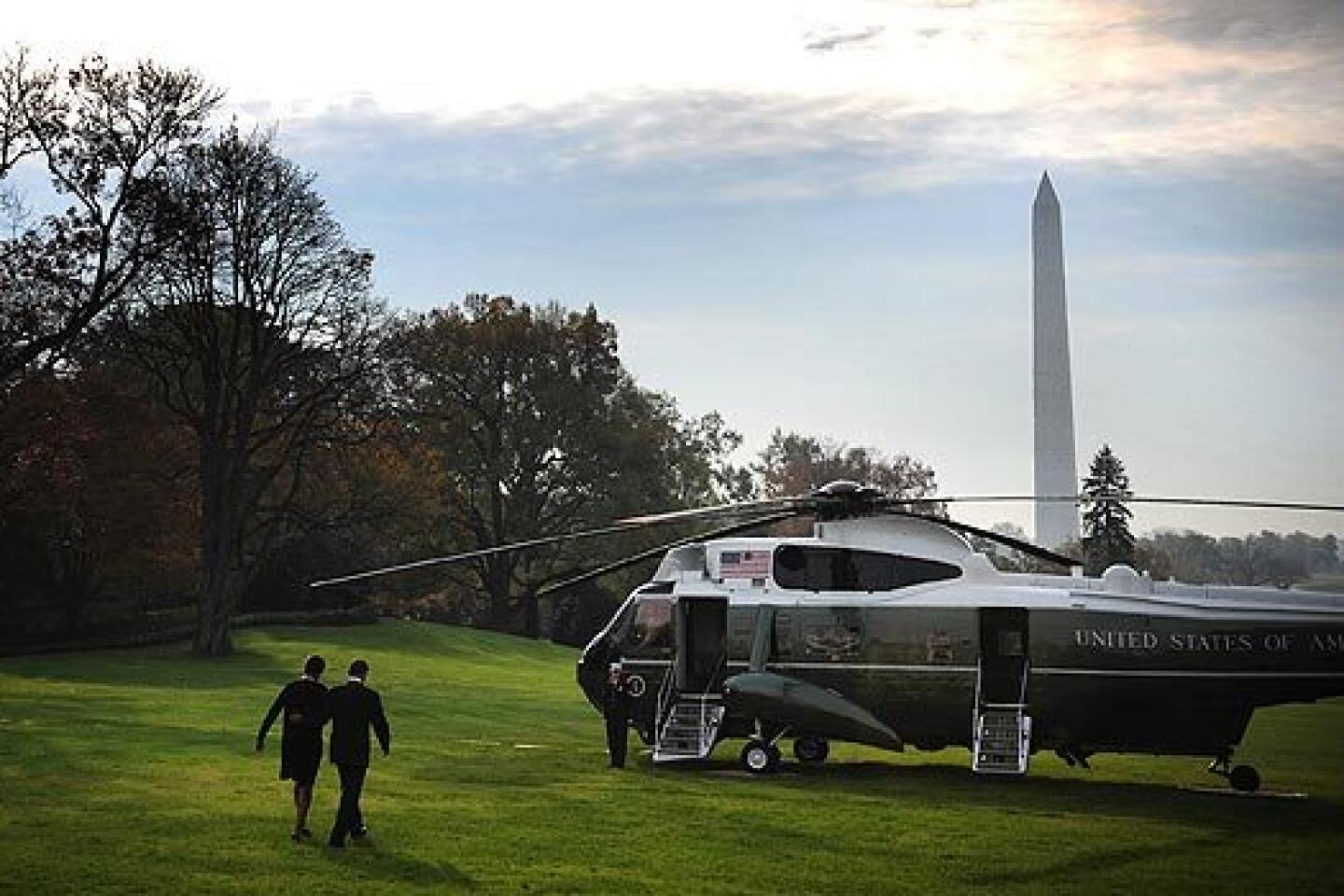
President Obama lamented the attack as a “horrific outburst of violence” and promised justice. “We are going to stay on this,” he said.
“These are men and women who have made the selfless decision” to protect the nation, Obama said of the victims. “It is horrifying that they should come under fire at an Army base on American soil.”
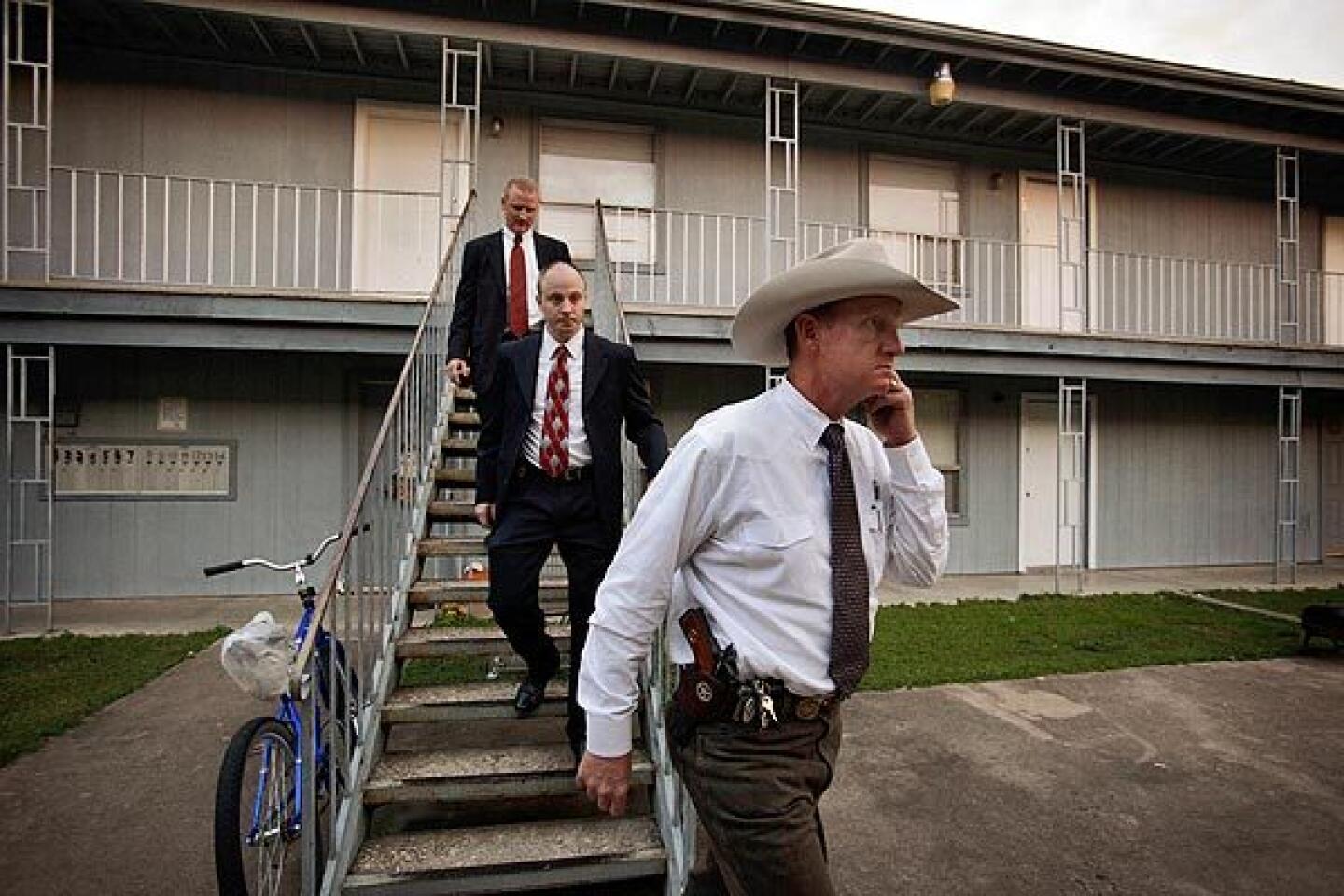
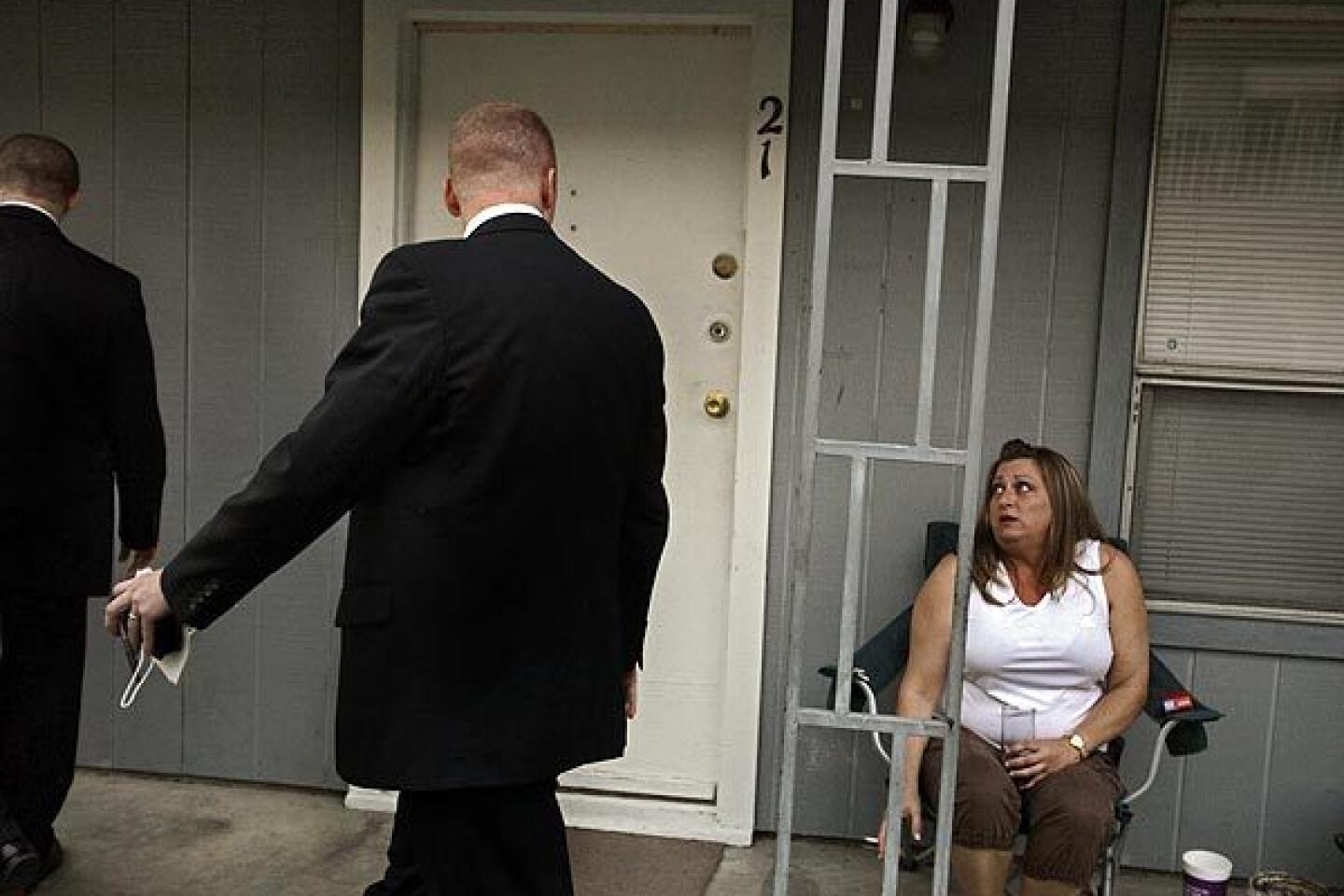
Hasan, a Virginia native, worked at Walter Reed Army Medical Center for six years before his transfer to the Texas base in July. Army officials with access to Hasan’s records told the Associated Press that he had received a poor performance evaluation at Walter Reed.
In a post on the website scribd.com that appears to be from May, a writer named “NidalHasan” likened a suicide bomber to a soldier who jumps on a grenade to save the lives of his fellow officers in that both were sacrificing their lives “for a more noble cause.”
That cause, he wrote, “is to help save Muslims by killing enemy soldiers. If one suicide bomber can kill 100 enemy soldiers because they were caught off guard that would be considered a strategic victory. Their intention is not to die because of some despair. The same can be said for the Kamikazees in Japan.”
Sen. Kay Bailey Hutchison (R-Texas) told NBC News that Hasan was about to be deployed to combat for the first time “and was upset about it.” Hasan’s cousin, Nadar Hasan, a lawyer in northern Virginia, told Fox News that deployment was his cousin’s “worst nightmare.”
The shooting broke out about 1:30 p.m. Central time at the Soldier Readiness Center. About 50 meters away, Cone said, 138 soldiers were preparing to go through a 2 p.m. college graduation ceremony before 600 guests.
“Thanks to the quick reaction of several soldiers,” Cone said, “they were able to able to close off the doors to that auditorium.” That action, he said, saved lives.
Cone said he did not believe that the weapons involved in the attack -- one of them a semiautomatic -- were military-issued.
The rules for carrying weapons on an Army post are standard throughout all bases, service officials said. The only personnel allowed to openly display weapons on the base are military police, said Lt. Col. Nathan Banks, an Army spokesman.
Service weapons are checked daily and are usually only allowed to be removed from an arms room for training on a range or maintenance. Personal weapons must be kept locked and registered with the base provost marshal. The military police keep a record of all of the weapons on a base, Army officials said.
The military has not released the names of those who were wounded or killed.
Lisa Pfund, the mother of a 19-year-old soldier, Amber Bahr, told a Milwaukee TV station that her daughter had been shot in the abdomen and was in stable condition. “We were on the phone. She said, ‘Hi, Mommy, how you doing?’ And all of a sudden, she said, ‘I gotta go.’ ” The next call she received, Pfund said, was from an emergency room doctor.
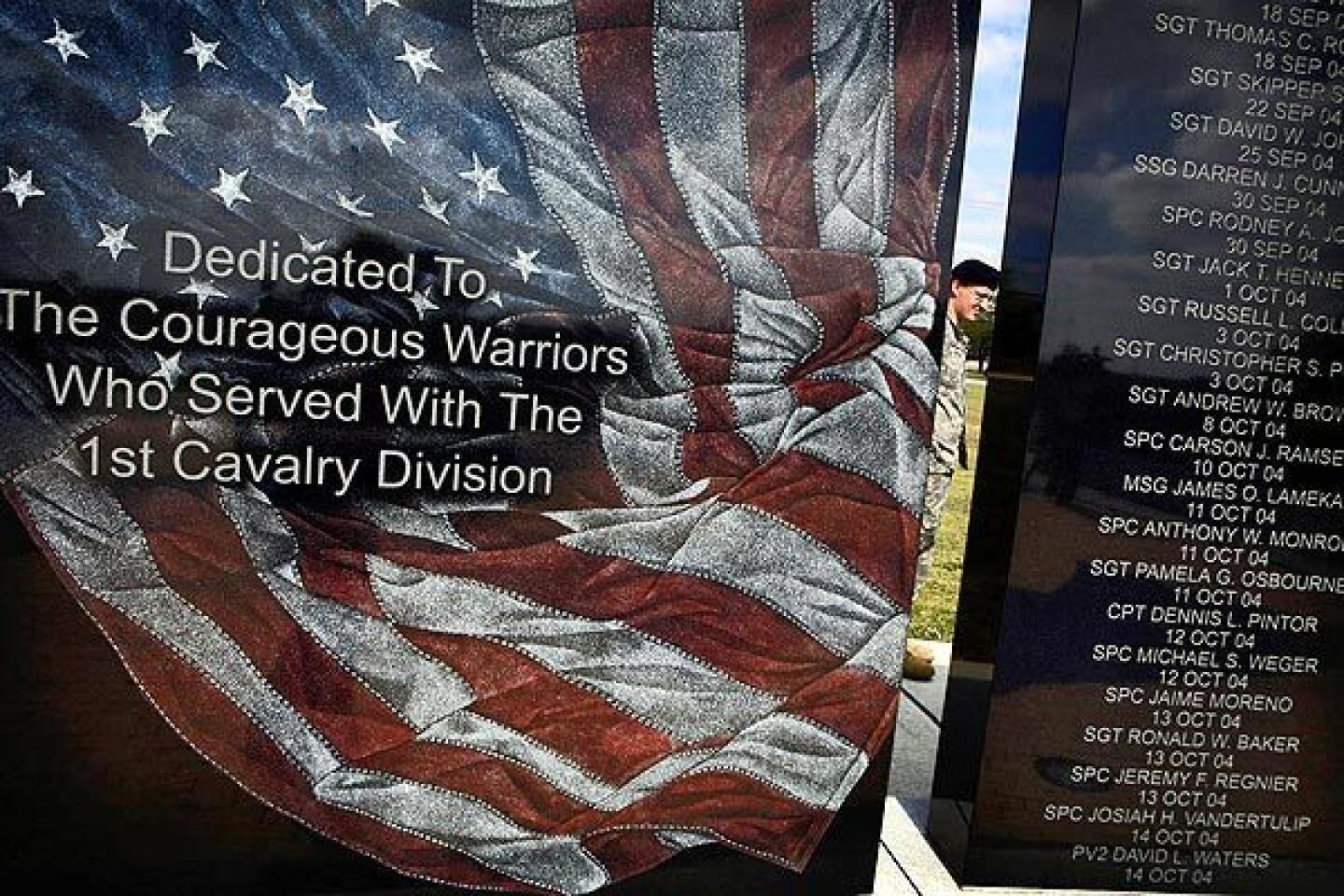
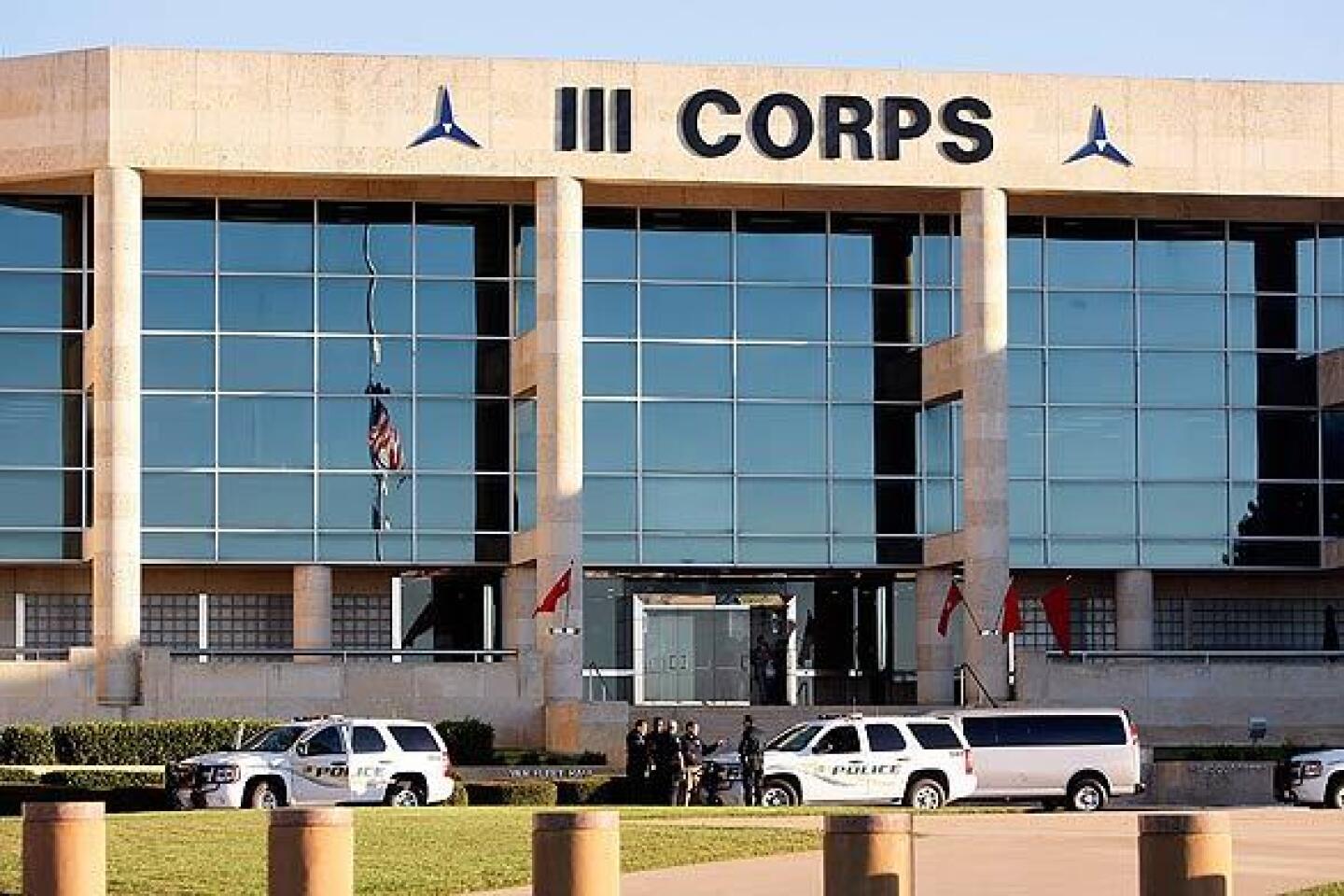
Ft. Hood, which sprawls across 339 square miles of Central Texas Hill Country, is the world’s largest military installation. Halfway between Waco and Austin, it supports two full armored divisions: the storied 1st Cavalry Division and the 4th Infantry Division. It is the largest single employer in Texas.
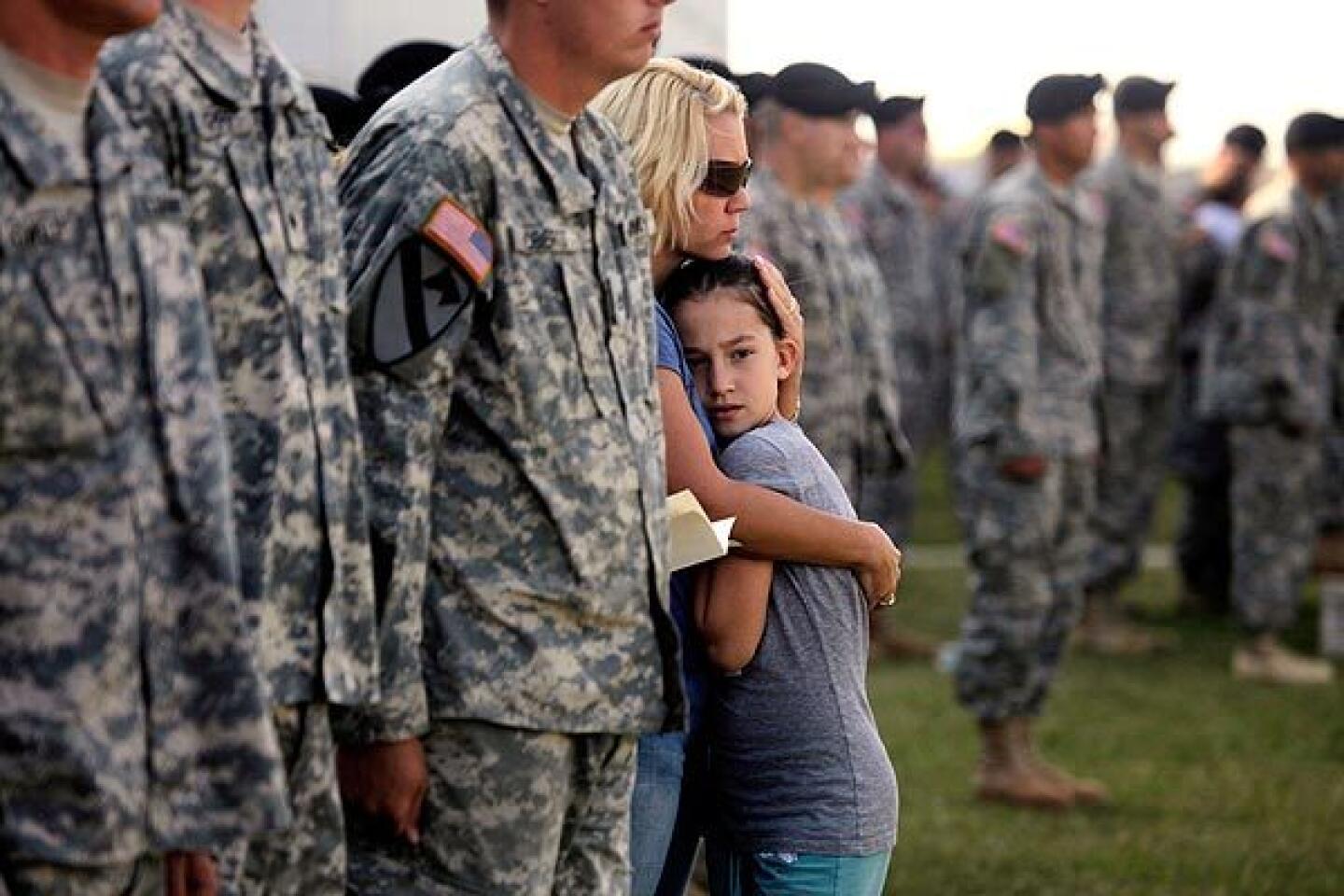
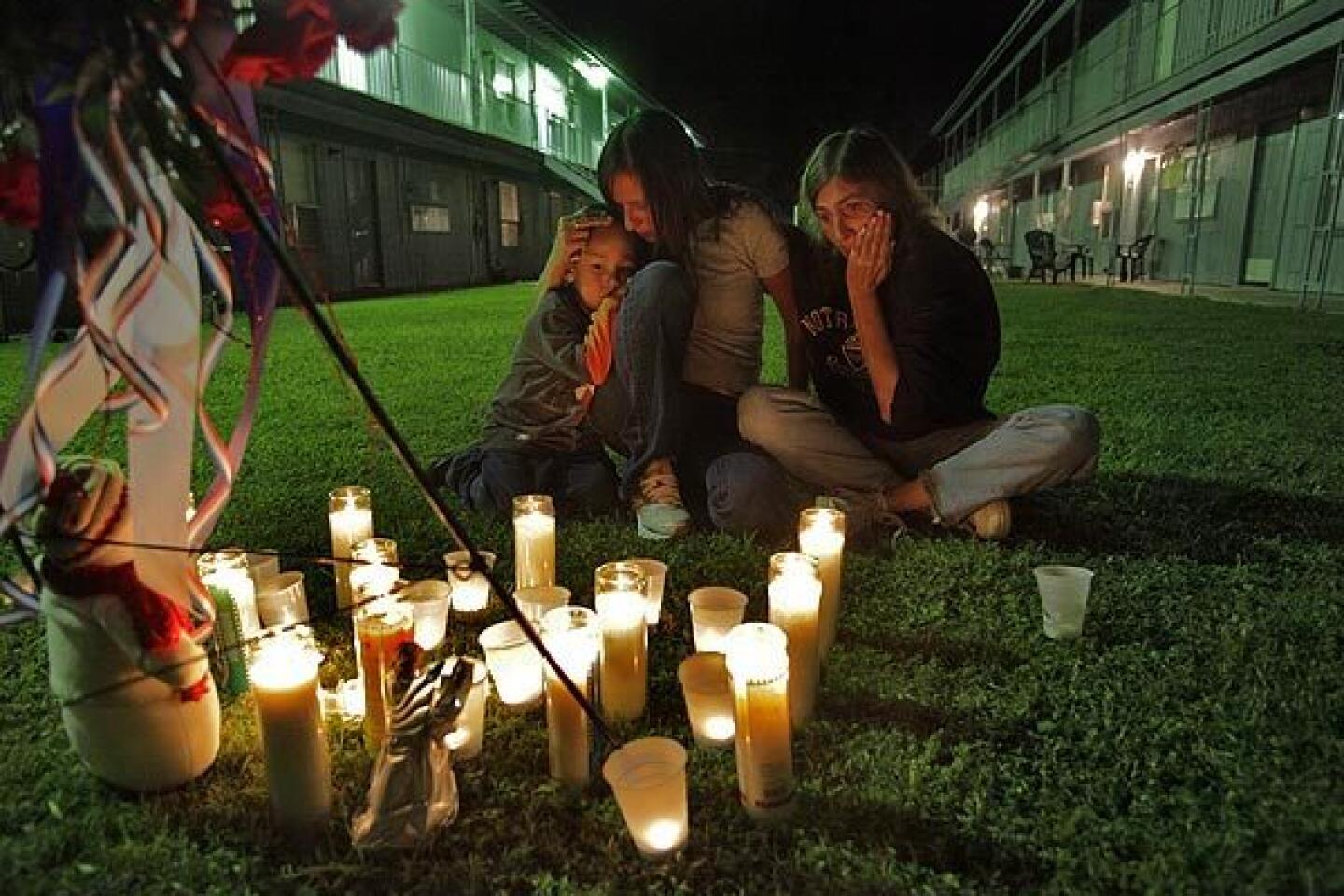
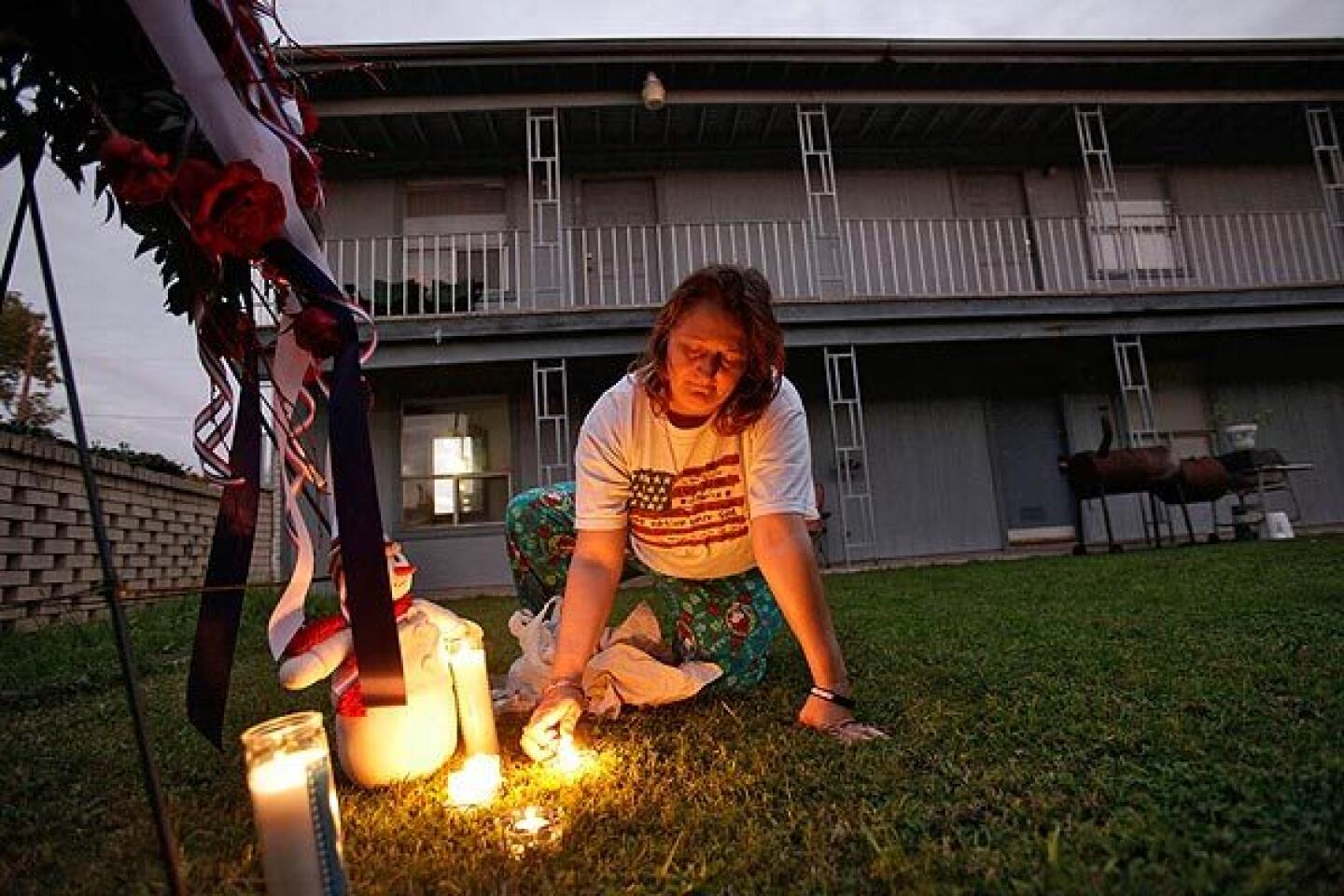
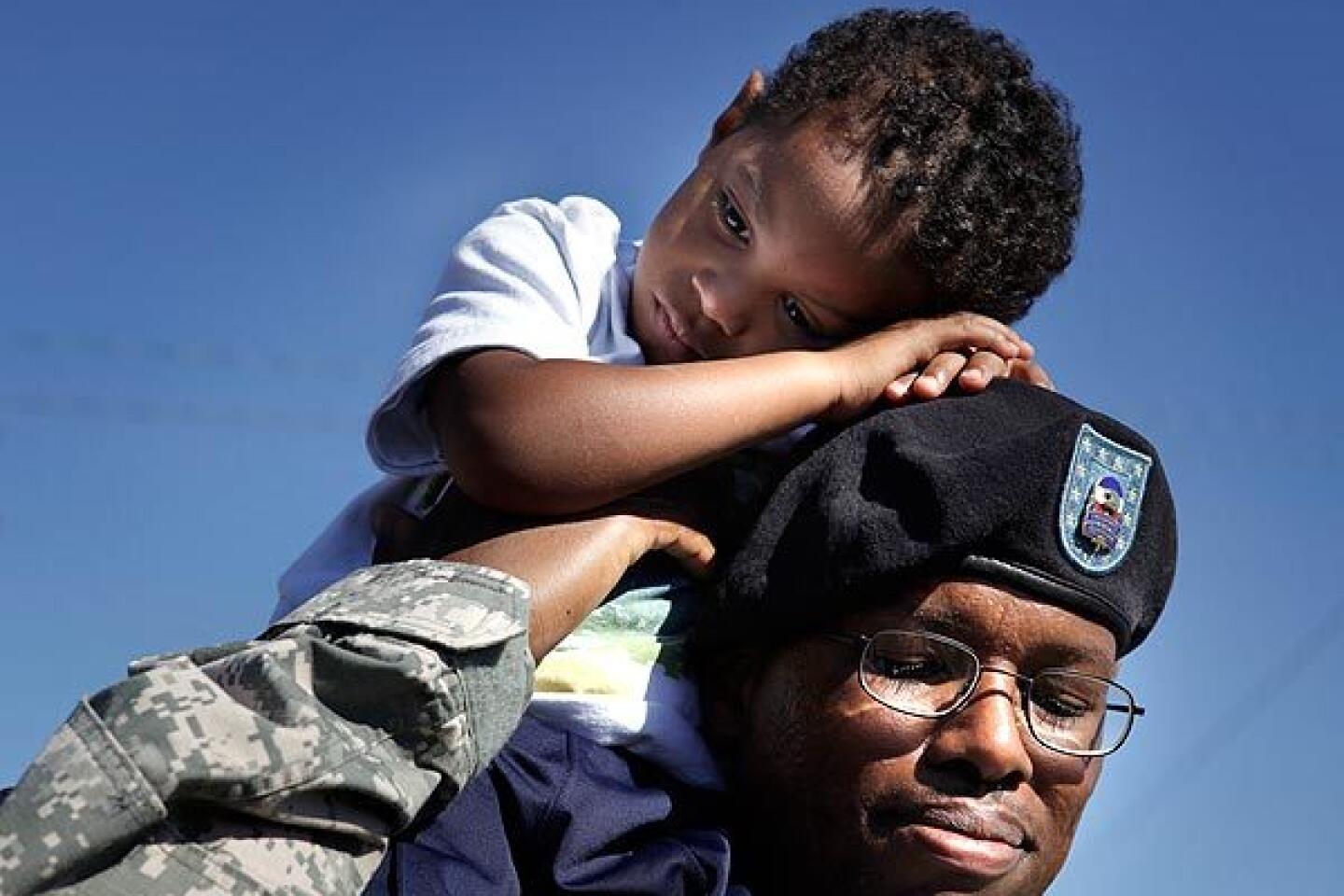
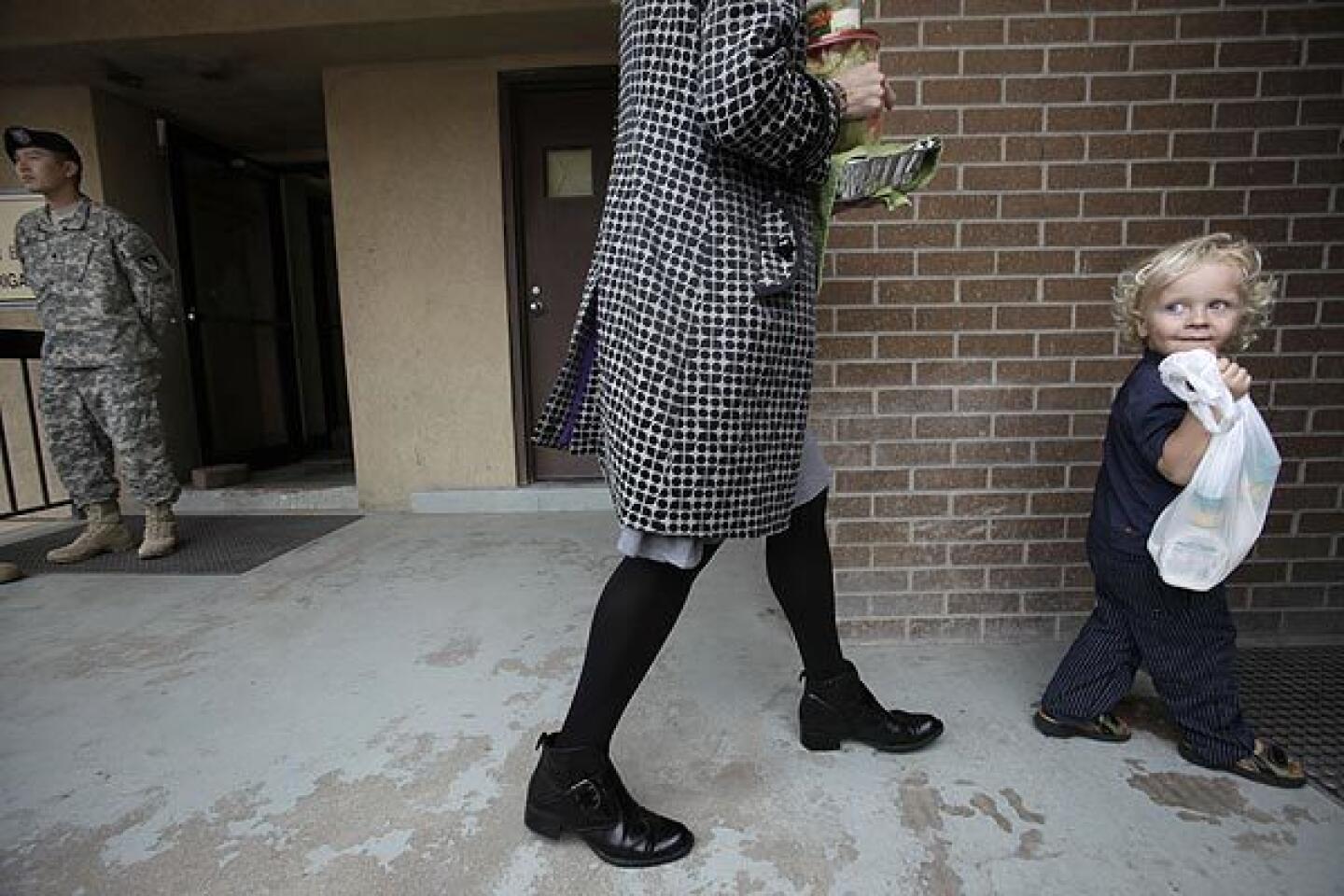
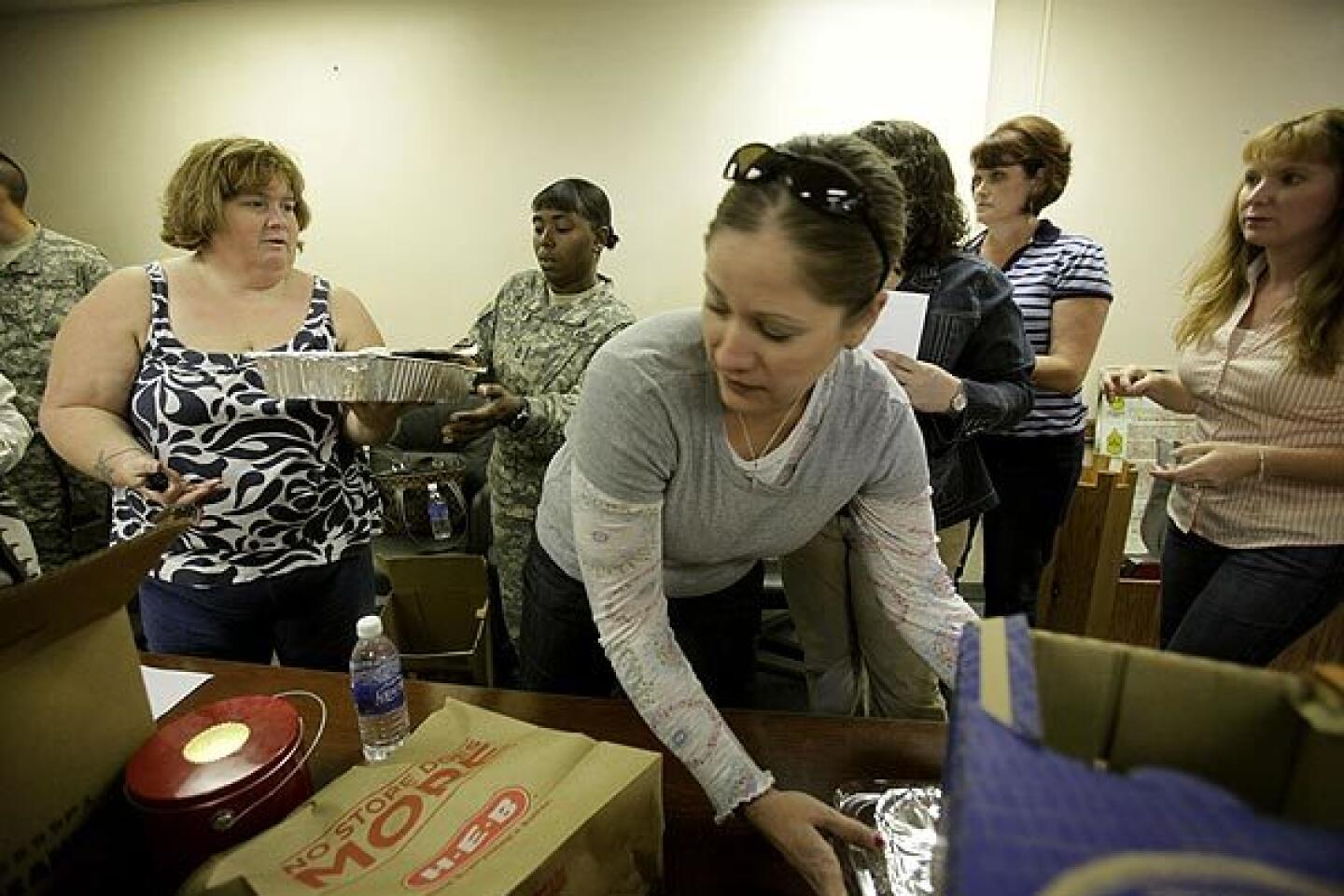
The base, home to nearly 70,000 people, was locked down for about six hours. Immediately after the shooting, base residents were told to lock their doors and windows and stay inside. Families used to being separated during long deployments were separated again in a situation that to many seemed surreal.
“My friend’s husband called her from Iraq and said, ‘Isn’t it sad that I am safer over here in Iraq than you are at home?’ ” said Jessica Sullens, 28, a substitute teacher who had spent hours in a nearby Walmart parking lot, where she had dashed on an errand.
Her husband, Cpl. Thomas Sullens of the 404th Aviation Support Battalion, and their 1- and 2-year old daughters were locked down on the base -- he with his motor pool and the children with a neighbor.
“This is unreal to me,” Sullens said. Her husband, she said, described the shooting as “a firefight.”
At 7:14 p.m. Central time, she said, the emergency was lifted and traffic onto the base resumed. Sullens was stuck in a line of about 150 cars that moved slowly through security gates, trying to get home.
Base personnel have accounted for more suicides than any other Army post since the U.S. invasion of Iraq in 2003, with 75 tallied through this July. Nine of those suicides occurred in 2009, counting two in war zones.
Gen. Peter W. Chiarelli, the Army’s vice chief of staff, has been leading an effort to reduce the number of Army suicides, which some have said is a result of long and repeated deployments to Iraq and Afghanistan.
Three of the four brigades of the 1st Calvary Division are in Iraq. The three brigades -- the first, second and third -- are on their third tour. The division’s newest brigade, the fourth, has done two tours in Iraq, returning most recently in June.
Ft. Hood also is home to three of the brigades of the 4th Infantry Division. The fourth brigade is now in Afghanistan. The first brigade has done three tours in Iraq, returning most recently in March. The second brigade has also done three tours, returning most recently in September.
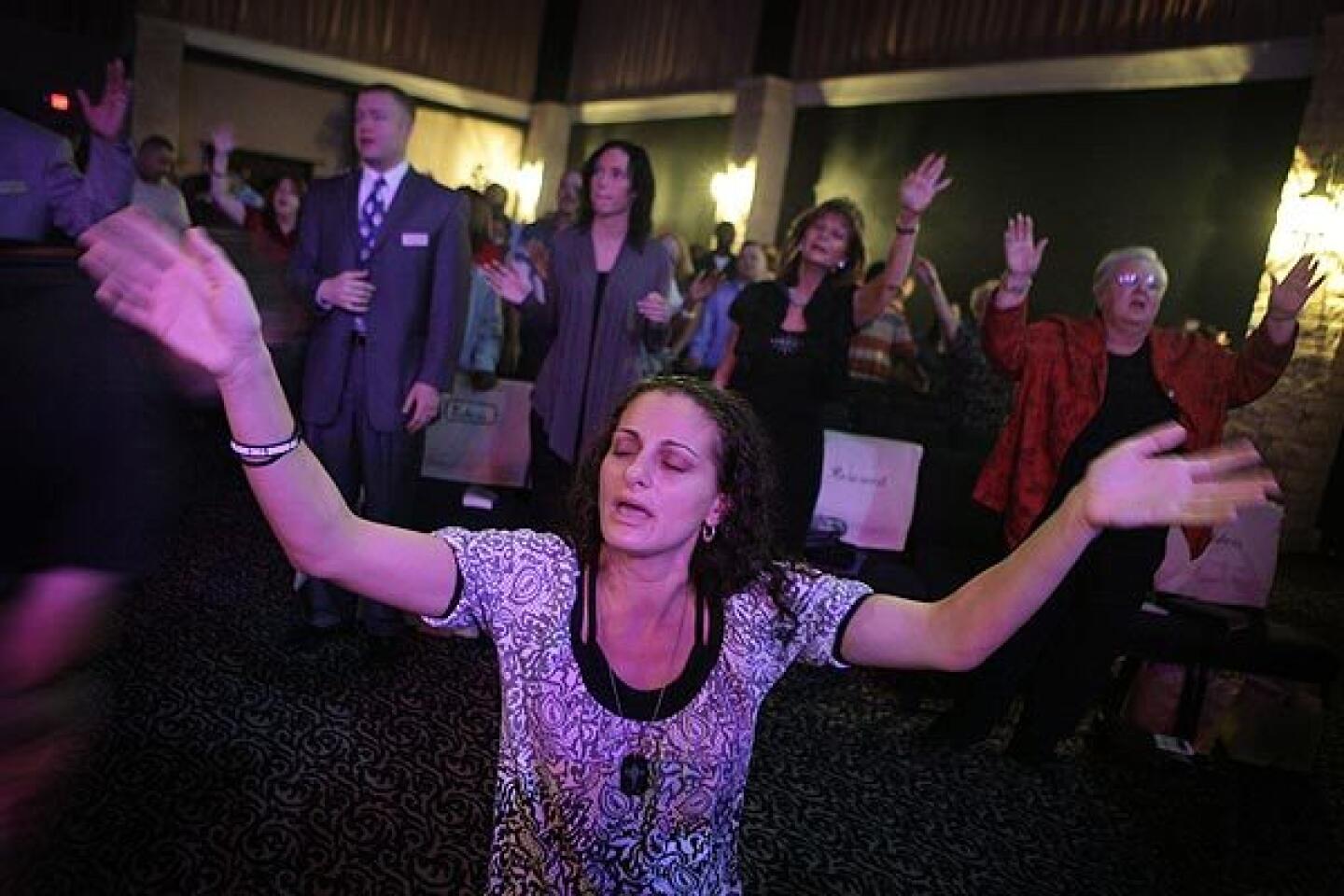
Ft. Hood residents were deeply shaken by Thursday’s events, even more so because Hasan is a mental health professional.
“It scares me to death,” Sullens said. “There was nothing they could have done to keep him off post because he belonged here. It’s terrifying to think he’s the one who is supposed to be making sure everyone is OK, and he himself is insane.”
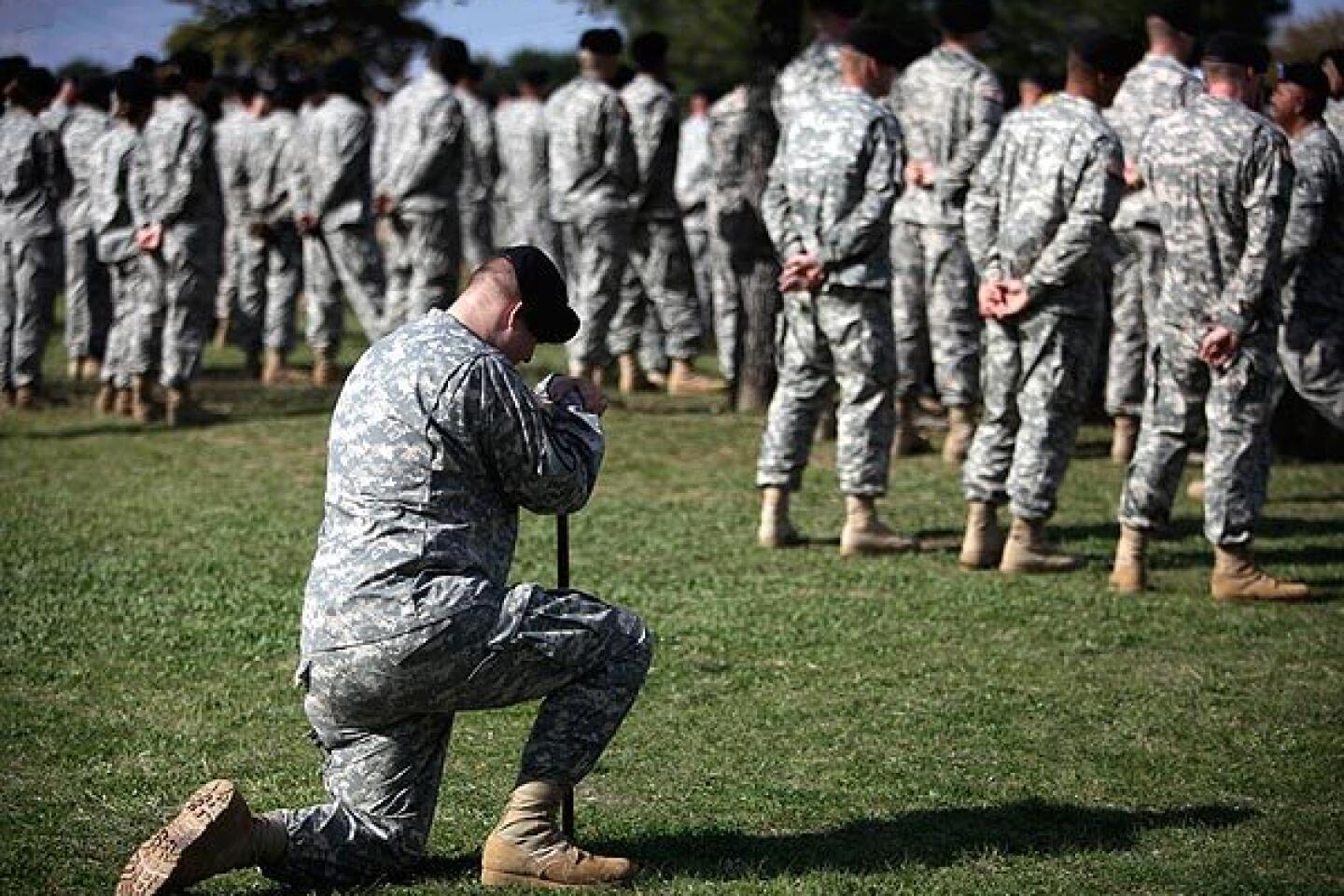
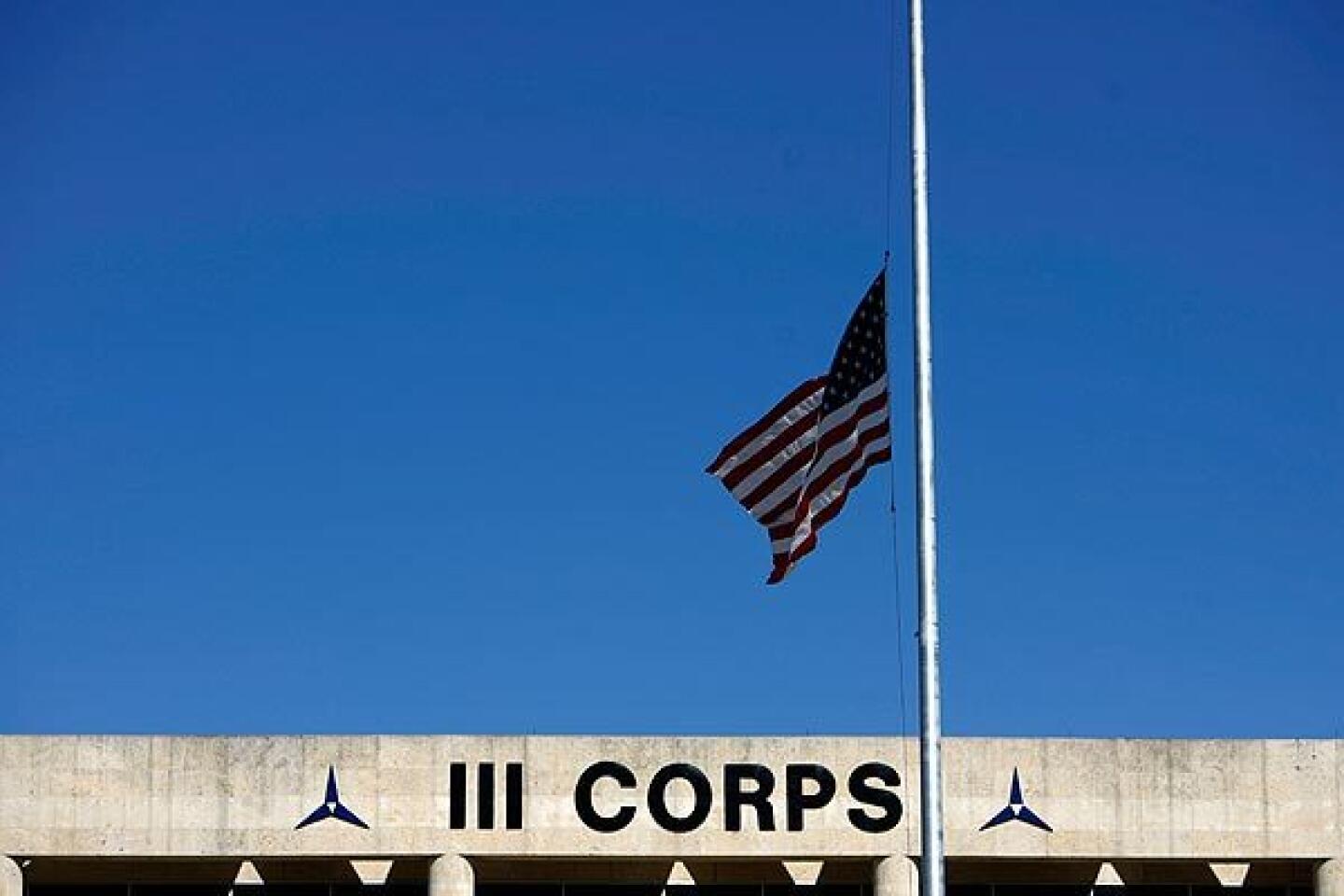
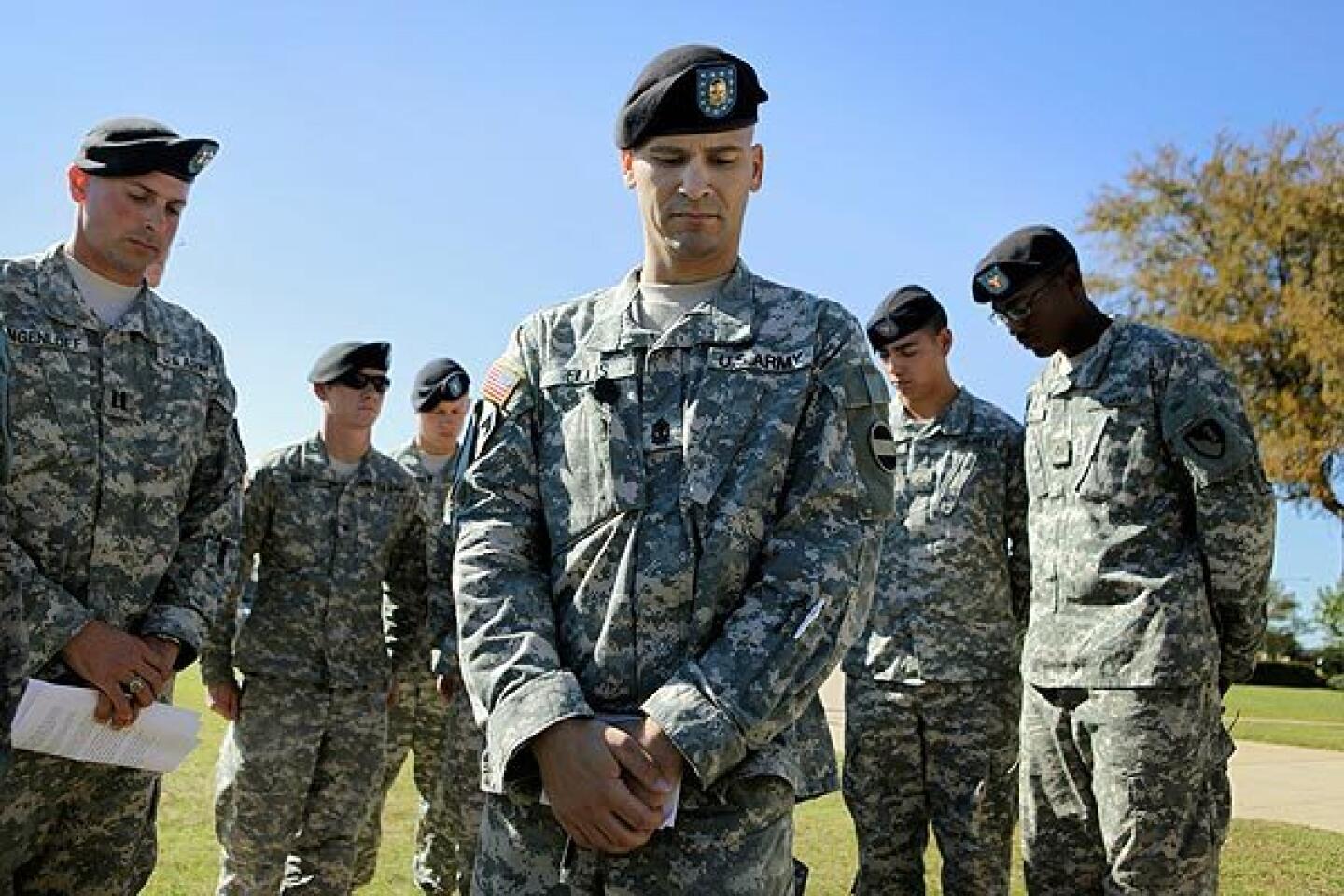
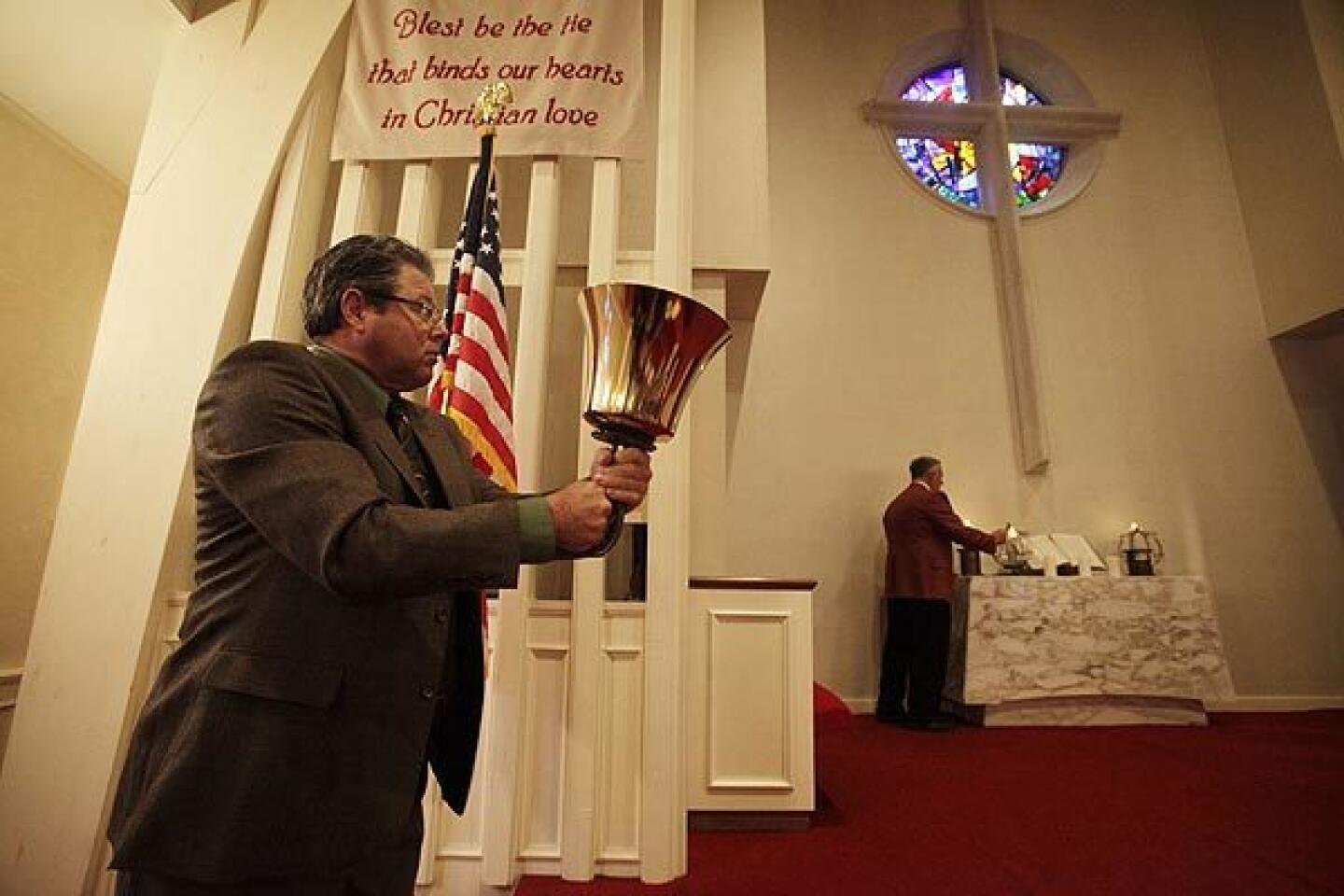
Today, Cone said, Ft. Hood will observe a day of mourning.
“We will move to normalcy as soon as possible.”
Times staff writers Julian E. Barnes in Washington and Kate Linthicum in Los Angeles contributed to this report.


Sign up for Essential California
The most important California stories and recommendations in your inbox every morning.
You may occasionally receive promotional content from the Los Angeles Times.