
Get the latest in the Steve Lopez series "Golden State."
Join columnist Steve Lopez as he explores the challenges - and occasional thrills - of aging in California.
You may occasionally receive promotional content from the Los Angeles Times.
Latest From This Author

A woman’s mother and grandmother struggle to reclaim her, but it’s as if fentanyl has taken her prisoner, and they can’t convince her to make a run for it.
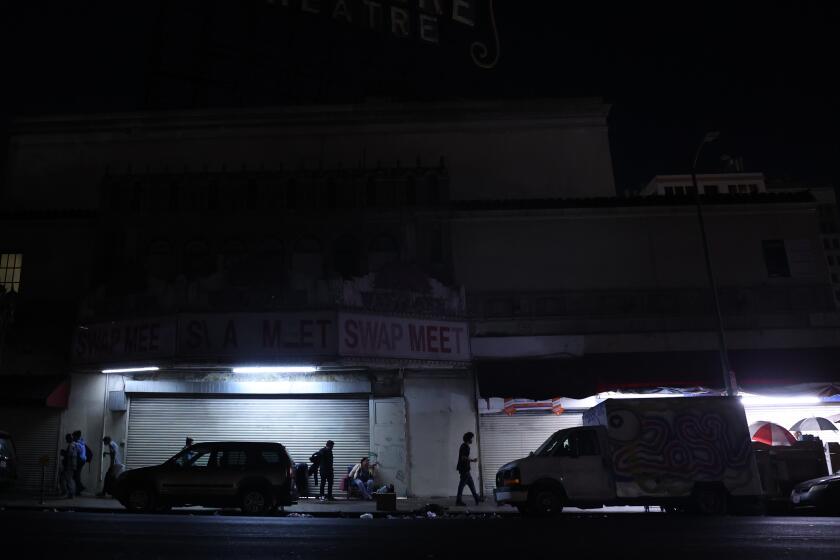
MacArthur Park is under siege from gangs and addicts. Is it too much to ask the city to fix the broken streetlights that line the borders of the public space?

Some say the Democrats are to blame for California’s problems, so what are the Republicans doing? Shrinking their tent
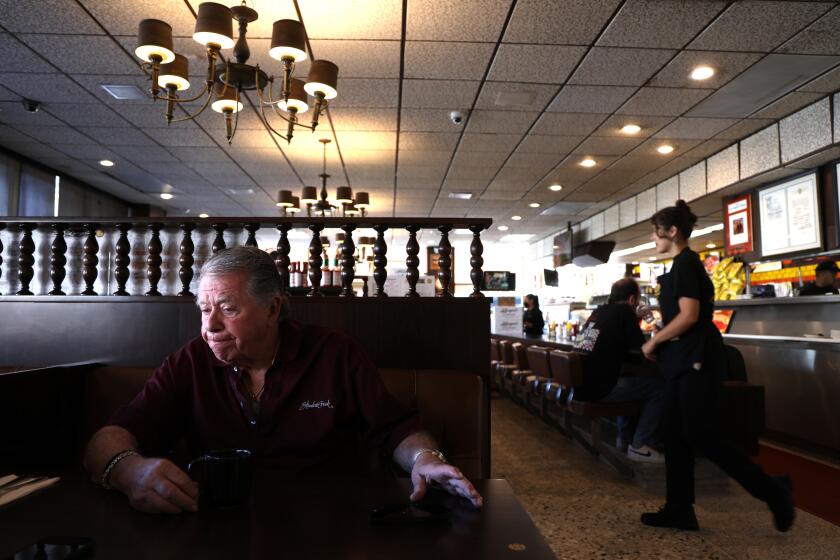
¿Cierra Langer’s? Es difícil imaginar el parque MacArthur y la ciudad sin uno de sus puntos más emblemáticos. Sería un proyecto que te dejaría sin aliento.
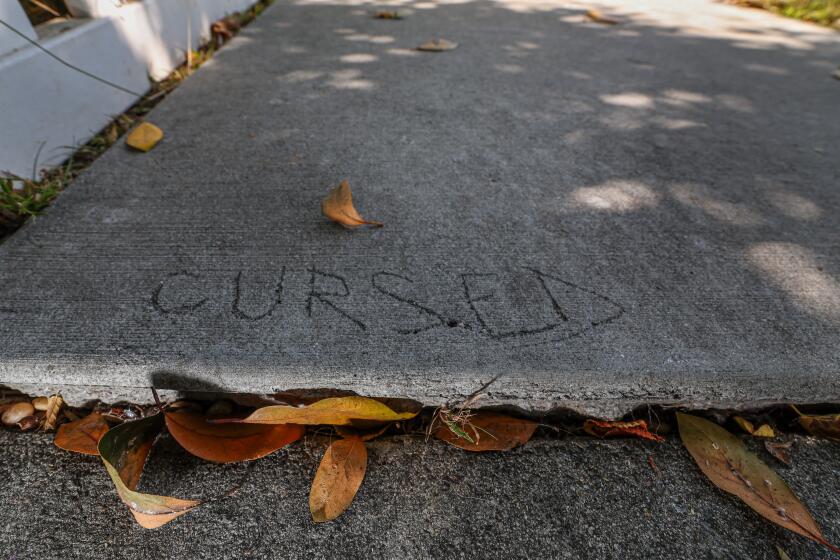
Your sidewalk needs to be fixed, so what do you do? Leave town? Get yourself a sturdy burro? Or try to work with the city of Los Angeles? Good luck on all fronts

Mayor Karen Bass read that Norm Langer was thinking of closing his deli, so she stopped by for lunch and vowed to address neighborhood problems
-
Langer’s, closing? It’s hard to imagine MacArthur Park, and the city, without one of its most iconic anchors. It would be a hole-in-your-soul development.

An audit of L.A.’s scandalous response to broken sidewalks put the service call backlog at 50,000, but there is no long-range plan in place to make those fixes

The DMV is still working out glitches in its digital eLearning course for over-70 license renewal. ‘They’re not putting enough marketing and love into this,’ one driver laments

As Los Angeles plans to butcher its Rapid Response Senior Meals Program this month, thousands wonder how they’ll get by without the weekly deliveries of free food.


