Newton: A meeting of California minds
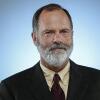
They loped in like a pair of old lions, one a bit stooped, both proud to a fault. On the left, sipping from his bottled water, was Gov. Jerry Brown. On the right, fidgeting with note cards, was Michael Milken.
The occasion was last week’s State of the State Conference put on by the Milken Institute. The day was full of wisdom and, surprisingly, optimism, as some of California’s best minds and sharpest business types appraised the state and found reason for both concern and hope.
But the main event was the dialogue between Milken and Brown, icons of dichotomous California — the ascetic governor sharing a stage with the financial wizard whose name was once synonymous with greed. Jerry Brown, who once slept on a futon, in conversation with the man who made a vast fortune while presiding over the bond department of Drexel Burnham Lambert, then went to prison for securities violations and then reemerged as a studious philanthropist and engaged citizen.
It’s easy to imagine that these two would give each other wide berth. But in one of those weird examples of the spectrum bending at the ends and joining back in the middle, California’s Zen Jesuit and its former San Fernando Valley junk-bond king found much to agree about.
Milken is not a model interviewer. He insisted on referring to the governor throughout as “Jerry.” He likes to talk about himself and devoted at least as much attention to praising Brown as to questioning him. Nevertheless, he succeeded in drawing out the governor, engaging him in a reflection on the relative costs of prisons and schools, the need to strip back excessive regulation that is thwarting job growth, and the pressing demand for pension reform. It even looked for a minute as if Brown might make a little news: The governor promised he would not draw on his various state pensions — he’s been governor twice, as well as attorney general and mayor of Oakland — until he has fixed the pension system. He later said he was kidding.
Brown was typically elliptical and cool, and he matched Milken’s occasional meandering with some of his own. When Milken asked him about paying for California’s higher education system, Brown launched into an alternately loopy and inspiring riff on what it takes to educate children, most of which had nothing to do with Milken’s question. His bottom line, though, was worth considering. Education, he said, requires rigor and imagination. Too much imagination leads to insanity; too much rigor leads to stasis. The answers, as often for Brown, lie in balance.
Brown was similarly shrewd on politics. Fear, he warned, drives bad policy. In the years since he left the governorship the first time, California has built 23 prisons and just two new colleges. The federal government, responding to the threat of terrorism, has limited the number of immigrants who can come here to live. Those are irrational responses to fear, and Brown longs for a more rational and compassionate politics.
Milken, meanwhile, kept up a steady stream of praise. He compared Brown to Albert Einstein and Thomas Edison, neither of which was very apt. Brown is an eccentric politician, and he founded two schools: a military academy, and a school for the arts. But don’t count on him to invent a light bulb.
Watching the two men on the dais, it was hard for someone who grew up in California not to compare them with their younger selves. And they too seemed aware of the passage of time. Milken reminisced about having known Brown for 40 years and boasted of feeling younger than ever. Brown didn’t exactly bite. He said he sometimes feels youthful and other times old — no surprise given the challenges he confronts in Sacramento.
The gaunt Milken also has a distracting preoccupation with weight. He displayed photos of Brown as a younger man, asserting his suspicion that Brown, who once weighed over 200 pounds, held off on running for governor again until he could present a slimmer self to the public. Twice, he prodded Brown to say how much he weighed. Either out of deference or embarrassment, Brown gave in: “About 175.”
Later, Milken showed a series of slides, illustrating his concern about Californians’ taste for such things as deep-fried butter and chocolate-covered bacon. Brown did his best to share Milken’s outrage. He said he’s recently “gotten excited about kale.” With a little olive oil and salt, he insisted, “it’s pretty damn good.”
Brown and Milken are no longer the dapper turks who once dazzled California. They’re older now, eating kale and reminiscing. But neither the passage of time nor the many challenges both have faced has dimmed their devotion to the state or commitment to confronting its troubles. They express a common demand for better education, for a politics of growth and potential rather than fear and retreat. Each is fighting for those ideals. Both still have some roar left.
More to Read


Get the L.A. Times Politics newsletter
Deeply reported insights into legislation, politics and policy from Sacramento, Washington and beyond. In your inbox three times per week.
You may occasionally receive promotional content from the Los Angeles Times.