FBI unable to break into Texas church gunman’s cellphone
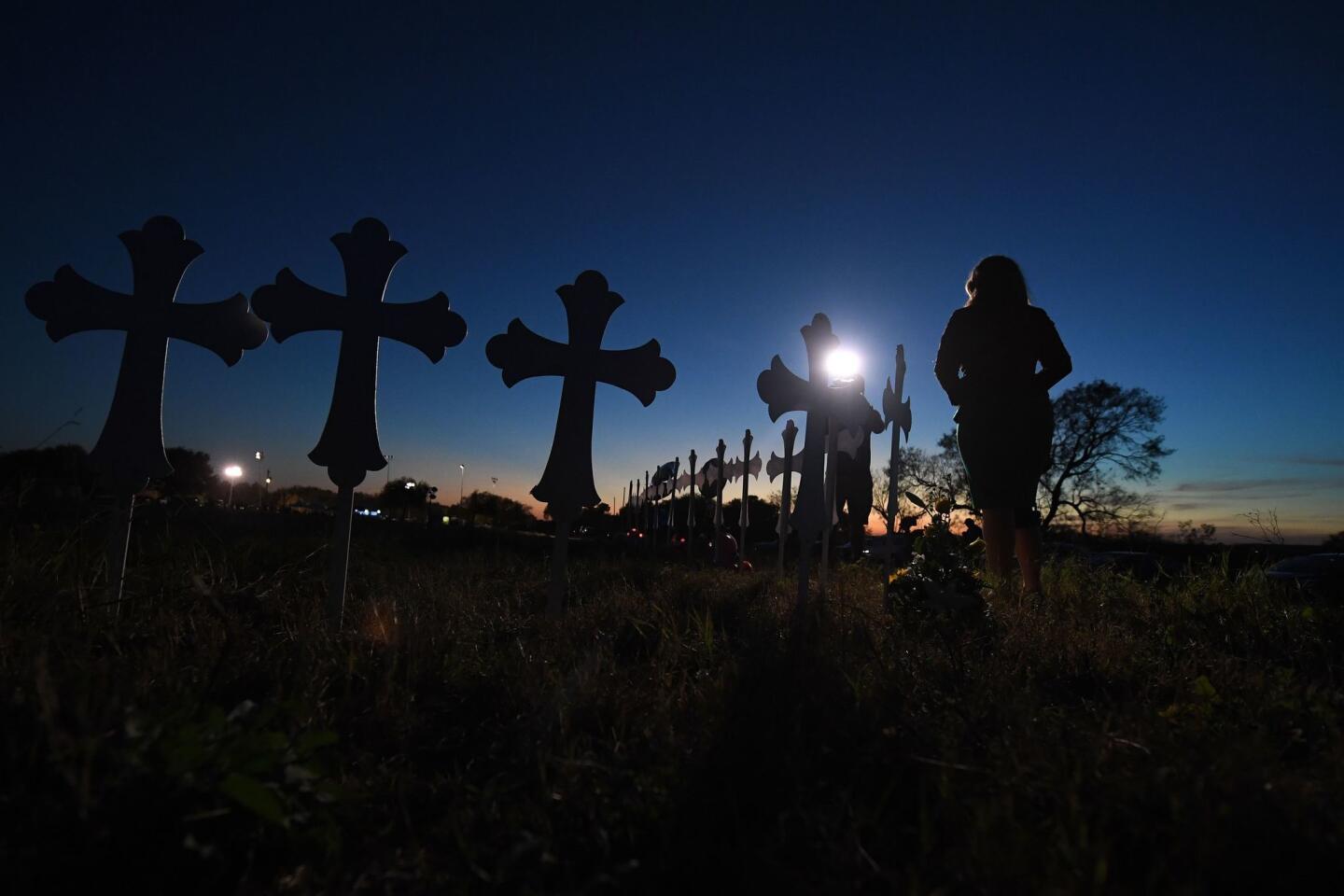
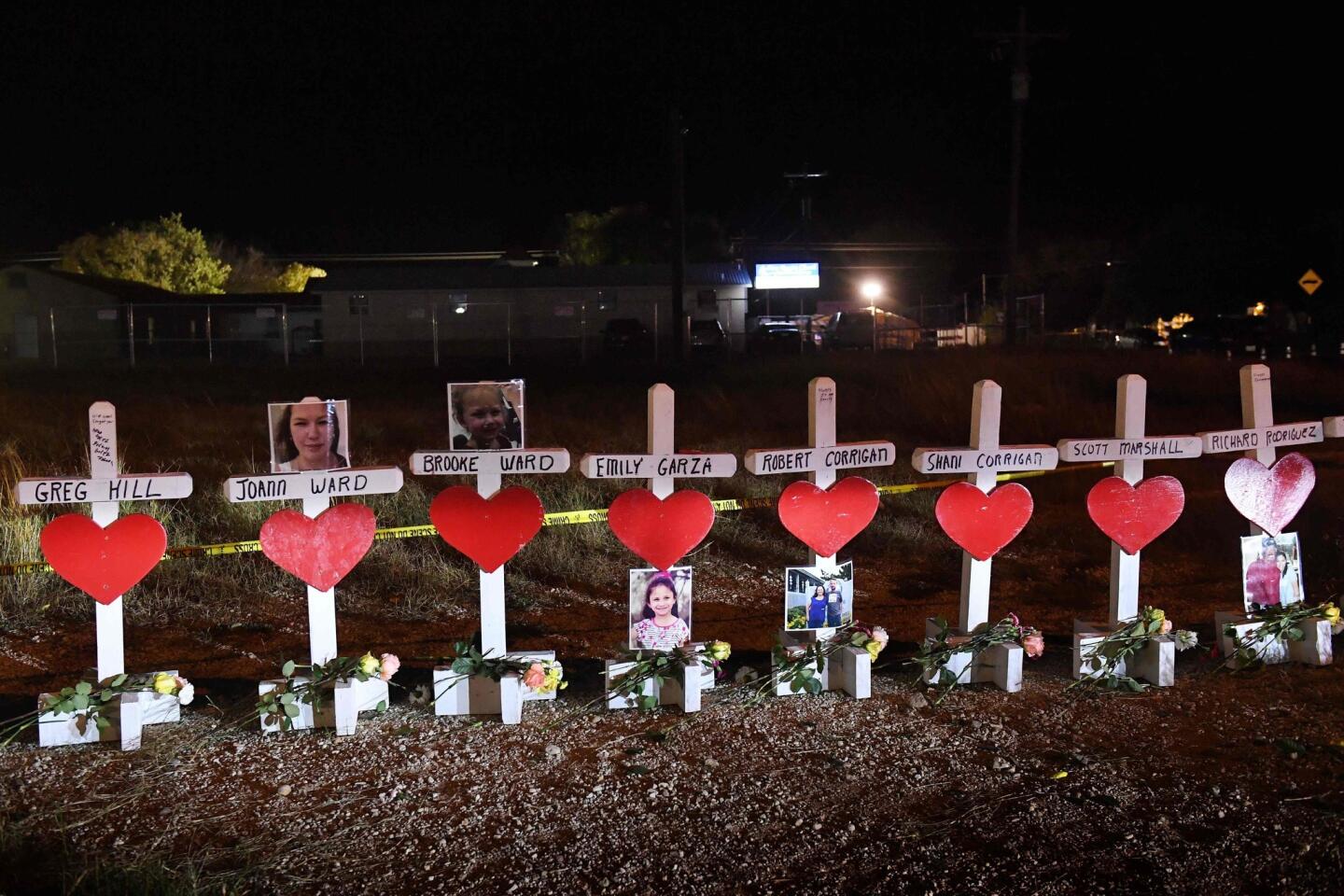
Maria Durand, left, and her daughter, Lupita Alcoces visit 26 crosses representing the victims of the massacre at the First Baptist Church of Sutherland Springs, Texas.
The FBI has been unable to access the phone of the Texas church gunman, officials said Tuesday, voicing their frustration with the tech industry as they try to gather evidence about Devin Kelley’s motive for killing 26 churchgoers in a small town outside San Antonio.
“With the advance of the technology and the phones and the encryptions, law enforcement — whether that’s at the state, local or federal level — is increasingly not able to get into these phones,” Christopher Combs, the special agent in charge of the FBI’s San Antonio bureau, said in a televised news conference.
Combs declined to say what type of phone Kelley had, “because I don’t want to tell every bad guy out there what phone to buy.”
Advertisement
The revelation came as investigators continued to scour the First Baptist Church in Sutherland Springs, where Kelley fired hundreds of rounds and left behind 15 empty 30-round ammunition magazines after his attack Sunday.
The FBI’s refusal to identify the manufacturer of the phone stands in contrast to its public feud with Apple in the aftermath of the San Bernardino shooting in 2015 that left 14 people dead.
In that case, investigators wanted access to gunman Syed Farook’s iPhone 5C, hoping the device would provide information about possible accomplices or terror networks.
Advertisement
Apple defied a court order to help crack the phone’s pass code, arguing it would set a precedent that would compromise the security of billions of customers.
1/23
Crosses with the names of victims are seen outside the First Baptist Church, the scene of a mass shooting that killed 26 people in Sutherland Springs, Texas.
(Mark Ralston / AFP/Getty Images)
2/23
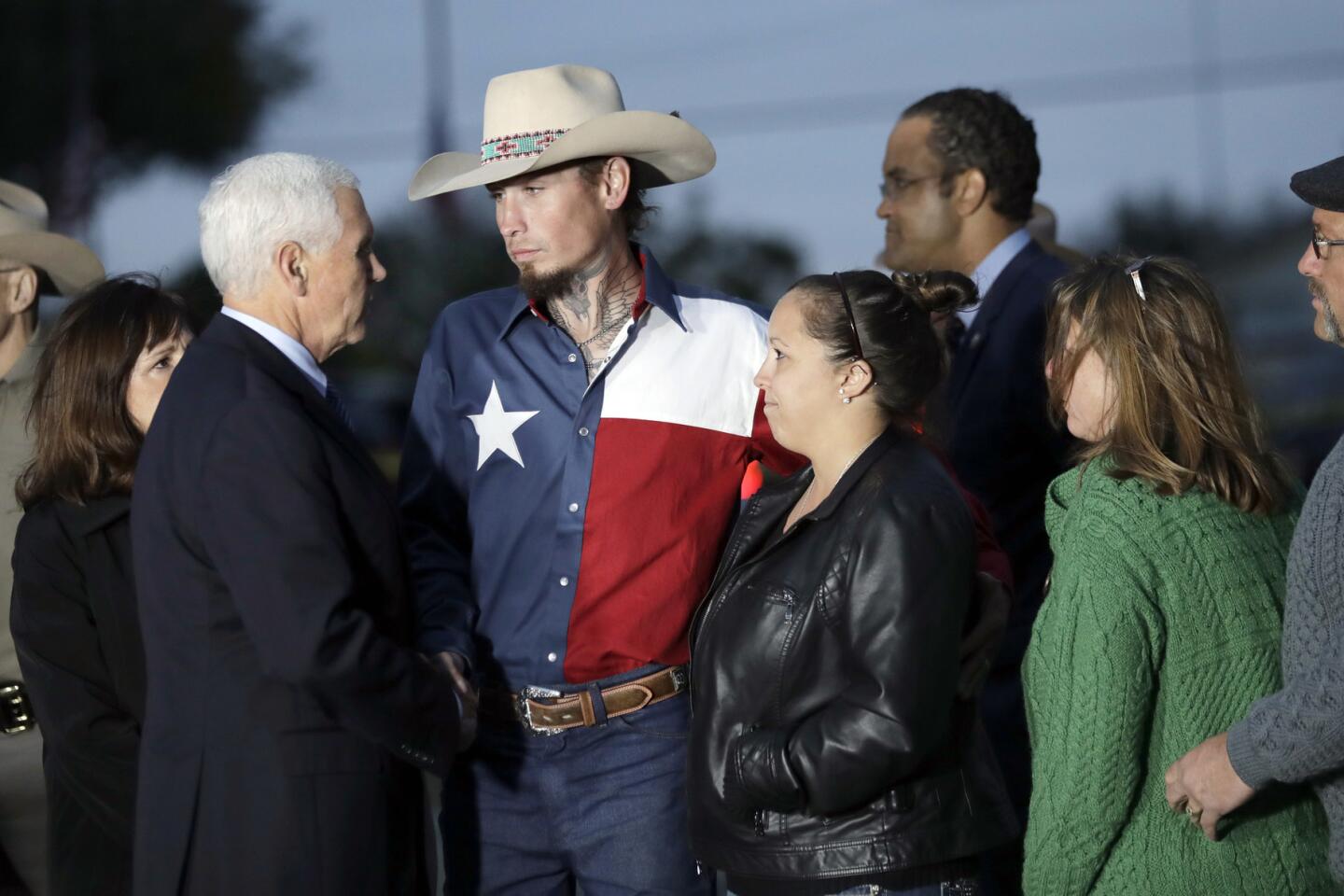
Vice President Mike Pence and his wife, Karen, talk with Johnnie Langendorff and his girlfriend, Summer Caddell, third from right, as they visit with first responders, family, friends and victims outside the First Baptist Church of Sutherland Springs.
(Eric Gay / Associated Press)
3/23
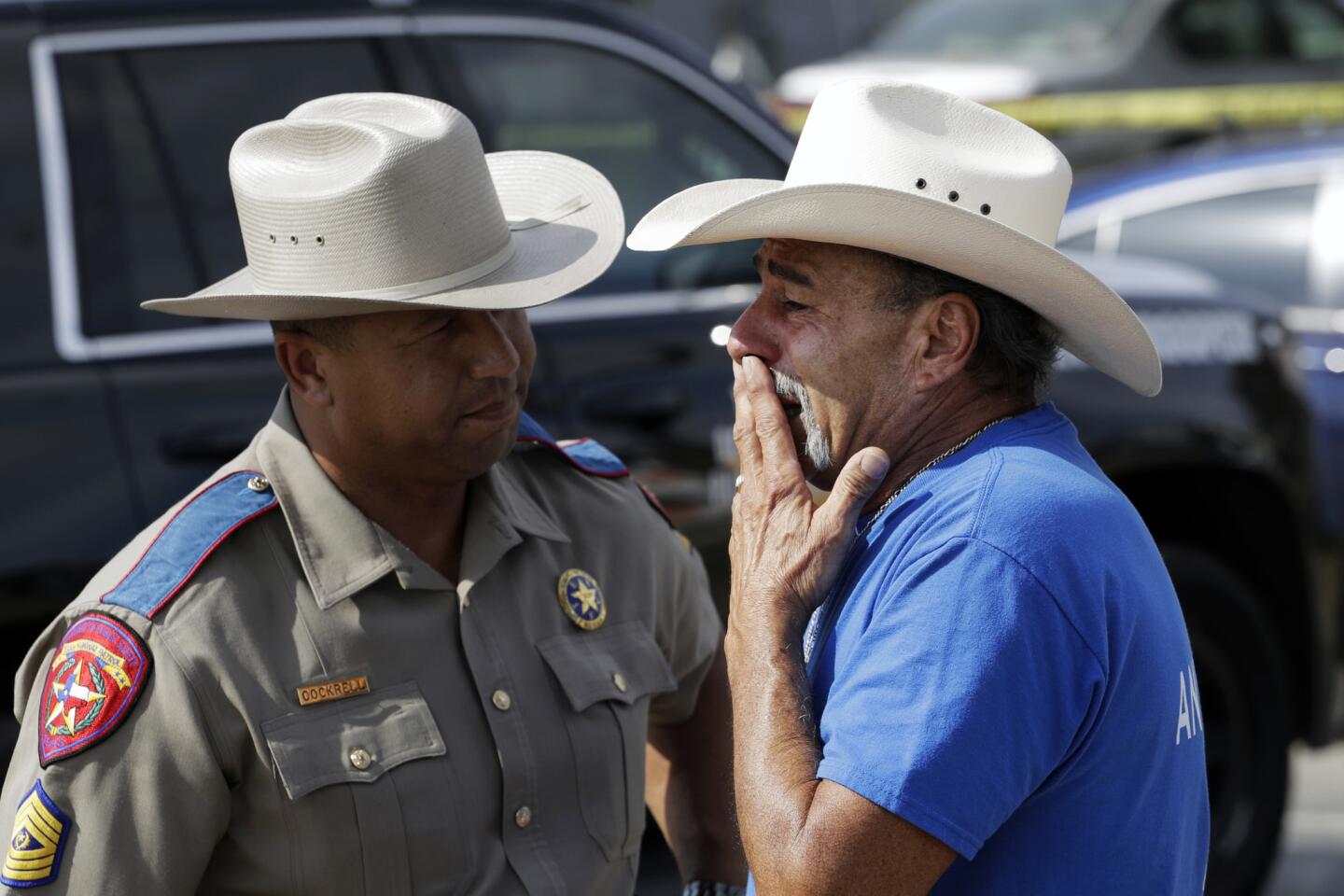
Rene Moreno, right, holds back tears as he speaks with a Texas state trooper at the scene of a shooting at the First Baptist Church of Sutherland Springs.
(Eric Gay / Associated Press)
4/23
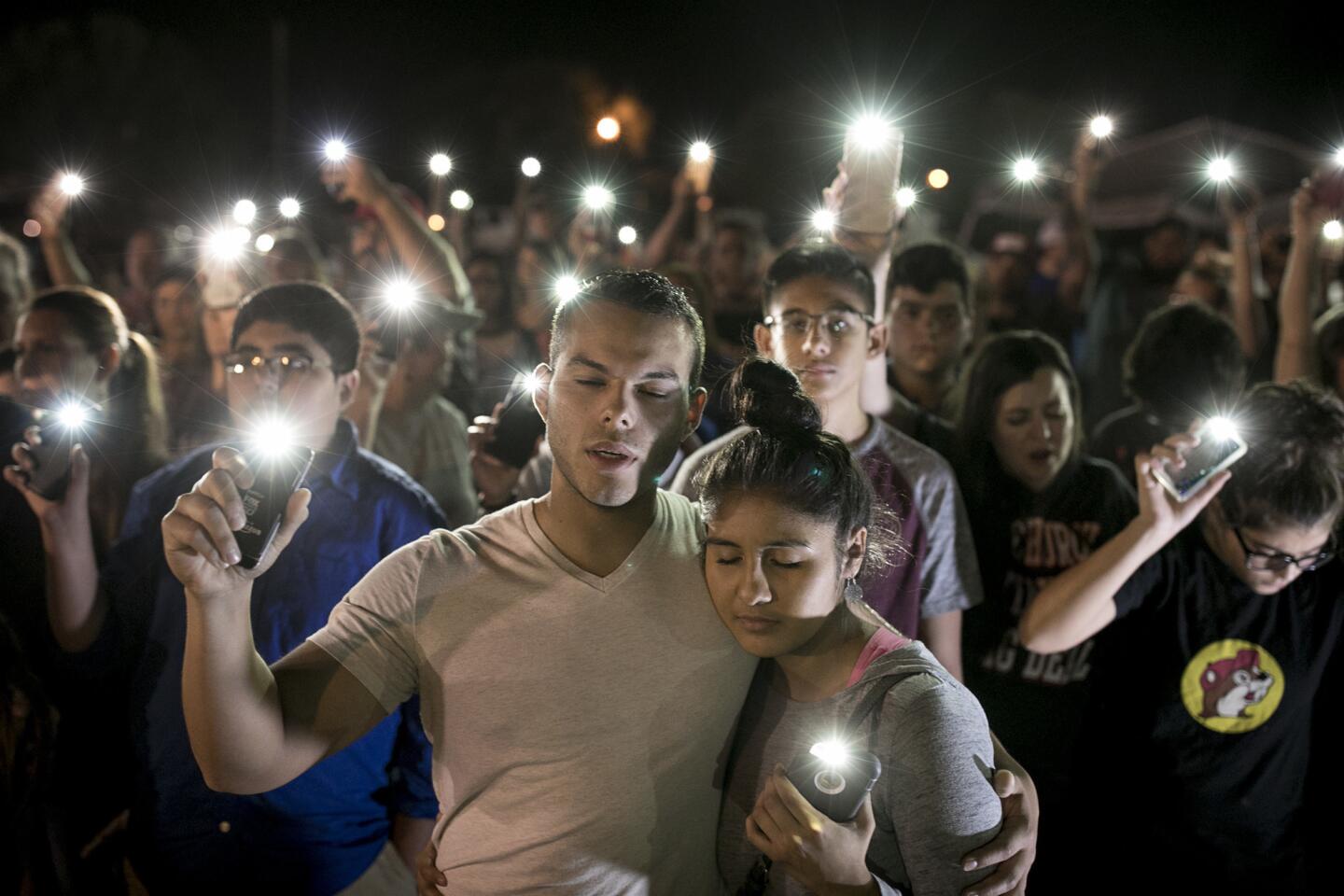
Matthew Mata and Erika Gonzalez participate in a memorial service for the victims of Sunday’s church shooting in Sutherland Springs, Texas.
(Jay Janner / Associated Press)
5/23
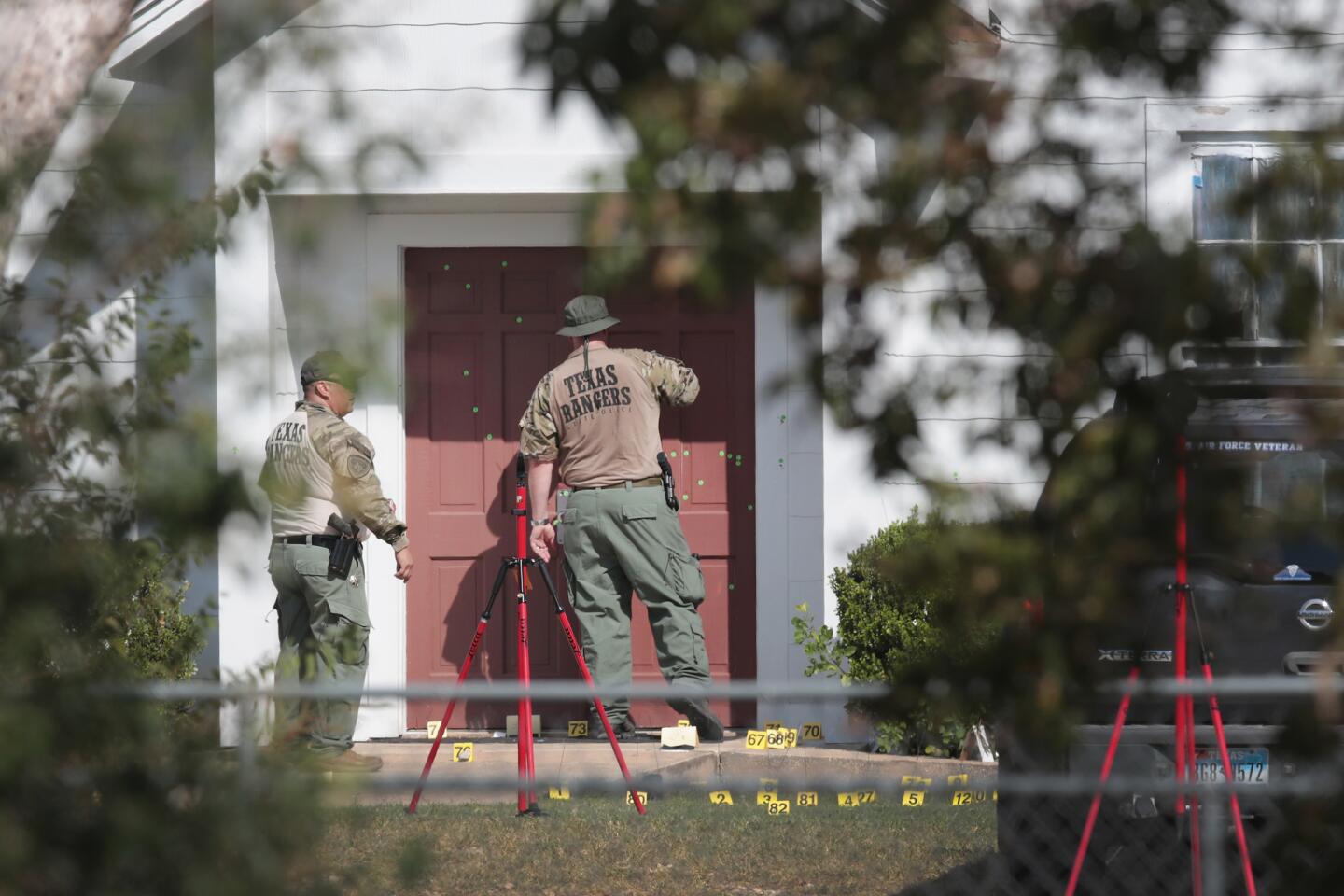
Investigators examine bullet holes in the front door of the First Baptist Church of Sutherland Springs, Texas, on Tuesday.
(Scott Olson / Getty Images)
6/23
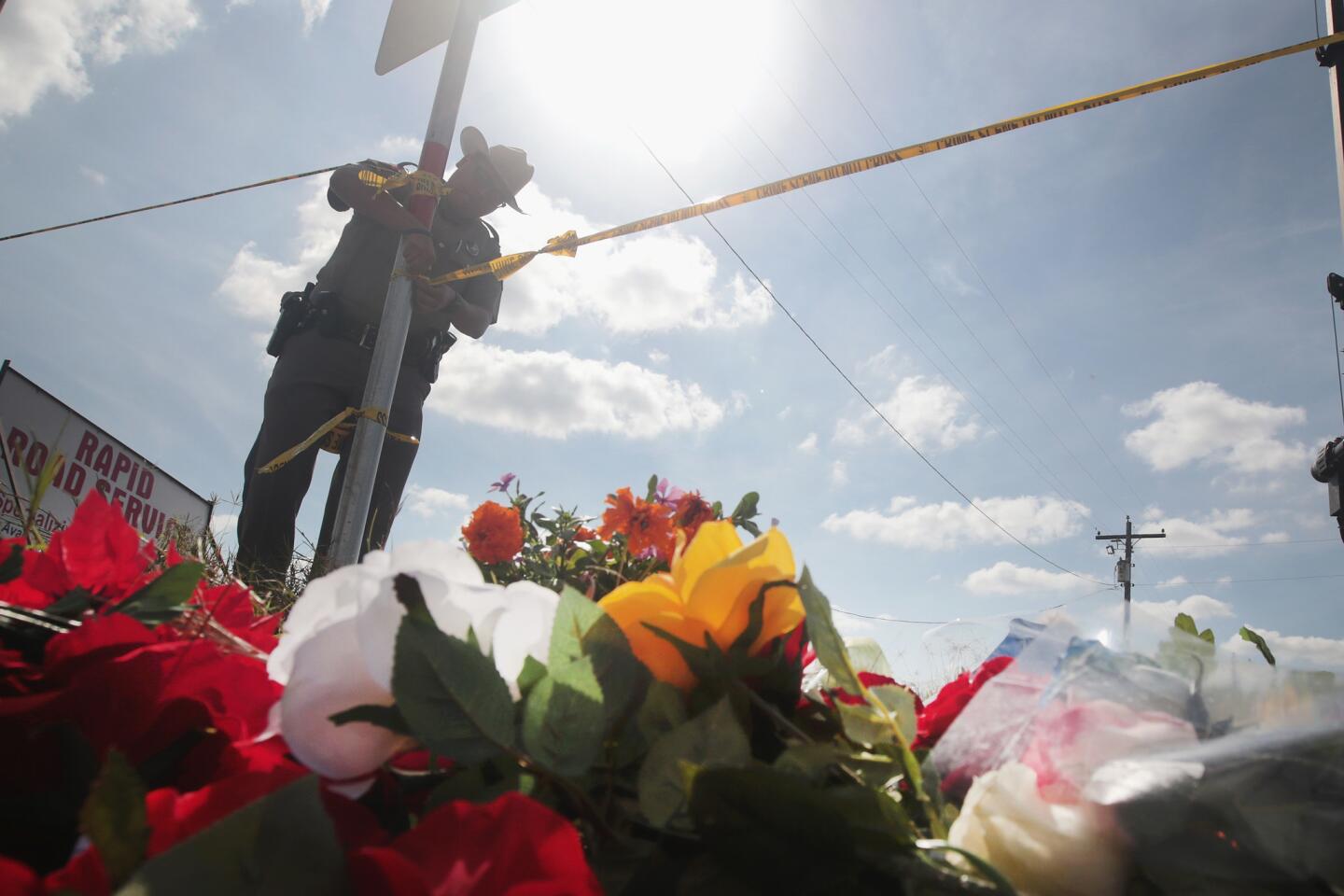
A police officer ties off crime scene tape near a small memorial close to the church where 26 people were shot to death Sunday.
(Scott Olson / Getty Images)
7/23
Twenty-six crosses stand in the small town of Sutherland Springs in memory of those killed Sunday when a gunman burst into the church.
(Mark Ralston / AFP/Getty Images)
8/23
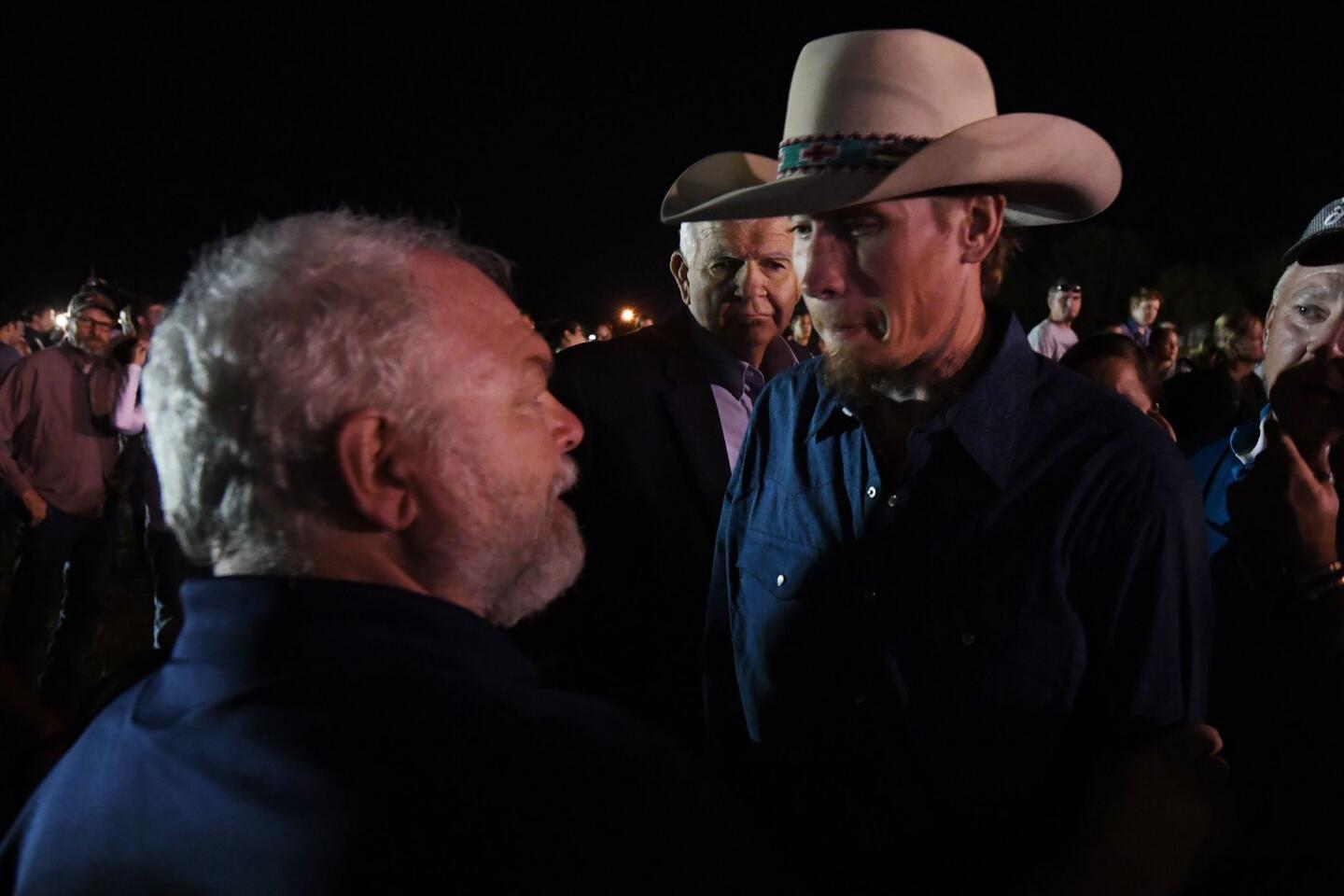
Stephen Willeford, left and Johnnie Langendorff, who both chased after gunman Devin Kelley, meet again during a vigil in Sutherland Springs on Monday.
(Mark Ralston / AFP/Getty Images)
9/23
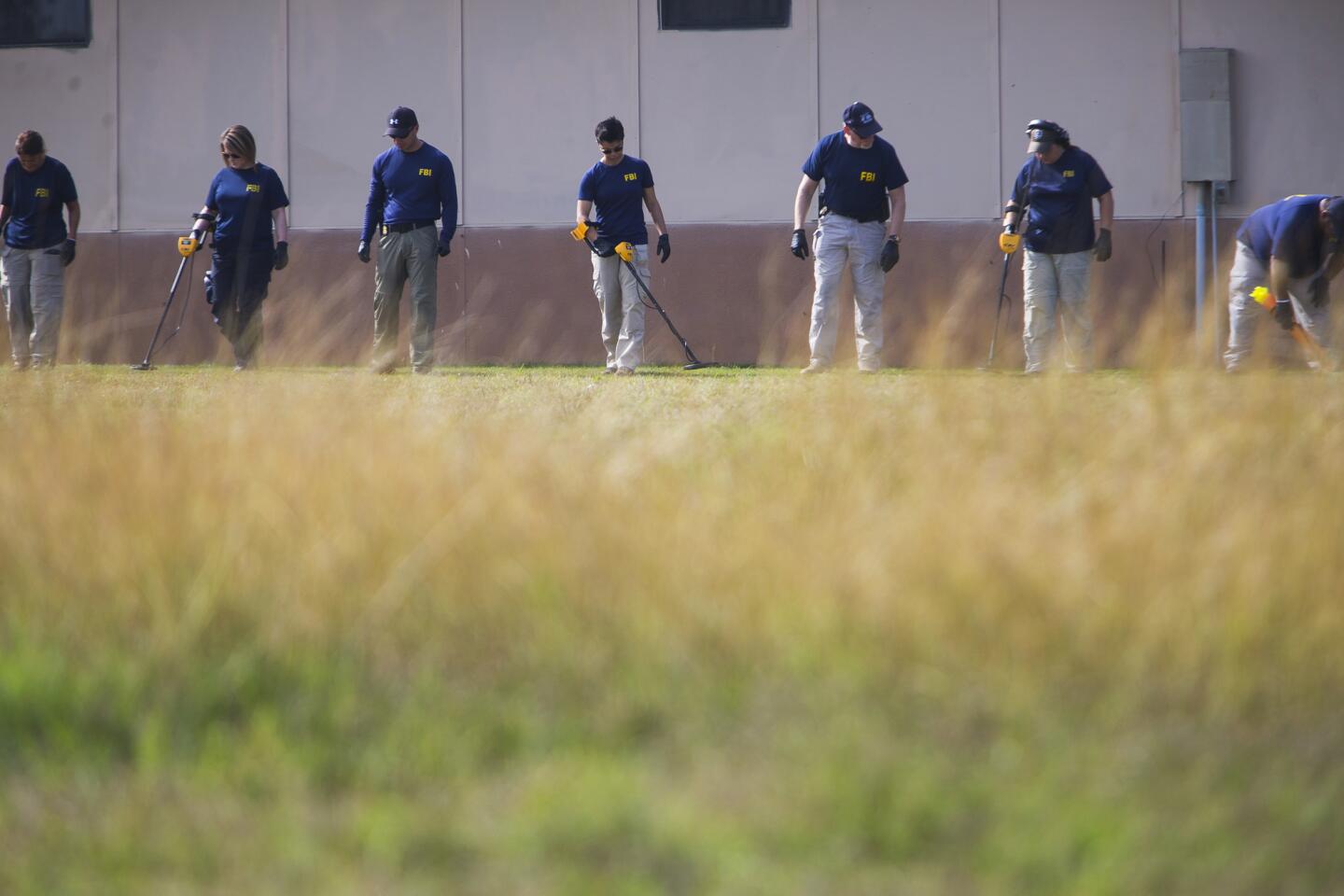
FBI officials use metal detectors to look for evidence in a Sutherland Springs field.
(Mark Mulligan / Associated Press)
10/23
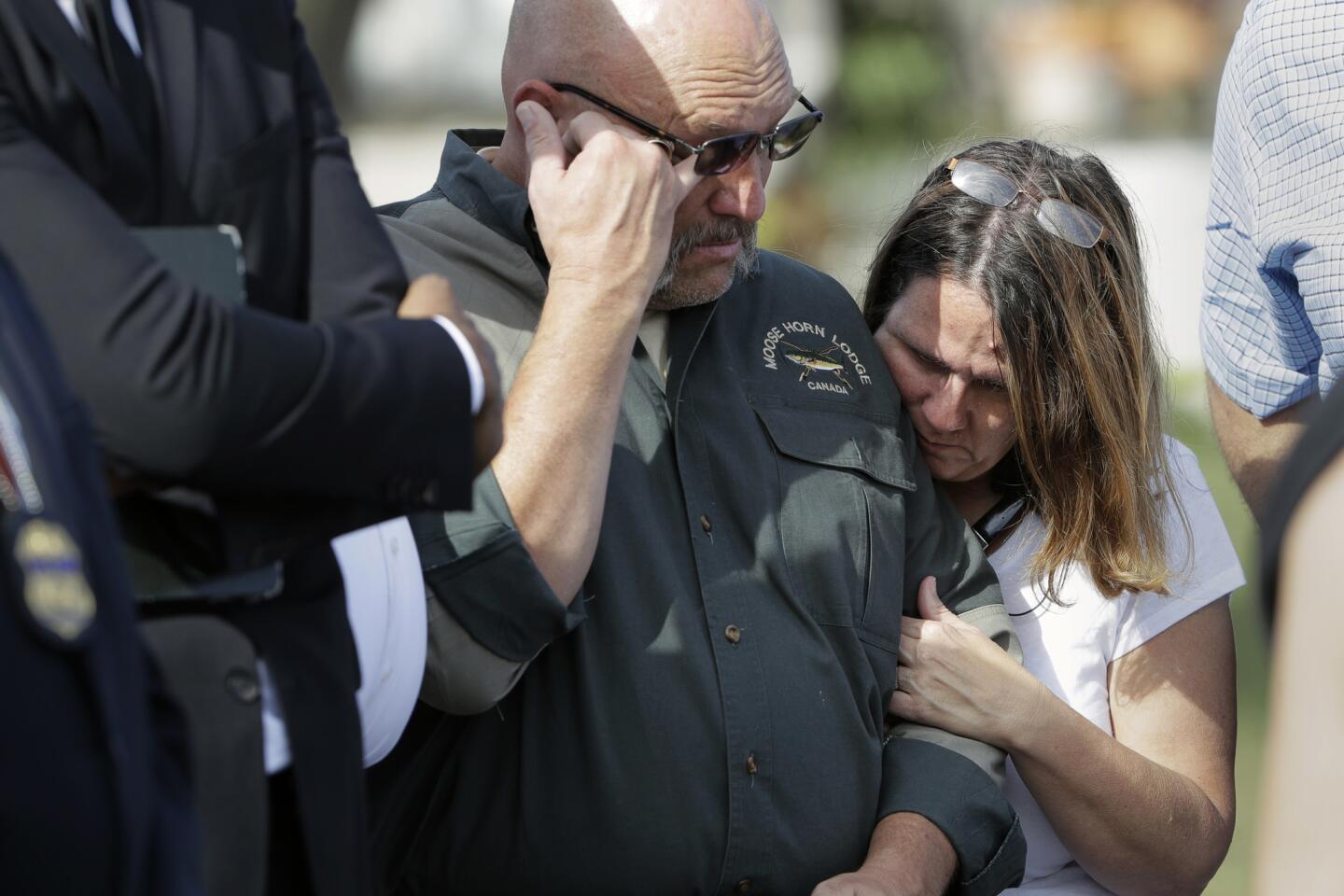
Pastor Frank Pomeroy of the First Baptist Church and his wife, Sherri, attend a news conference. Their daughter Annabelle, 14, was among the 26 people killed.
(Eric Gay / Associated Press)
11/23
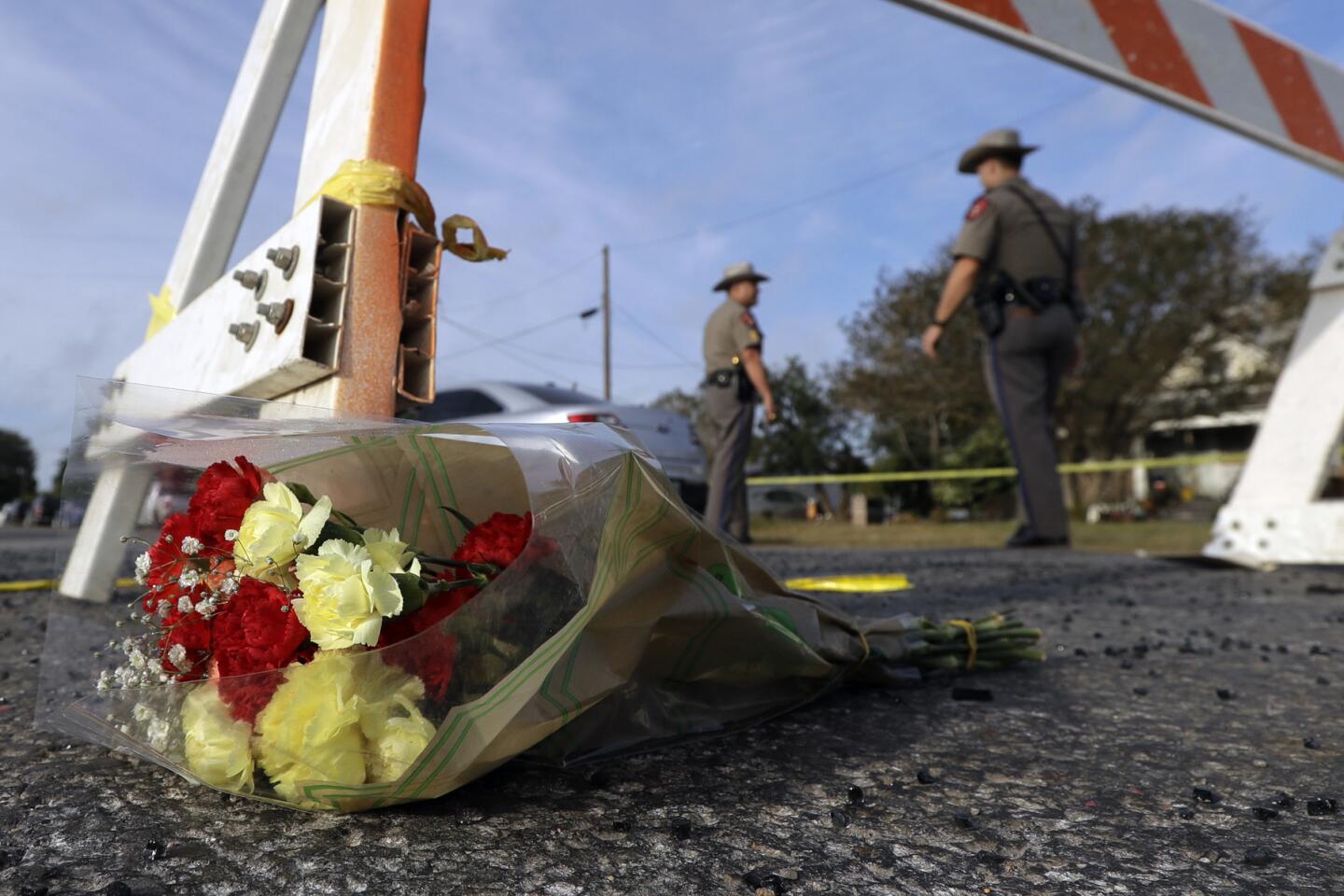
A bouquet of flowers lies at the base of a roadblock as law enforcement officials work Monday at the scene of the shooting in Sutherland Springs, Texas.
(Eric Gay / Associated Press)
12/23
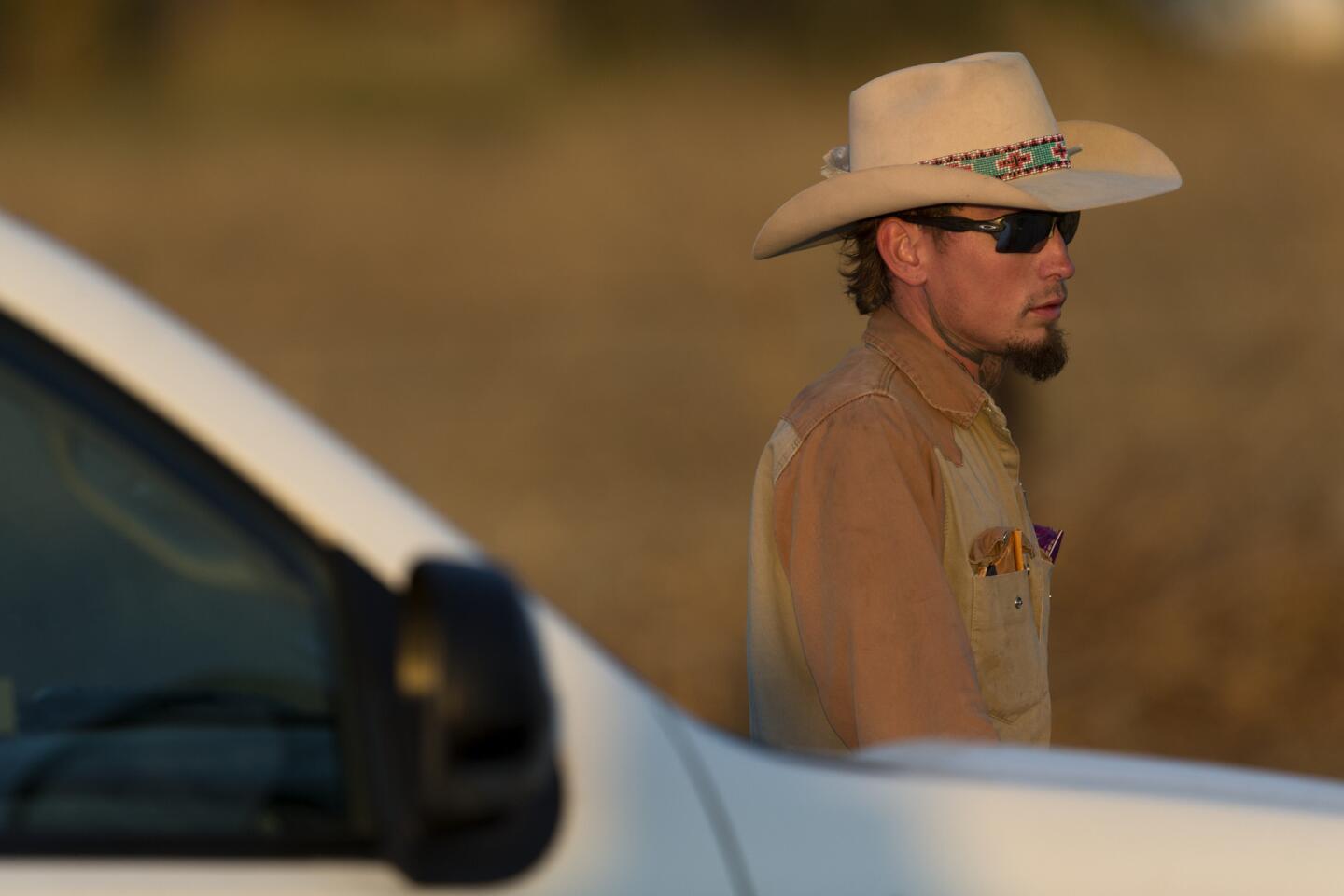
Johnny Langendorff, who chased the church gunman, waits to be picked up from the scene where Devin Kelley was found dead in Guadalupe County, Texas, on Sunday.
(William Luther / Associated Press)
13/23
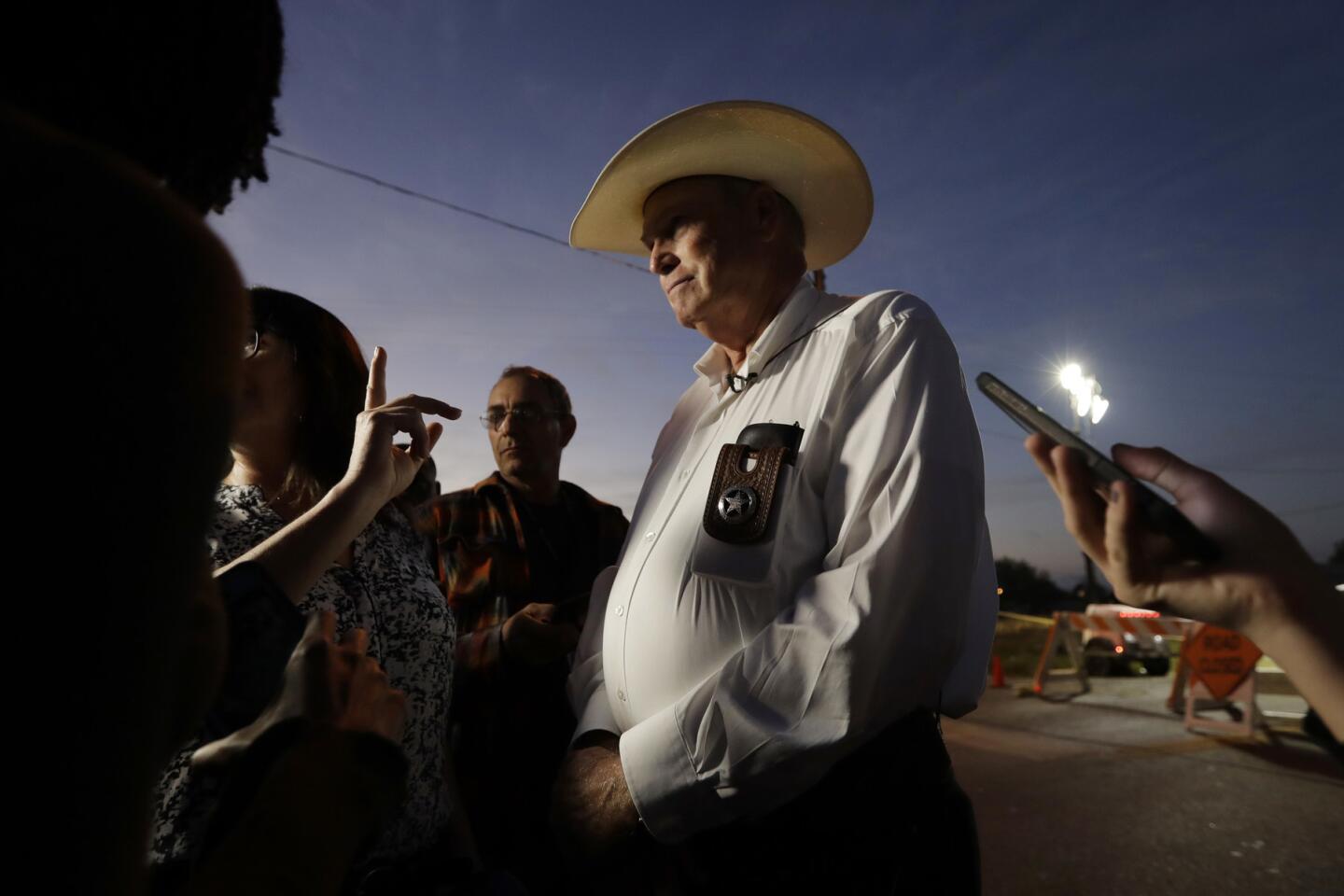
Wilson County Sheriff Joe Tackitt Jr. provides an update to the media on Monday concerning the mass shooting in Sutherland Springs, Texas.
(Eric Gay / Associated Press)
14/23
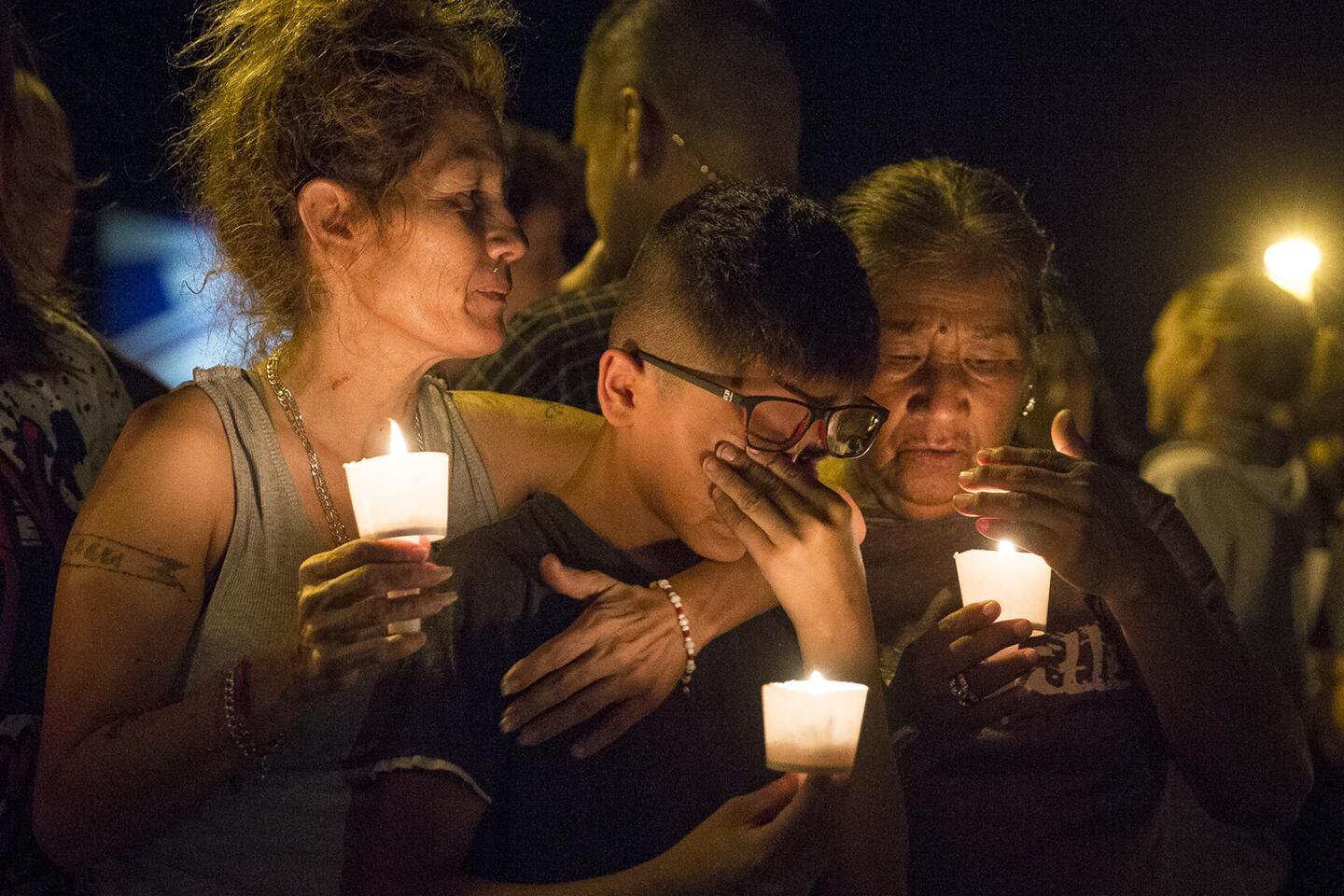
Mona Rodriguez comforts her 12-year-old son, J Anthony Hernandez, during a Sunday night vigil for the victims killed at the First Baptist Church of Sutherland Springs.
(Nick Wagner / Associated Press)
15/23
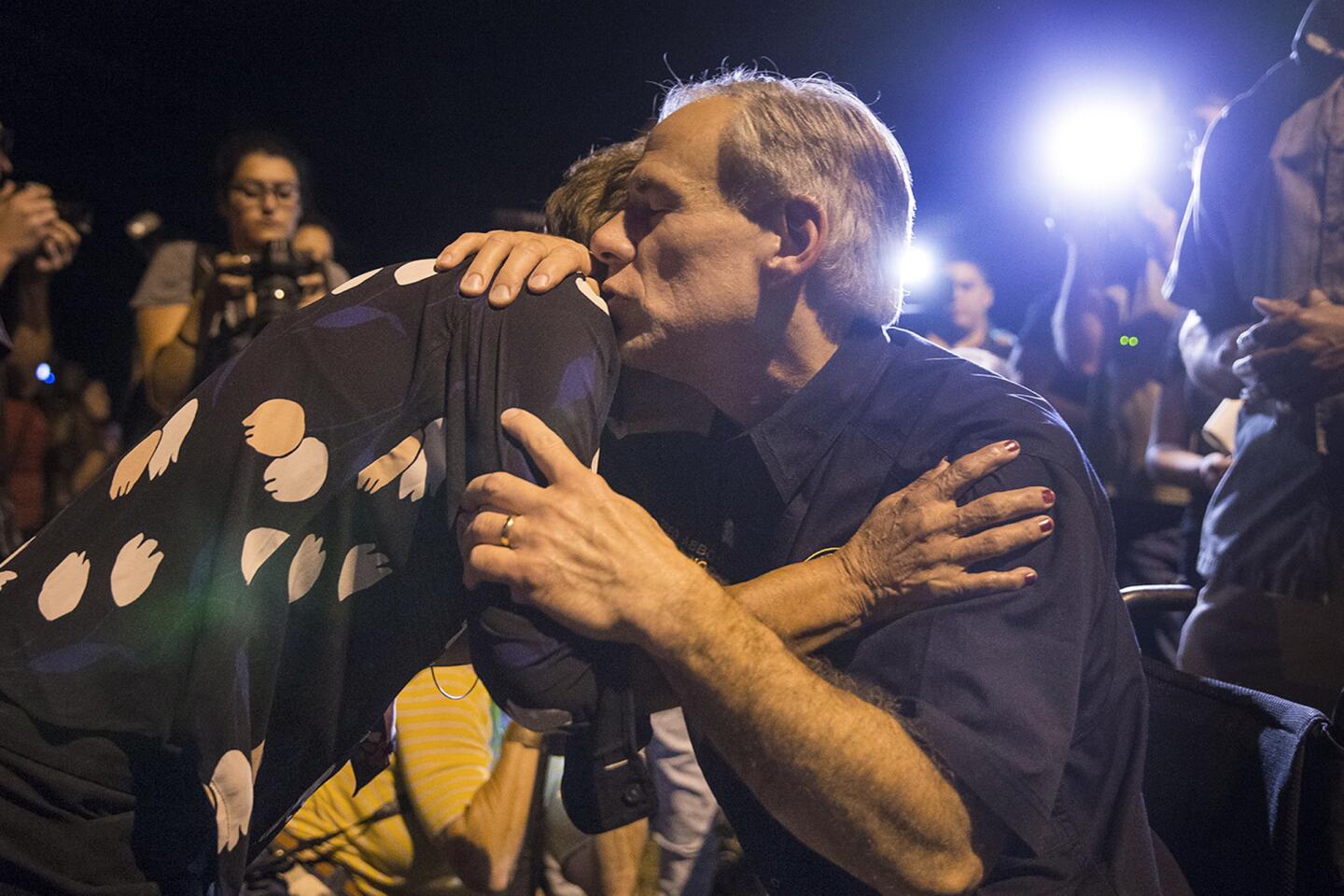
Texas Gov. Greg Abbott embraces a woman during a candlelight vigil for the victims of the mass shooting.
(Nick Wagner / Associated Press)
16/23
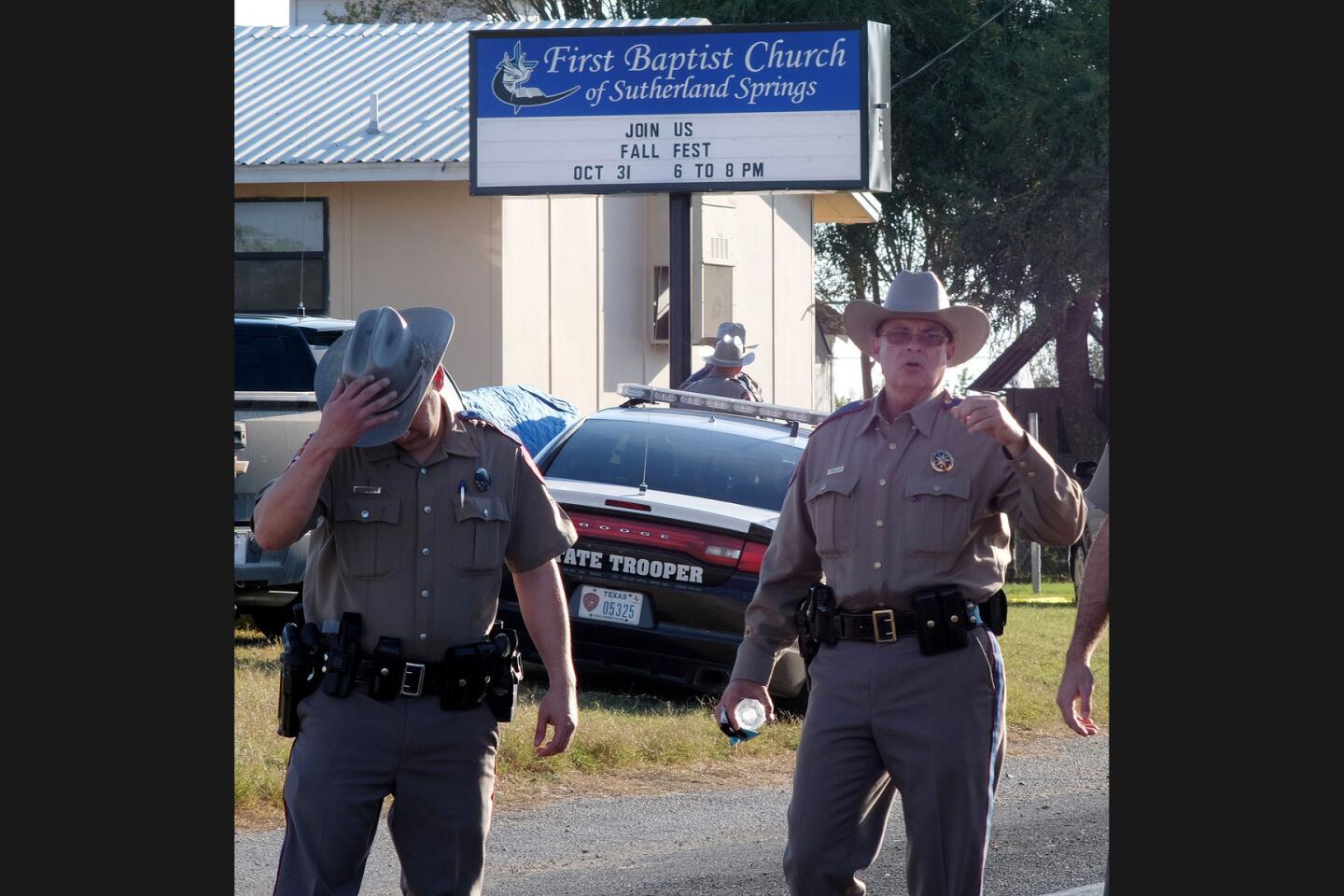
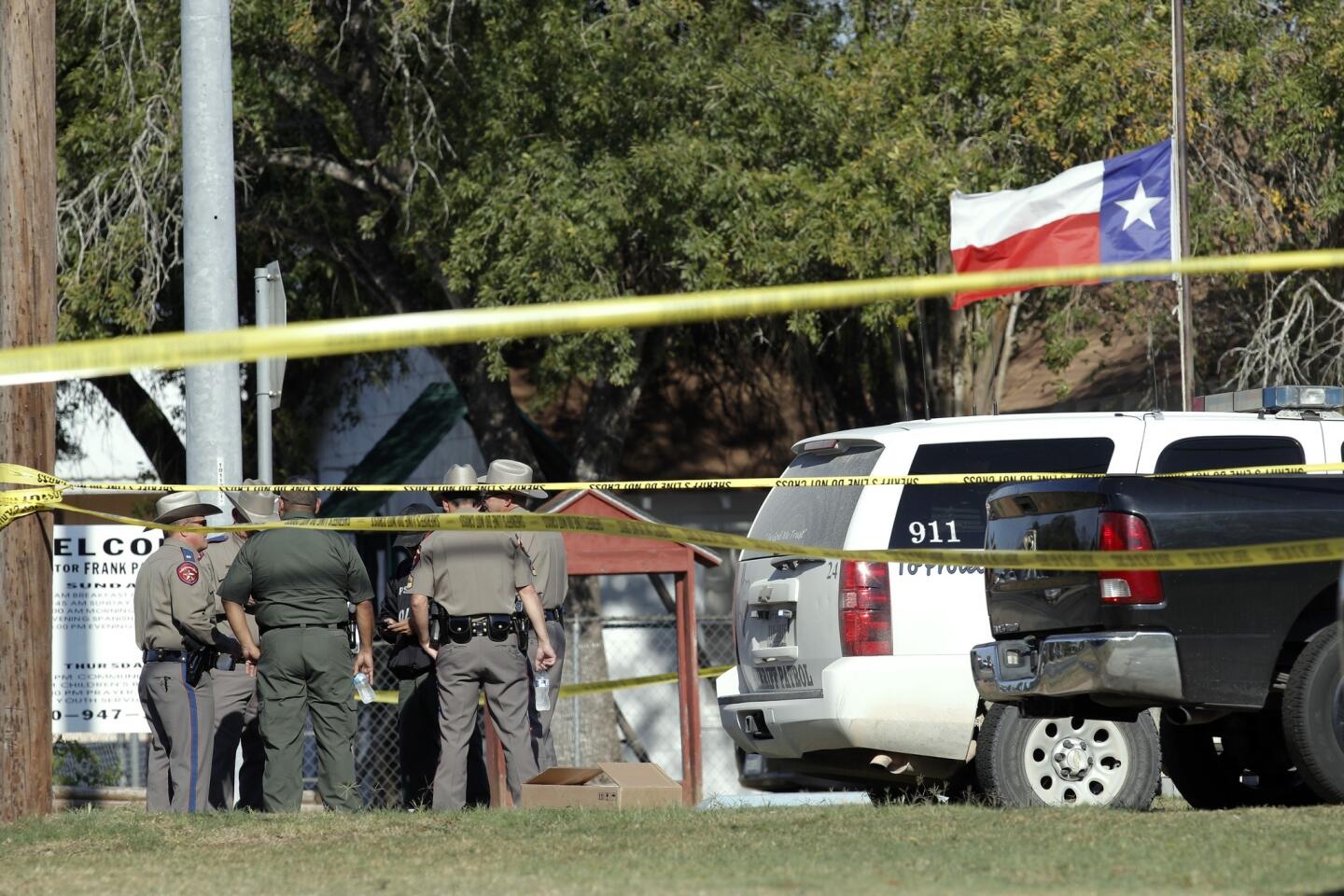
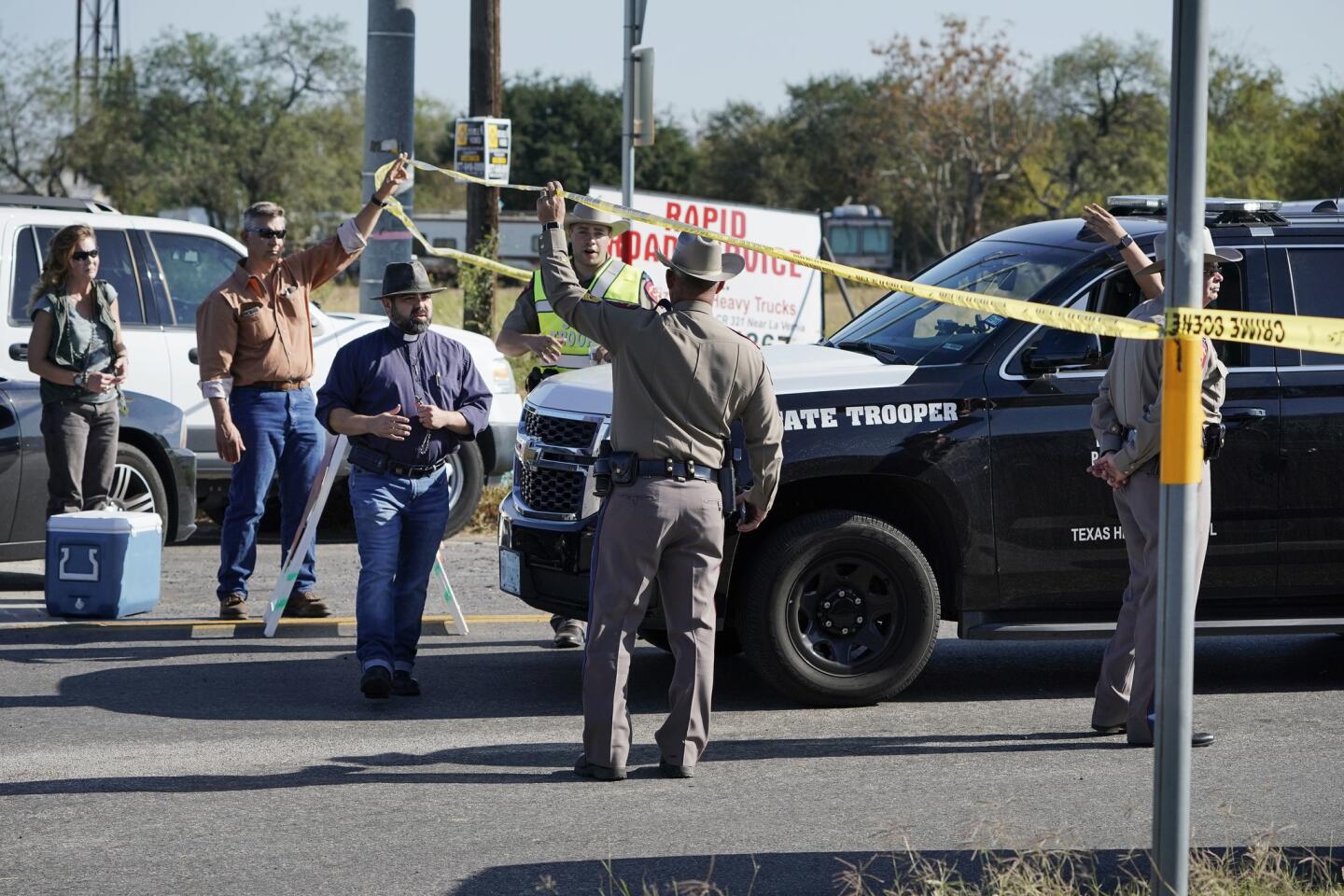
Texas Department of Public Safety troopers stand outside the First Baptist Church.
(R. Tomas Gonzalez / EPA/Shutterstock)
17/23
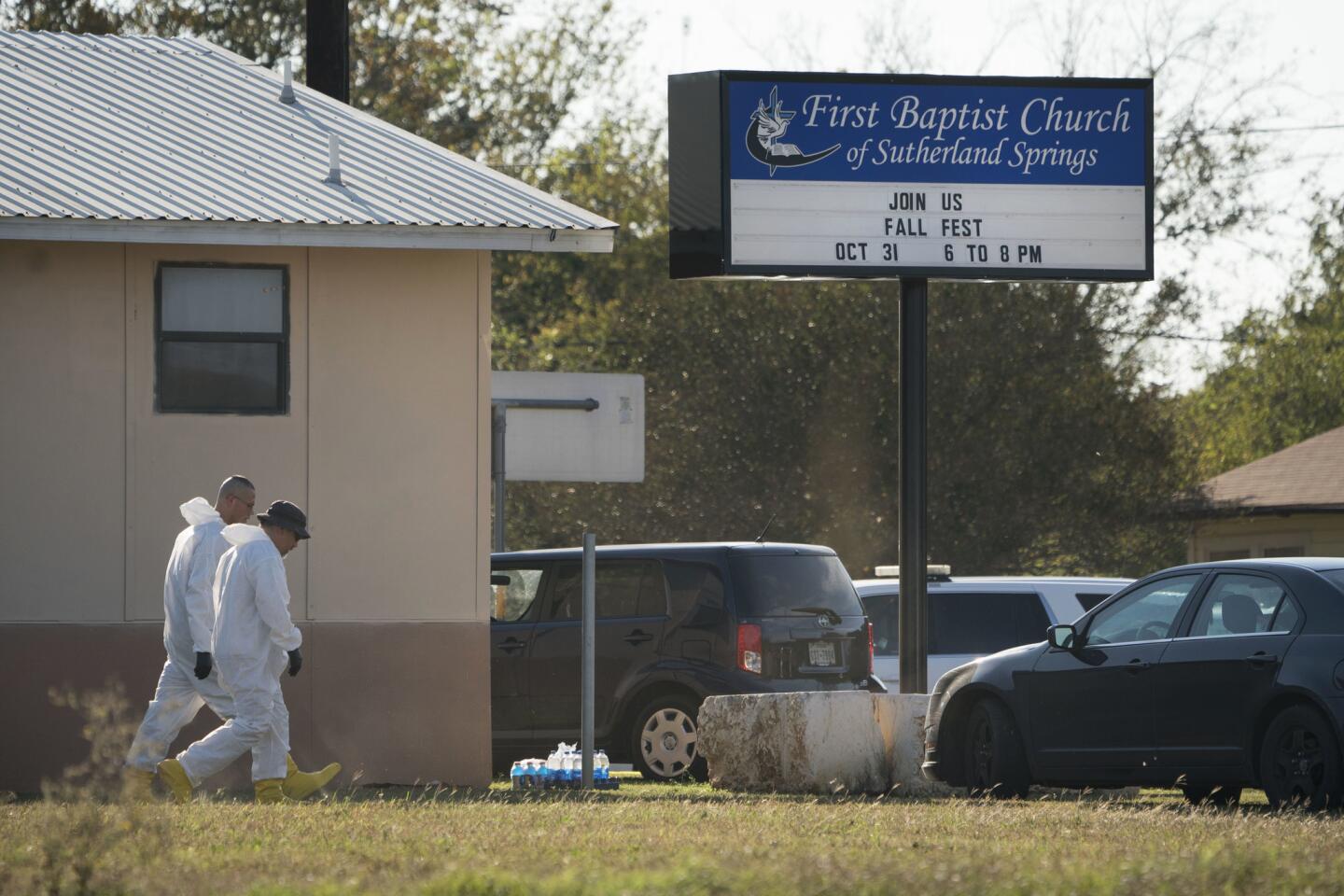
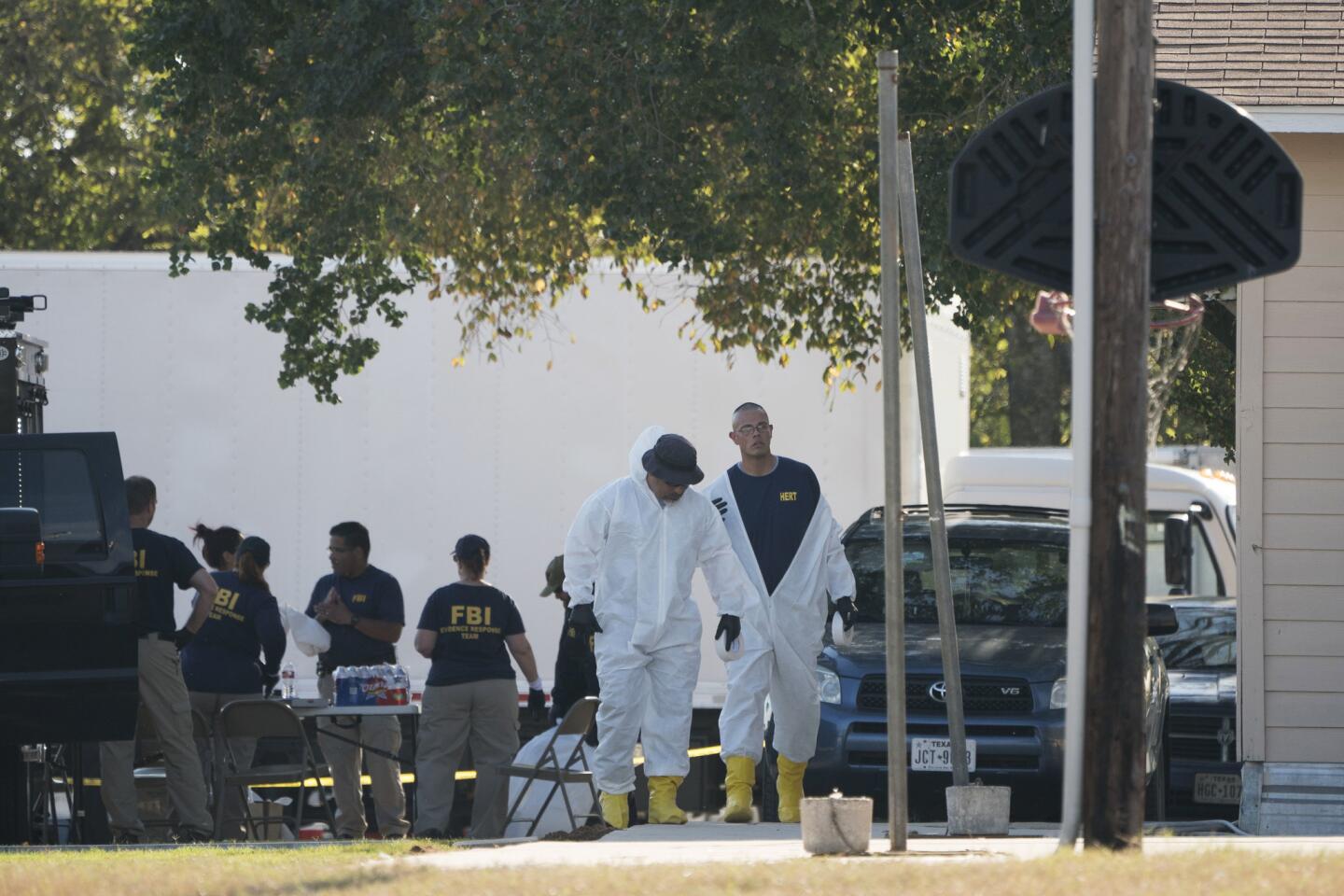
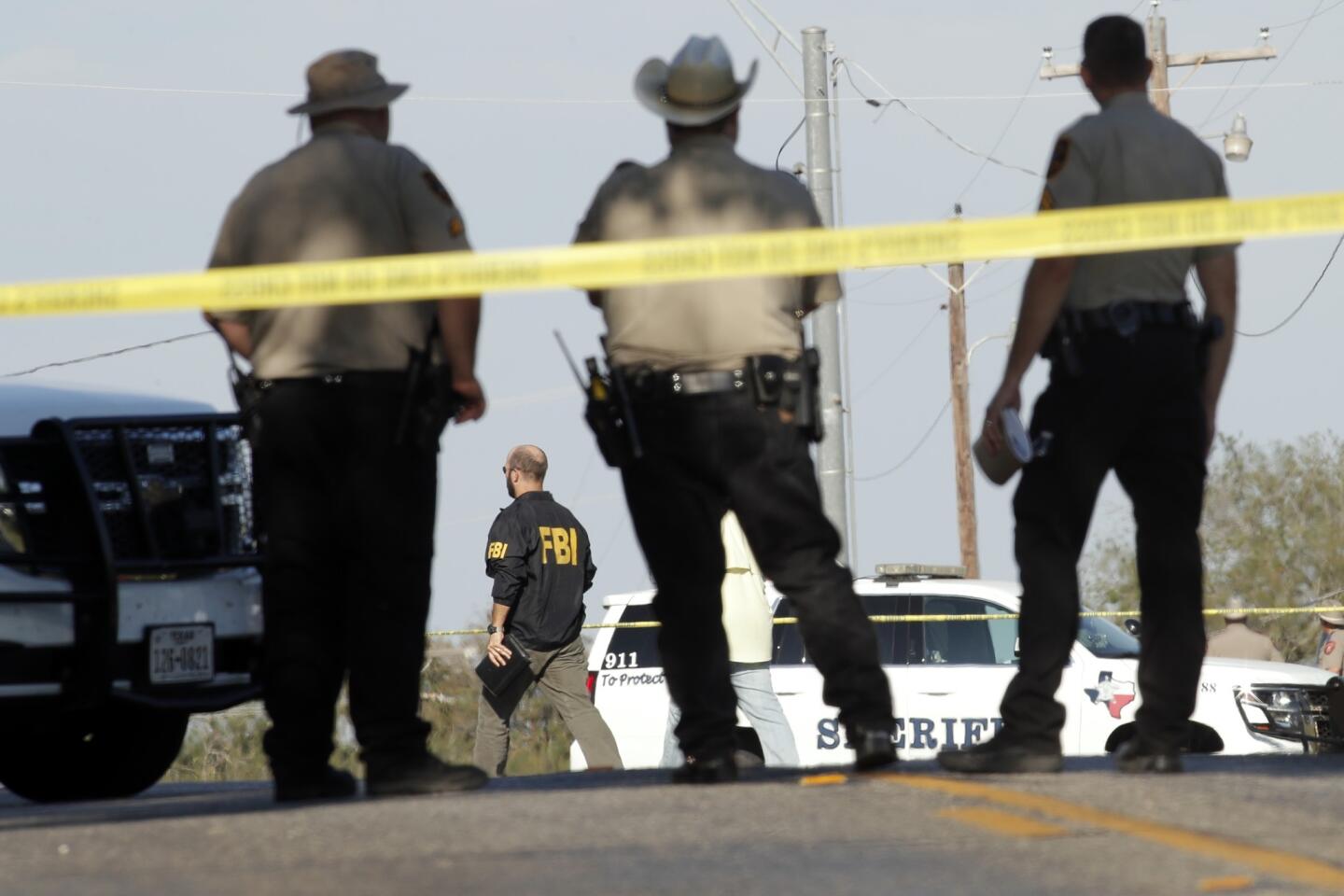
Members of the FBI work at the scene.
(Darren Abate / Associated Press)
18/23
Members of the FBI investigate the shooting scene.
(Darren Abate / Associated Press)
19/23
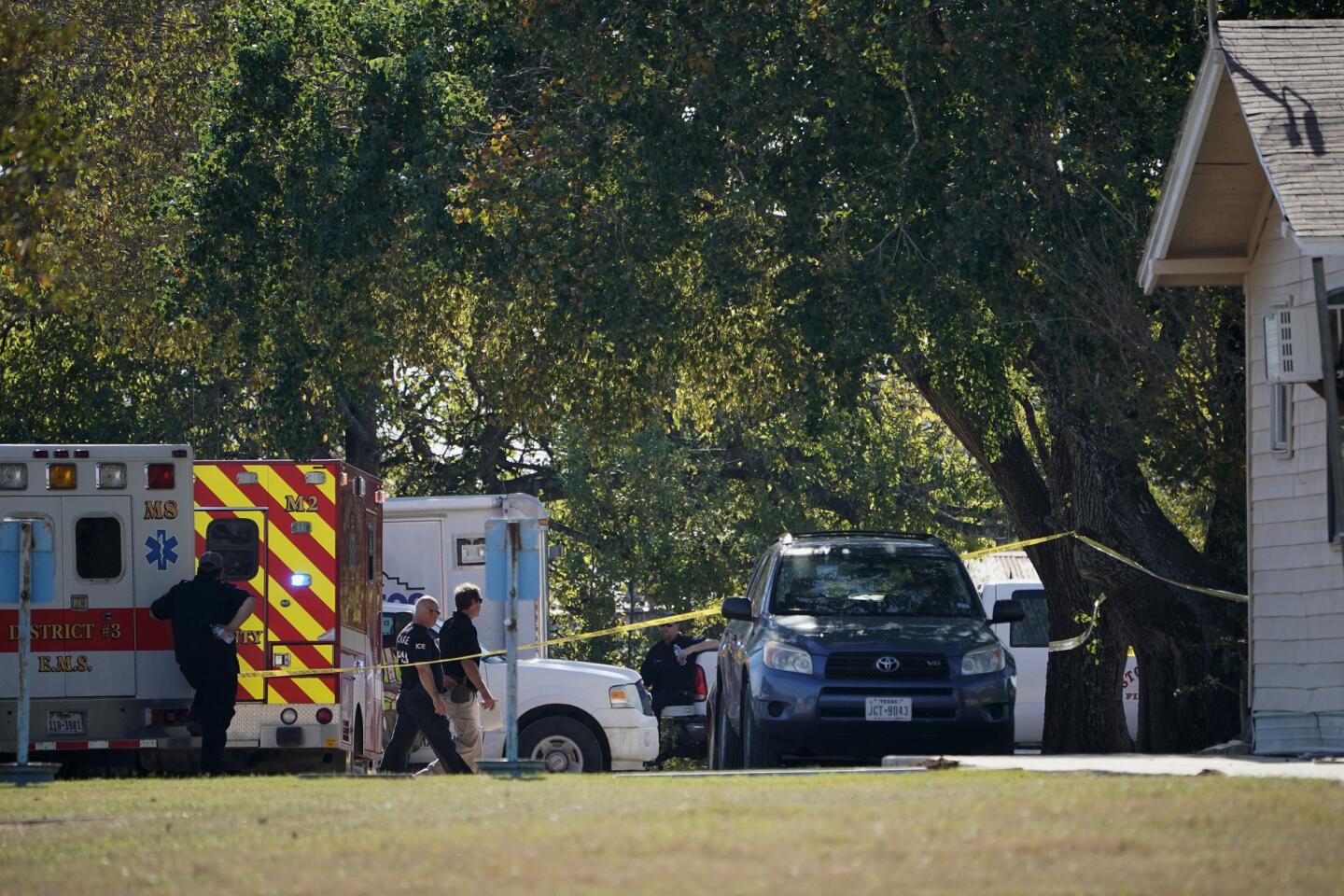
Law enforcement officials gather near the First Baptist Church following a shooting in Sutherland Springs, Texas.
(Erich Schlegel / Getty Images)
20/23
Law enforcement officials gather near the First Baptist Church following a shooting in Sutherland Springs, Texas.
(Erich Schlegel / Getty Images)
21/23
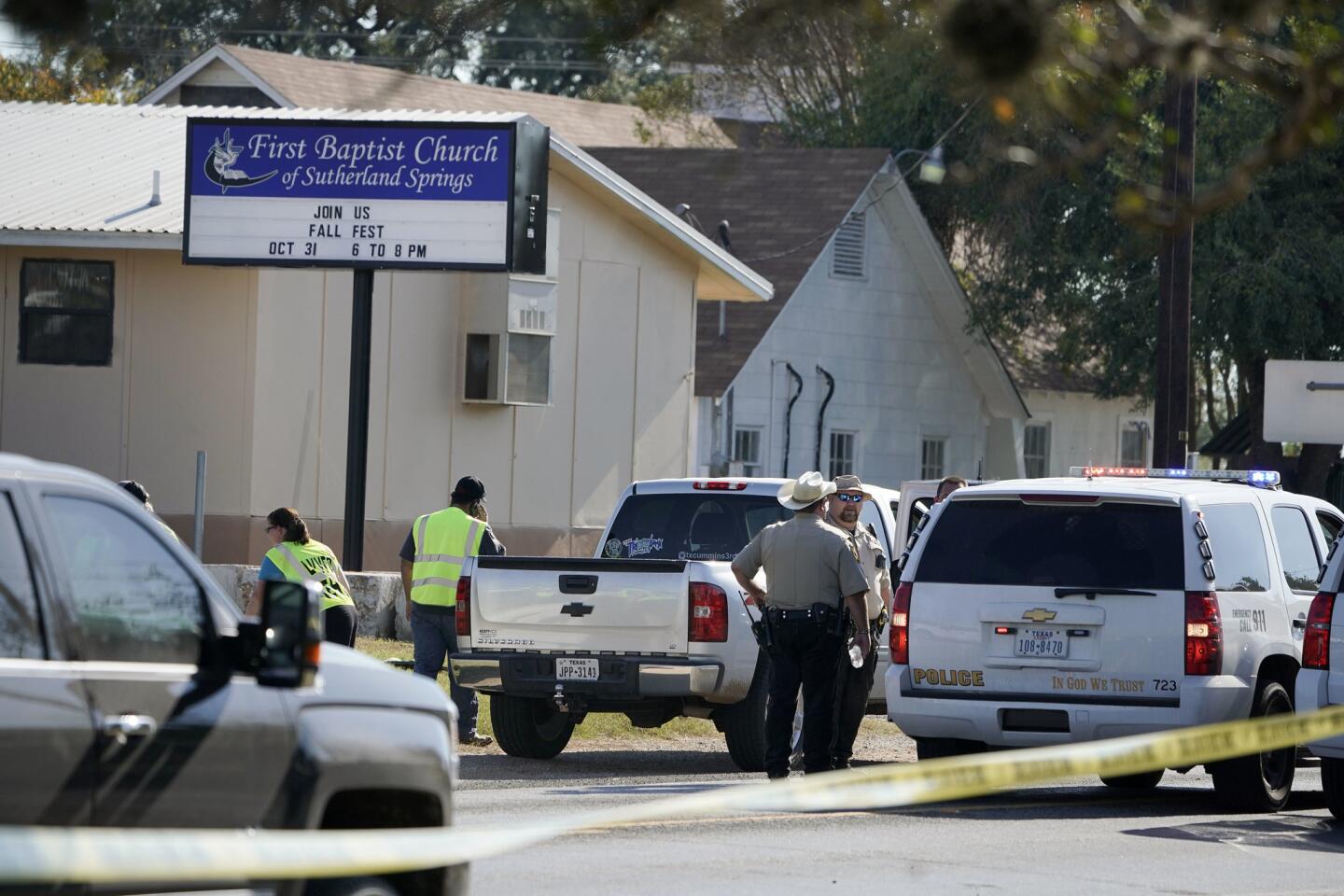
Law enforcement officers gather in front of the First Baptist Church on Sunday.
(Darren Abate / Associated Press)
22/23
First responders work at the rear of the First Baptist Church of Sutherland Springs after a gunman attacked.
(Darren Abate / Associated Press)
23/23
Law enforcement officers work a barricade near the First Baptist Church on Sunday.
(Darren Abate / Associated Press)
The FBI eventually paid a private firm $1 million to circumvent Apple, gaining access to Farook’s phone and dropping its lawsuit against the tech giant.
The tension between law enforcement and the tech industry over encryption remains as high as ever.
FBI Director Christopher Wray said last month that federal agents were still seeking access to 6,900 mobile devices.
“To put it mildly, this is a huge, huge problem,” Wray said. “It impacts investigations across the board -- narcotics, human trafficking, counter-terrorism, counterintelligence, gangs, organized crime, child exploitation.”
Tech companies are wary of such requests. The government, particularly the National Security Agency, has proven to be vulnerable to hacking. And if U.S. law ultimately compels companies to provide so-called backdoors to their devices, fears abound that undemocratic countries such as China will do the same.
“Even if you solve the trust problem with the government, you then have a problem with where to draw the line” with other countries, said Robert Cattanach, a former Justice Department attorney who specializes in cybersecurity for the law firm of Dorsey & Whitney.
Cattanach said it was likely the FBI did not name the maker of Kelley’s phone because it appeared unlikely that Kelley had accomplices. There was a greater sense of urgency with Farook because of concerns he might be acting on behalf of a terrorist group.
“You can’t go to a judge and argue there’s a future threat like in San Bernardino,” he said. “So what are you going to do? Public shaming didn’t work with Apple.”
Matt Pearce was a reporter for the Los Angeles Times from 2012 to 2024. He previously covered the covering internet culture and podcasting, the 2020 presidential election and spent six years on The Times’ national desk, where he wrote stories about violence, disasters, social movements and civil liberties. Pearce was one of the first national reporters to arrive in Ferguson, Mo., during the uprising in 2014, and he chased Hurricane Harvey across Texas as the storm ravaged the Lone Star State in 2017. A University of Missouri graduate, he hails from a small town outside Kansas City, Mo.